
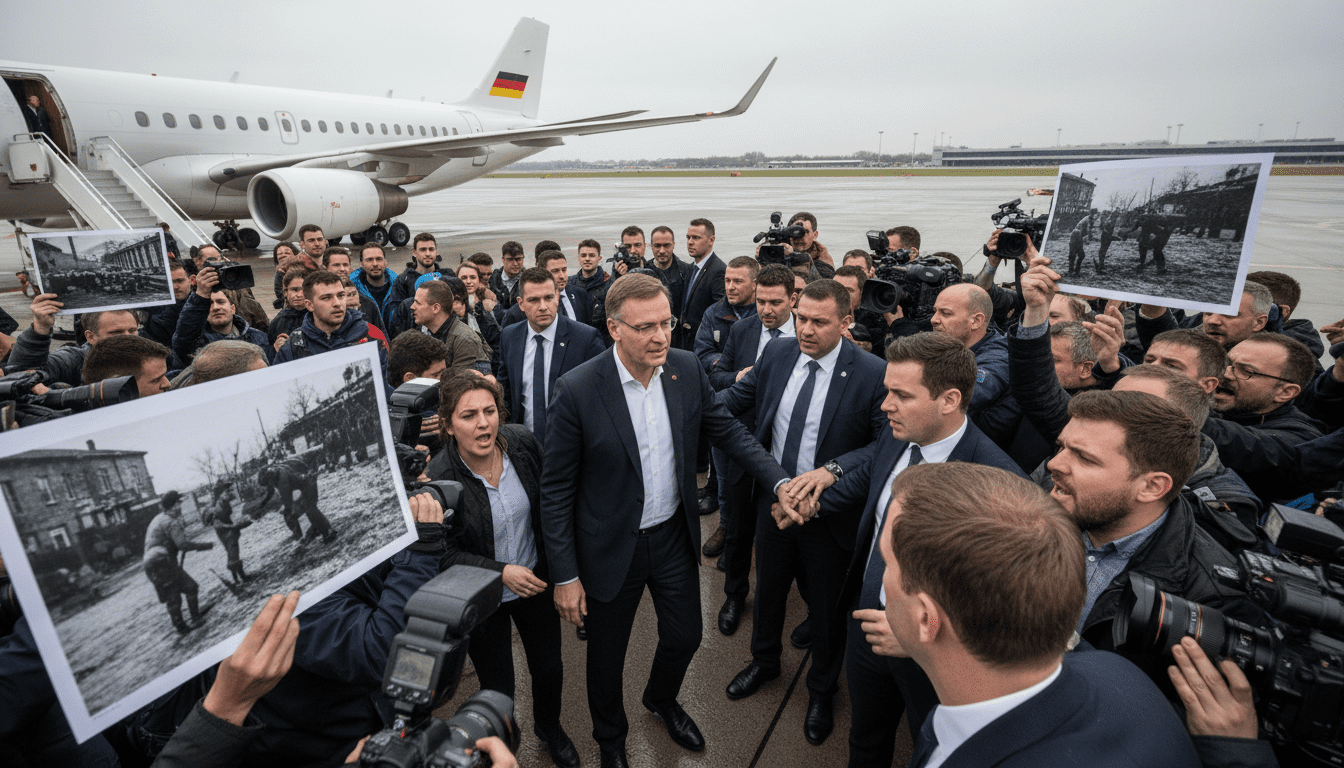
Wadephul Greece visit overshadowed by resurfaced World War II execution photos
Foreign Minister Wadephul’s Greece visit is overshadowed by newly surfaced photos of a 1940s execution of Greek civilians, prompting political debate and calls for transparency.
German Foreign Minister Johann Wadephul’s visit to Athens on May 4, 2026, has been overshadowed by the circulation of historical photographs showing the execution of approximately 200 Greek civilians during World War II. The Wadephul Greece visit, intended to focus on bilateral ties and regional security, now faces immediate public scrutiny as the images rekindle painful memories and political questions in both countries. Greek officials and civil society groups have called for a full investigation into the provenance of the photos and for an official response from Berlin.
Photos surface as Wadephul arrives in Athens
The photographs emerged on social media and were quickly amplified by Greek news outlets, showing what local commentators described as a wartime mass execution. Images from the 1940s have circulated before, but this set attracted renewed attention because of their timing with Wadephul’s arrival. Greek authorities have said they are reviewing the material to verify authenticity while urging caution against premature conclusions.
Greek political leaders and public express outrage
Greek political figures condemned the images and demanded clarity from German institutions about wartime conduct and record-keeping. Opposition parties framed the resurfaced photos as a moral obligation for transparency, while veterans’ groups called for proper identification of victims and perpetrators. Large numbers of citizens gathered at symbolic sites to lay flowers and to press for accountability, underscoring the deep emotional resonance these wartime wounds retain in Greek public life.
German government response and Wadephul’s remarks
Berlin’s response was measured at first, with government spokespeople saying they had noted the public reaction and were seeking information from historical archives. Wadephul, arriving in Athens for scheduled talks, acknowledged the shock the images had provoked and expressed willingness to cooperate on establishing the historical record. He reiterated Germany’s commitment to confronting difficult chapters of history, and he pledged to meet Greek counterparts and historians to discuss next steps.
Historical context and archive searches
Historians note that wartime reprisals and mass killings in occupied Greece during the 1940s have been documented but that comprehensive records remain incomplete. Scholars and archival experts will likely be called on to establish provenance, dates, units involved and possible legal responsibility. Greek and German archives, including military and municipal records, are expected to be canvassed to corroborate the photographs and to identify victims, a process that can take months.
Diplomatic agenda disrupted by crisis management
Wadephul’s program in Athens had been set to cover defense cooperation, migration and EU-Greece relations, but the resurfaced photos forced an immediate reshuffling. Officials said private meetings with Greek ministers would include discussions about the images and coordination on a historical review. The diplomatic focus shifted from policy announcements to crisis management and symbolic gestures intended to ease public tension.
Possible effects on bilateral relations and memory politics
Analysts say the incident could strain political discourse between the two capitals if not handled transparently and sensitively. Memory politics in Greece is potent, and failure to address historical grievances can complicate cooperation on current strategic issues. At the same time, timely, joint historical work and clear communication may provide an avenue for both countries to reinforce mutual trust while acknowledging past harms.
The resurfacing of the photographs during a high-profile ministerial visit has reignited debate about how wartime archives are managed and how states confront difficult histories. Both Greek and German leaders face public pressure to move beyond statements and to provide a credible, evidence-based account of the events depicted. Experts warn that provisional conclusions can inflame tensions, and they emphasize the importance of rigorous archival and forensic work.
Wadephul’s immediate commitments in Athens include meetings with Greek officials and historians to coordinate an inquiry, while German authorities said they would mobilize relevant archival services. Observers expect a series of joint statements and possibly expert delegations in the coming weeks to assess authenticity and context. How quickly and transparently those steps proceed will be crucial to calming public sentiment and preserving the broader diplomatic agenda.
The Wadephul Greece visit has been transformed from a routine diplomatic engagement into an urgent exercise in historical accountability, illustrating how the discovery of wartime evidence can disrupt contemporary politics and diplomacy. Both governments now face the task of balancing speedy fact-finding with careful, respectful handling of victims’ memories as they work to clarify the past.
