
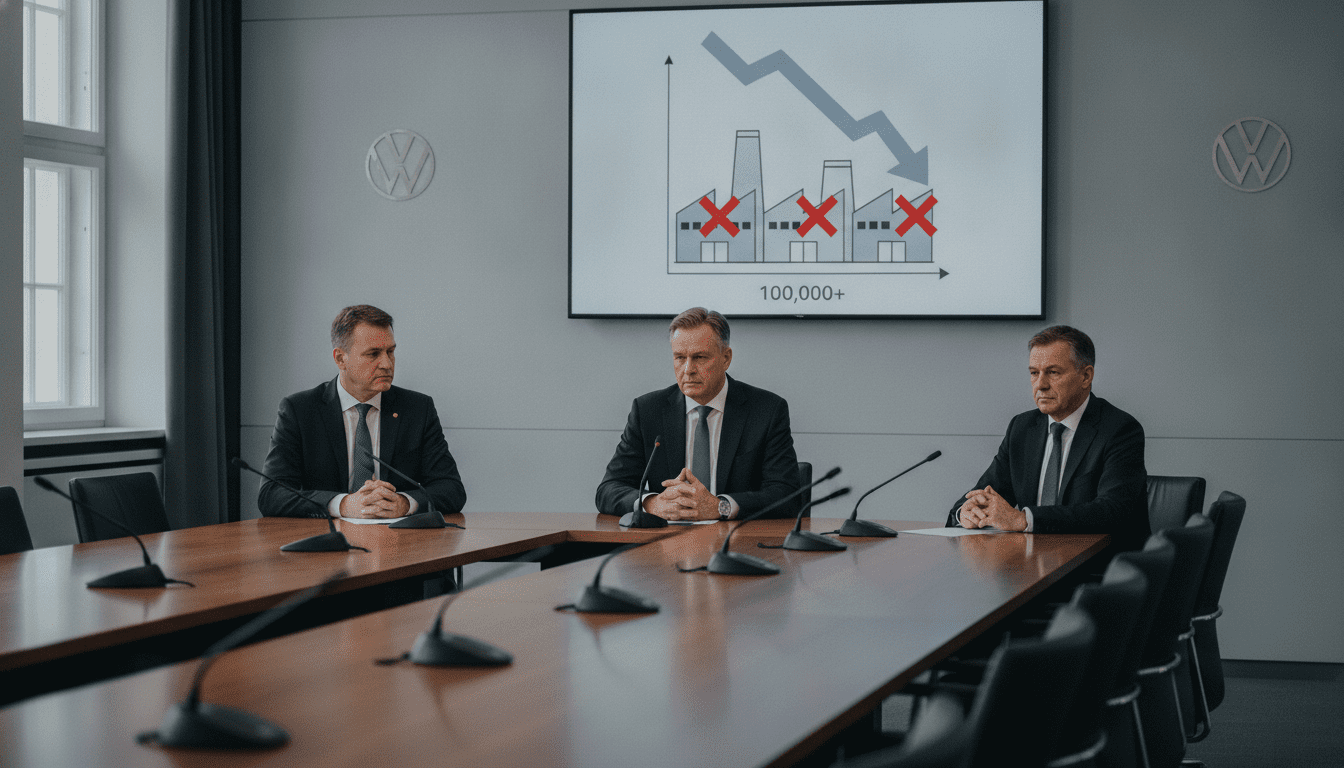
Volkswagen job cuts of up to 100,000 reported in restructuring plan
Volkswagen job cuts reported by German media could remove up to 100,000 roles worldwide as management weighs plant closures, spin-offs and cost reductions; supervisory board meets 9 July 2026.
Volkswagen job cuts of as many as 100,000 positions have been reported in a confidential restructuring paper that the company will discuss with its supervisory board on 9 July 2026. The figure would affect a company that currently employs roughly 657,000 people worldwide and, if confirmed, would roughly double previously stated reduction targets. Volkswagen declined to comment on confidential internal documents while it prepares the plan for board review.
Scope of the reported cuts
A report in Manager Magazin, citing insiders, identified the potential scale of the job reductions and said the document deliberately avoided a single definitive tally. The 100,000 figure is presented as an upper bound and the final number could be lower depending on decisions taken by the board and subsequent negotiations. Company spokespeople have said that the issues raised in the internal paper are being discussed in the appropriate corporate bodies. Any formal decisions would follow the supervisory board meeting on 9 July 2026.
German plants named as potential closures
The restructuring paper reportedly lists four German sites that could be closed when current model production ends: the Volkswagen plants in Hannover, Zwickau and Emden, plus the Audi site in Neckarsulm. The plan would stop production at those locations as specific models phase out, according to the account. Closure of any of these plants would mark a significant change for regions where the company is a major employer and industrial anchor. Local supply chains and thousands of direct and indirect jobs could be affected if closures proceed.
Split of brands and component business under consideration
Alongside workforce reductions, the internal proposal reportedly contemplates carving Volkswagen’s core brand and its components subsidiary out of the group to create separate legal entities. The intent of these structural moves would be to make individual units easier to prepare for capital-market listings or strategic partnerships. Executives argue that distinct corporate vehicles could unlock value and allow more focused investment strategies for each business. Such moves would represent a major shift in the group’s organization and financing approach.
Union and works council pushback
The company’s works council and the IG Metall union responded sharply, calling the suggested plant shutdowns “irresponsible threats” and pledging to resist measures that would cost jobs. Representatives argued that management should focus on delivering competitive products, technologies and efficiencies rather than announcing sweeping cuts. Unions warned they would use all available means to defend employment and the industrial footprint of affected regions. Any attempt to implement closures would almost certainly produce a prolonged negotiation and potential industrial action.
Political alarm and regional concerns
Political leaders in affected states expressed alarm at the prospect of major closures. Saxony’s minister-president warned that a weakening of Volkswagen’s presence would be damaging for the region’s economy, and local SPD officials pledged to fight for every position. Elected officials emphasized the broader consequences for supply chains, public finances and local investment if large-scale job losses occur. The political backlash increases the pressure on Volkswagen to present a plan that balances competitiveness with social and regional responsibilities.
Financial drivers and company outlook
Volkswagen’s finance chief has signaled the need for fundamental change, noting a marked drop in profits earlier in the year and calling for structural, sustainable improvements to the business model. Management has framed the proposals as a response to a deep transformation across the automotive industry, including electrification and shifting demand patterns. Executives argue that tougher cost structures and clearer corporate units are necessary to preserve long-term competitiveness. Critics counter that abrupt downsizing risks undermining the workforce and the industrial base needed for future investments.
The supervisory board will review the proposals on 9 July 2026, and any decisions are likely to trigger detailed consultations with employee representatives, regional governments and financial stakeholders. The final scope of Volkswagen job cuts, plant-status decisions and corporate separations will become clearer only after those deliberations and the negotiation processes that follow.
