
Ukraine War Shows How Information Warfare and Sensor Fusion Speed the Kill Chain
The Ukraine war shows how information warfare, sensor fusion and autonomous systems are significantly accelerating the kill chain and altering battlefield decision-making.
The conflict in Ukraine has underscored a fundamental shift: information, not just firepower, often determines the pace of combat. Analysts note that what once took hours to coordinate now happens in seconds as sensors, networks and autonomy shorten detection-to-engagement timelines. Military researcher Frank Sauer says this acceleration, driven by sensor data fusion and autonomous functions in weapons, is reshaping how commanders perceive risk and act under pressure.
Frontline Speed: Sensor Fusion and the Kill Chain
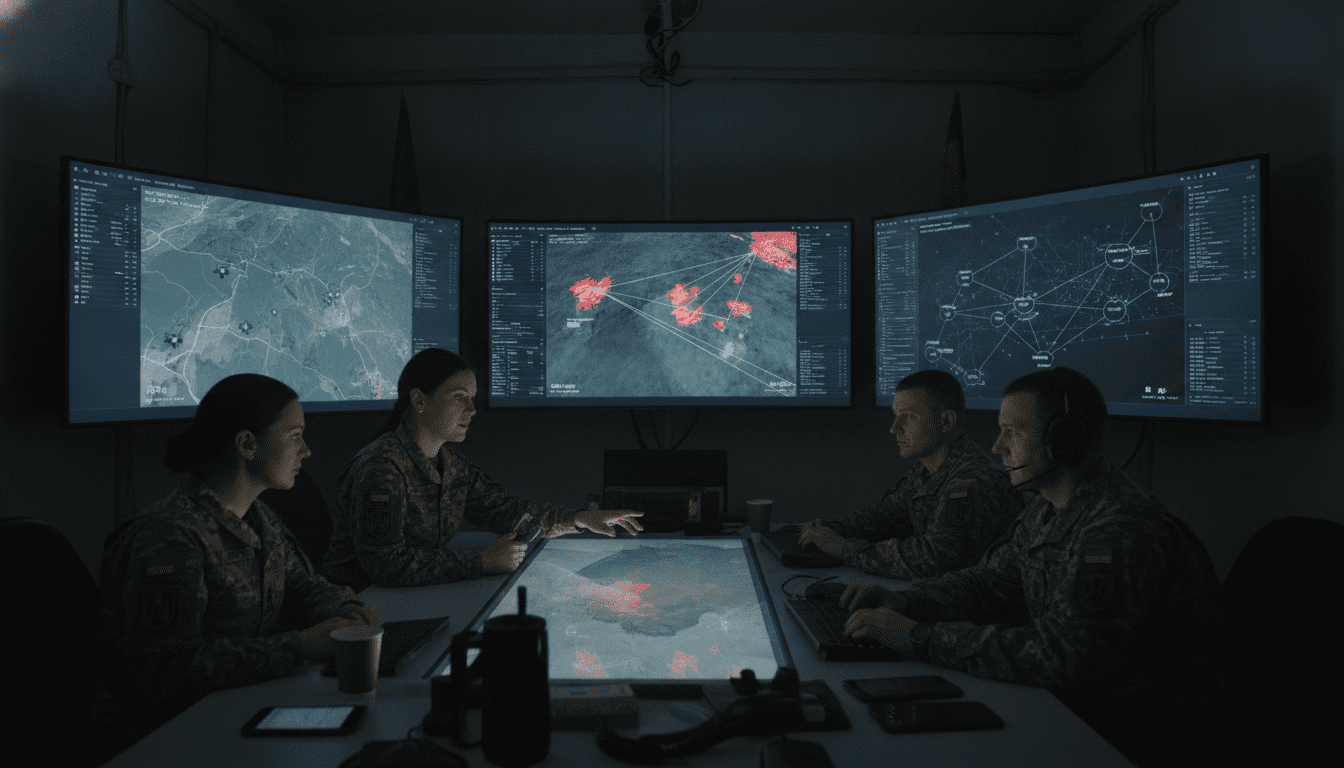
Sensor fusion—combining inputs from drones, satellites, electronic sensors and human reports—has multiplied situational awareness for front‑line units. When data streams are merged and analyzed in near real time, targets can be classified and tracked far more quickly than with legacy systems. That compressed timeline effectively shortens the kill chain, meaning the interval between detection and strike is dramatically reduced.
Commanders who gain that advantage can exploit fleeting openings, but the speed also raises new tactical risks. Rapid engagement leaves little room for cross-checks, increasing the chance of mistaken identity or collateral damage. Forces now balance the tactical benefit of speed against the operational need for verification.
Autonomy and Decision Times
Autonomous algorithms and automated targeting aids are central to the current leap in tempo. Autonomous processes can prioritize sensor cues and recommend or even execute responses faster than human operators. Proponents argue this reduces cognitive load and improves reaction times against fast-moving threats such as loitering munitions or precision fires.
Critics caution that delegation of lethal choice to algorithms shifts responsibility and can amplify errors when sensors misread the environment. The interplay between human judgment and machine speed has become a core debate in militaries adapting to modern combat, where seconds can decide outcomes and errors have immediate consequences.
Command and Control Under Strain
Shorter decision cycles are forcing changes to command-and-control doctrine across NATO and partner forces. Traditional hierarchical decision chains are being supplemented by distributed command models that push authority closer to the tactical edge. That allows units to respond rapidly to local sensor inputs while keeping strategic oversight intact.
At the same time, higher headquarters must invest in resilient communications and shared data models so that decentralized decisions remain coherent with overall campaign goals. The reliance on continuous data exchange creates vulnerabilities if networks are degraded, spoofed or overloaded, which adversaries will seek to exploit.
Legal and Ethical Questions Raised
The faster kill chain driven by information fusion and autonomy rekindles legal and ethical questions about accountability in combat. International law requires meaningful human control over the use of lethal force, but definitions of that control grow blurrier as automation handles more of the sensor-to-shooter pipeline. Legal advisers and ethicists warn that doctrine must clarify where human judgment is retained and how errors will be investigated.
Humanitarian concerns are also acute where civilian infrastructure and non‑combatants are present. The uncertainty created by split-second targeting decisions makes post‑strike assessments and transparency more important than ever to maintain legitimacy and to limit harm.
Adaptation by Allies and Adversaries
Armed forces on both sides of modern conflicts are investing heavily in sensors, data links, and autonomous capabilities to gain or deny tempo. Allies are accelerating programs to integrate dispersed sensors and to field decision‑support tools that present fused pictures of the battlefield. Adversaries, meanwhile, focus on countermeasures—electronic attack, deception and data manipulation—to slow or confuse those same systems.
The result is a technological competition where information superiority and resilience are strategic objectives as much as tactical ones. Military planners increasingly treat data flows and processing pipelines as key assets to be defended, monitored and hardened against disruption.
The Ukraine war thus serves as a stark reminder that the character of war is changing: the decisive edge comes from how quickly and reliably one can turn information into action. As sensor fusion and autonomy push the kill chain into ever-shorter timeframes, armed forces face the twin challenges of leveraging speed while preserving control and legal accountability. The balance they strike will shape doctrine, procurement and international debates about the future of lethal force.
