
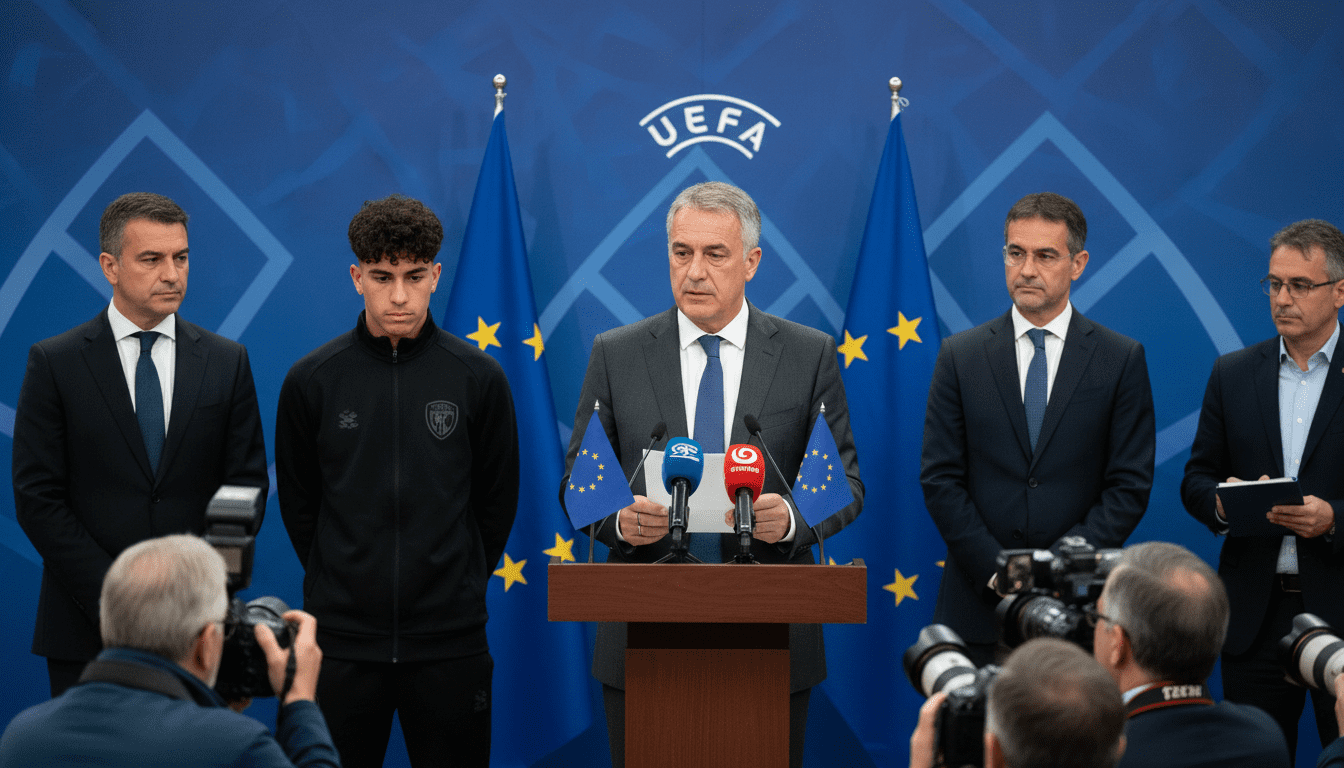
Gianluca Prestianni handed six-match UEFA ban after homophobic conduct ruling
UEFA bans Gianluca Prestianni for six matches for homophobic conduct toward Vinicius Jr; three matches suspended, one already served. Decision: 24 April 2026.
Gianluca Prestianni, the 20-year-old Benfica forward, has been suspended for six UEFA matches after an ethics investigation concluded his behaviour toward Real Madrid’s Vinícius Júnior was homophobic rather than racist. The UEFA Control, Ethics and Disciplinary Body announced the sanction on 24 April 2026, with three of the six matches suspended on a two-year probation and one match already having been provisionally served. (theguardian.com)
UEFA ruling and the scope of the ban
The disciplinary body specified the suspension applies to official UEFA club and representative national team matches for which Prestianni would otherwise have been eligible. UEFA’s written decision makes clear the six-match total includes the provisional one-match suspension applied in February, and that three matches are deferred under a two-year probationary period. (theguardian.com)
The sanction falls short of the 10-match minimum ordinarily cited under Article 14 for discriminatory conduct, a discrepancy that has provoked debate among clubs, governing bodies and commentators. UEFA did not fully publish the detailed reasoning at the time of the announcement, leaving observers to note possible mitigating factors cited by the disciplinary panel. (theguardian.com)
What happened in Lisbon on 17 February
The incident originated in the Champions League knockout play-off first leg between Benfica and Real Madrid at the Estádio da Luz on 17 February 2026, when Vinícius reported being abused during an on-pitch confrontation. Play was halted for about 10 minutes after the Brazilian forward left the field and officials applied UEFA’s anti-discrimination protocol while an investigation was opened. (theguardian.com)
Video footage circulated widely after the match showed Prestianni covering his mouth while speaking toward Vinícius, a moment that intensified scrutiny and prompted statements from players and managers in the tunnel and in the media. The episode became a flashpoint for wider debate about how discriminatory remarks are identified and sanctioned in elite football. (theguardian.com)
Why UEFA found homophobic conduct, not racist abuse
UEFA’s appointed ethics and disciplinary inspector investigated eyewitness accounts, video evidence and the player’s own statements before concluding the conduct met the definition of homophobic discriminatory behaviour. The CEDB applied the relevant provisions of the disciplinary regulations while settling on a reduced active ban compared with some experts’ expectations. (theguardian.com)
Officials and legal analysts pointed to factors that can affect sanction length such as the specific wording attributed to the player, any admission or acceptance of wrongdoing, and precedent in similar disciplinary cases. UEFA’s final decision noted mitigating circumstances without fully disclosing all evidentiary findings, prompting calls for greater transparency in high-profile discrimination rulings. (theguardian.com)
Prestianni’s statements and Benfica’s reaction
Prestianni has consistently denied making a racist slur, telling interviewers that the words used were homophobic insults rather than racial epithets and attempting to downplay the severity of the language in cultural terms. In a televised interview he suggested certain insults are more commonplace in his environment, remarks that deepened criticism and sparked renewed debate over cultural context versus discriminatory harm. (uk.sports.yahoo.com)
Benfica publicly expressed support for the player during the investigation and released a club communication when UEFA imposed the provisional suspension, while coach and club officials have at times offered mixed messages about intent and consequences. The club’s stance has itself been scrutinised amid calls for stronger internal measures to prevent discriminatory language. (slbenfica.pt)
Wider implications for rules and future matches
UEFA has indicated it may ask FIFA to extend the scope of the suspension to include international fixtures, a move that could affect Prestianni’s availability for Argentina and potentially for major tournaments if the request is accepted. Observers noted the disciplinary outcome could set a precedent for how governing bodies classify and punish different types of discriminatory language moving forward. (theguardian.com)
The case has also intensified discussion at the rulemaking level about behaviour that is concealed by players covering their mouths during confrontations. The International Football Association Board and FIFA are reviewing whether such actions should carry an automatic in-game sanction, a debate that has drawn comments from football officials and the FIFA president in recent weeks. (theguardian.com)
The UEFA decision in the Prestianni case closes one chapter of a contentious episode but leaves several questions open about consistency, transparency and the sport’s capacity to address discriminatory language. Stakeholders from players’ unions to governing bodies will now weigh how disciplinary processes and educational measures should evolve to prevent similar incidents in future.
