
Tofiq Bəhramov and the Wembley Goal: How a Linesman’s Signal Decided the 1966 World Cup Final
Tofiq Bəhramov’s decisive signal at Wembley in 1966 remains one of football’s most debated moments, and his name has been woven into sporting memory from Baku to London.
Opening summary
Tofiq Bəhramov, the Soviet linesman whose raised flag awarded England a controversial extra-time goal, became an unlikely symbol of World Cup lore. His gesture in the 101st minute at Wembley decided the 1966 final between England and West Germany and altered the lives of players, officials and fans. The episode remains central to debates about officiating, national memory and the later adoption of goal-line technology.
The moment on the pitch
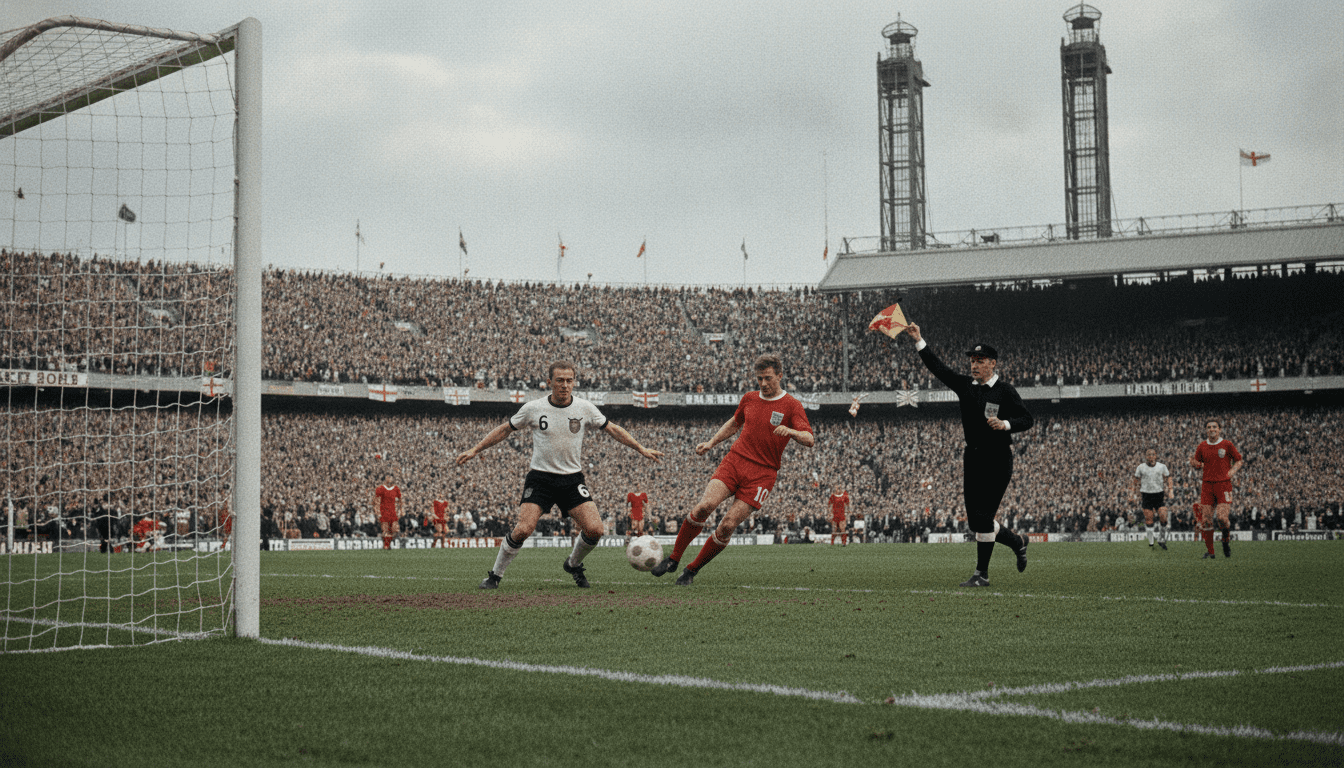
In the second period of extra time Geoff Hurst struck a shot that hit the underside of the crossbar and bounced toward the goal line. Referee Gottfried Dienst, positioned with his back to goalkeeper Hans Tilkowski, did not have a clear view of the ball’s final position. Bəhramov, patrolling the touchline, signalled for a goal and his decision was relayed to Dienst, who awarded what became known as the “Wembley Goal.”
The instantaneous nature of the signal turned a fleeting event into a decisive match outcome. Contemporary accounts emphasize the confusion on the field and the absence of a common language between officials. That single raised flag became the focal point for England’s 4-2 victory and for decades of dispute over whether the ball fully crossed the line.
Commemoration in Azerbaijan
Tofiq Bəhramov’s legacy in his homeland is unusually prominent for a linesman. Azerbaijan renamed its national stadium in Baku in his honour, and he has been commemorated with statues and postage stamps that celebrate his role in football history. The stadium, once bearing names tied to Soviet leaders, now carries Bəhramov’s name as a local and national symbol.
This public recognition contrasts with the contentious reception his decision received on the global stage. In Baku, the gesture is framed as part of a proud sporting heritage, while internationally it remains a subject of persistent scrutiny and narrative rivalry between fans and historians.
Conflicting recollections and explanations
Bəhramov offered varying accounts in later years about what convinced him to signal a goal. At times he cited the players’ reactions on the field, noting that England’s joy and the German keeper’s demeanour suggested the ball had crossed the line. At other moments he proposed that the ball rebounded off the net in a manner that made the exact point of contact irrelevant.
Those shifting explanations fed the controversy rather than settling it. Bəhramov himself admitted he had not directly seen where the ball struck the ground when it bounced, and his differing statements have been parsed by historians and fans seeking a definitive narrative.
Communication, trust and the referee’s call
Gottfried Dienst, the Swiss referee, relied on his linesmen in a split second of decision-making despite language barriers. Dienst later explained that Bəhramov’s manner left him with the impression that a goal had occurred. That reliance on gesture and instinct rather than technological aid reflects the realities of officiating in that era.
Officials on the day included Karol Galba as the other linesman, whose chance at renown was sidestepped by the timing of the decisive play. Galba’s role and the broader coordination among referees underscore how much match outcomes once depended on human perception and communication under pressure.
Historical context and later technology
If the match had been played under modern regulations with goal-line technology then standard at World Cups since 2014, the question would have been resolved within seconds. Advances in camera systems and sensor-based verification now aim to remove doubt from precisely the kind of event that produced the Wembley controversy. Retrospective technical analyses and academic studies have repeatedly suggested the ball did not fully cross the line.
Yet rule changes and replay tools arrived decades after that extra-time flash, leaving the 1966 decision lodged in public memory and sporting folklore. The persistence of debate illustrates both the limits of human judgement in sport and the ways singular moments are amplified by national narratives.
The overlooked official and enduring questions
Karol Galba, the Czechoslovak linesman on duty that day, is rarely recalled in popular retellings despite being part of the same officiating team. Had a later cross produced a similar dispute in Galba’s half, the spotlight might have shifted and a different figure could have entered football legend. Instead Galba’s name remains secondary to the enduring association of the event with Bəhramov.
The Wembley Goal continues to serve as a case study for refereeing, memory and mythmaking in sport. It is both a technical controversy and a human story about how a single gesture can resonate across nations and decades.
Tofiq Bəhramov’s signal at Wembley ensured his place in football history and transformed a moment of uncertainty into a lasting legacy. The stadium in Baku bearing his name and the ongoing debates over the 1966 goal remind us that sport often preserves its most potent dramas in the tension between what was seen, what was said, and what later technologies would have shown.
