
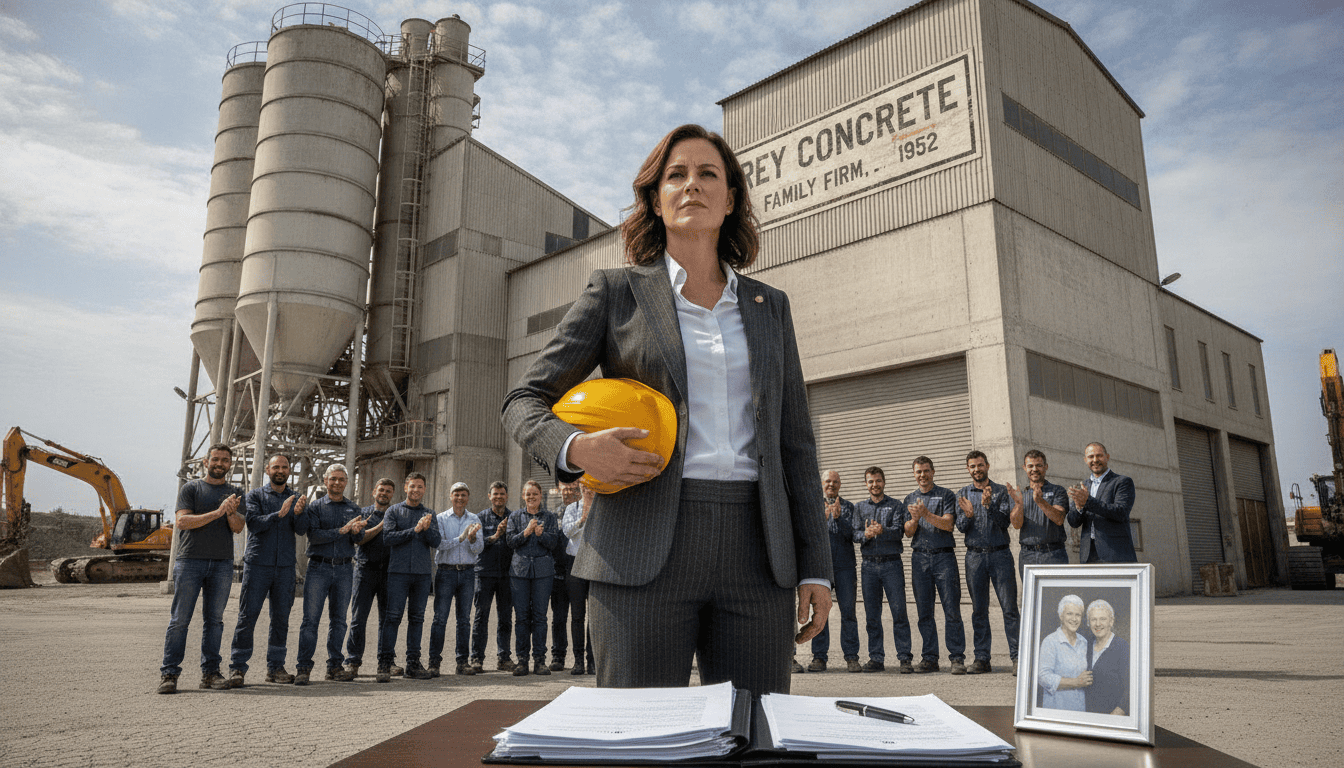
How Stefanie Rey Turned a Family Concrete Firm Around
Stefanie Rey rescued her family’s concrete products company after taking control in her mid-twenties, steering it through a bitter ownership dispute and a deep operational crisis. The turnaround centered on modernization, tighter finances and new markets that returned stability to the business Rey has led since 2012. Her story is a case study in how an heir can transform a traditional industrial firm while navigating family conflict.
Early ambitions and an unexpected inheritance
Stefanie Rey originally planned a career far from the factory floor, training and coursework aimed at veterinary medicine before family circumstances intervened. Facing the sudden responsibility for Siegfried Rey Betonwarenfabrik, she abandoned those plans and moved into company management in her mid-twenties. That early pivot set the stage for a decade-plus campaign to rebuild the firm’s competitiveness.
Assuming leadership in 2012
Rey formally took the reins of the company in 2012, becoming the public face of a business long associated with her family name. Her first years focused on stabilizing cash flow and re-establishing trust with customers and suppliers after a period of erratic management. She also invested in basic operational diagnostics to identify where the plant was losing productivity and margin.
Family dispute over control and governance
Control of the business triggered a protracted family dispute as different relatives sought influence over strategy and ownership stakes. That conflict spilled into boardroom tensions and delayed critical decisions at a time when the firm needed rapid change. Rey pressed for clearer governance arrangements and a defined management mandate to separate family issues from day-to-day operations.
Operational overhaul and product strategy
On the shop floor, Rey prioritized modernization: selective automation, tighter production planning and upgrading quality control systems to match market standards. The company also broadened its product mix, moving beyond legacy lines to modular concrete components and customer-specific solutions for construction firms. These moves helped improve unit margins and attract repeat customers who demanded consistent quality.
Financial restructuring and supplier negotiations
Faced with constrained liquidity, Rey negotiated revised payment terms with major suppliers and reworked debt arrangements to buy time for the turnaround to take hold. Cost controls were introduced across departments, with an emphasis on preserving skilled jobs while reducing waste. Those financial measures reduced short-term pressure and allowed management to reinvest in targeted equipment updates.
Workforce and community impact
Employees played a central role in the recovery, with management launching retraining programs for operating staff and shop supervisors. Rey emphasized retaining institutional knowledge even as procedures changed, arguing that steady workforces improve both safety and output. Local contractors and municipal clients reported renewed confidence in the company’s ability to meet deadlines and specifications.
Outcomes and future direction
The combination of governance reform, operational upgrades and market repositioning returned the firm to a more stable footing and halted a slide in sales that had threatened its viability. While not all legacy product lines were maintained, the company emerged leaner and more focused on higher-margin segments of the concrete market. Rey has signaled plans to continue incremental investments in efficiency and to explore regional market expansion.
Stefanie Rey’s experience shows how leadership, discipline and pragmatic decisions can preserve a multi-generational enterprise despite personal and legal disputes. Her trajectory from would‑be veterinarian to industrial manager underscores the difficult choices heirs face when family firms confront modern market pressures.
