
Salzgitter to acquire Ruhr’s second-largest steelworks despite years of losses
Salzgitter acquires the Ruhr region’s second-largest steelworks despite losses since 2023; CEO Gunnar Groebler defends the move amid 2,000 planned job cuts.
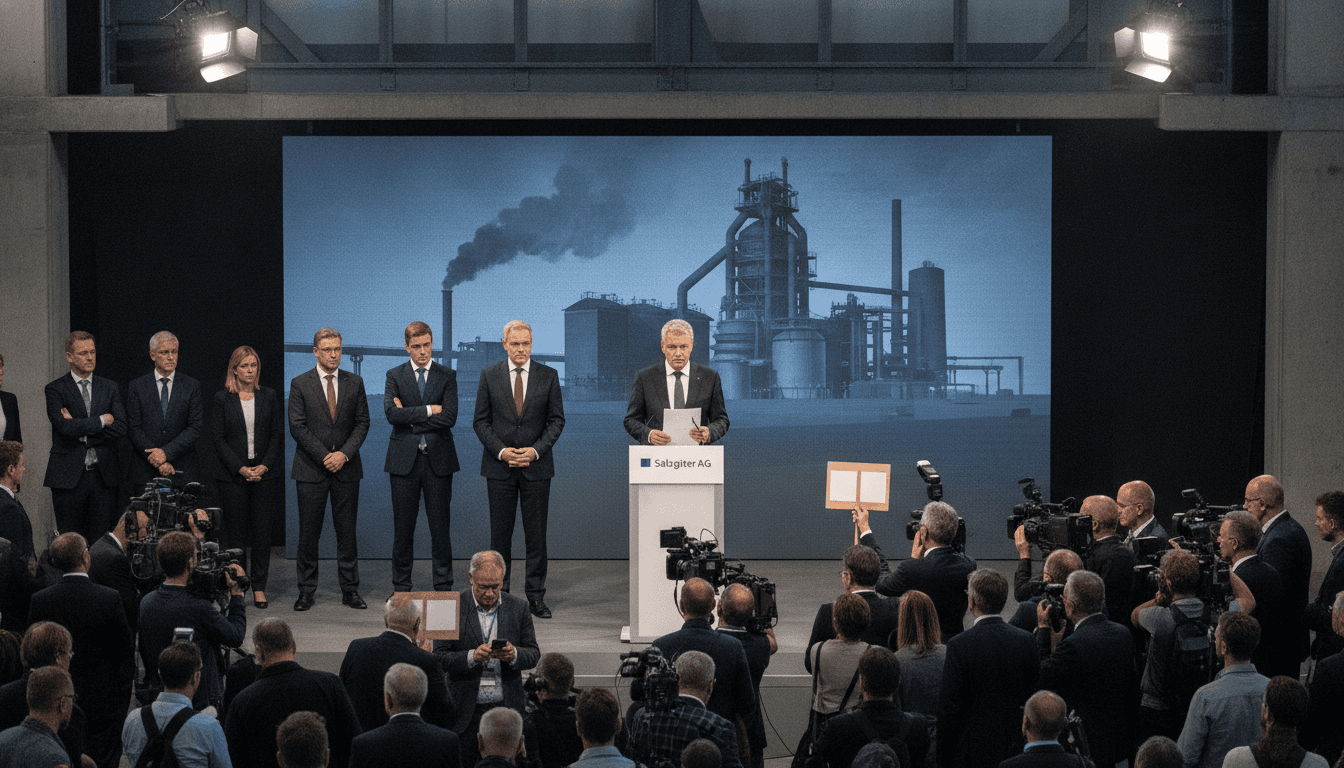
Salzgitter announced on July 23, 2026, that it will take over the second-largest steelworks in Germany’s Ruhr region, a move that comes despite the company reporting no profits since 2023. The acquisition places Salzgitter at the center of a major consolidation in German steelmaking and immediately raises questions about jobs, regional politics and competition. CEO Gunnar Groebler said the purchase is necessary to secure capacity and modernize production, even as the company plans significant workforce reductions.
Salzgitter completes acquisition of Ruhr steelworks
Salzgitter confirmed the transaction in a statement, saying the takeover strengthens its footprint in Germany’s traditional industrial heartland. Company officials described the plant as strategically important for supplying automotive and construction customers across Europe. The deal was finalized after negotiations with several stakeholders and marks one of the most consequential asset transfers in the domestic steel sector this year.
Deal comes despite years of losses at Salzgitter
Executives acknowledged that Salzgitter has not returned a profit since 2023, a fact that has intensified scrutiny of the purchase. Management argued that short-term financial performance does not undermine the longer-term need to secure production capacity and to invest in decarbonization. Financial analysts said the move increases balance-sheet pressure but could nonetheless deliver economies of scale if integration and modernization proceed as planned.
Gunnar Groebler defends the strategic rationale
Gunnar Groebler, Salzgitter’s chief executive, framed the takeover as a defensive and forward-looking step to protect domestic steel supply chains. He told employees and local officials that consolidation was necessary to ensure future investment in low-emission technologies at scale. Groebler said industry partners had expressed relief that the plant would remain active under a single corporate umbrella that can commit to the capital spending required for green transformation.
Planned 2,000 job cuts and local reaction
As part of the acquisition, Salzgitter announced plans to cut around 2,000 positions, a move the company tied to rationalizing overlapping functions and updating operations. Local unions and municipal leaders reacted with concern, warning of social impacts in communities already adjusting to economic change. Regional elected officials said they would press Salzgitter for comprehensive transition measures, including retraining programs and financial support for affected workers.
Industry consolidation raises competition concerns
The acquisition has reignited debate over consolidation in the German steel industry and its implications for competition and resilience. Some industry observers have warned that larger single-firm dominance could weaken the overall sector by reducing diversity of ownership and bargaining options. Others counter that consolidation may be the only viable way to marshal the resources needed for decarbonization and to secure European supply chains in the face of international competition.
Economic implications for the Ruhr region
Analysts say the deal will reshape supply relationships in the Ruhr, an area still defined by heavy industry despite decades of structural change. The plant’s integration into Salzgitter’s network could preserve certain production lines while accelerating shift toward higher-value, lower-emission products. Municipalities are preparing for a mixed economic impact: some suppliers may win new orders, while service and retail businesses near affected sites fear lower demand from displaced workers.
The takeover puts a spotlight on how Germany’s steel sector balances short-term financial constraints with long-term industrial strategy. Salzgitter’s leadership argues the acquisition is essential to maintain domestic capacity and to finance investments in cleaner production, while critics say the move concentrates risk if the company cannot restore profitability. The next months will test whether integration plans, workforce transition measures and planned modernization can deliver the stability and investment Salzgitter’s executives promise.
