
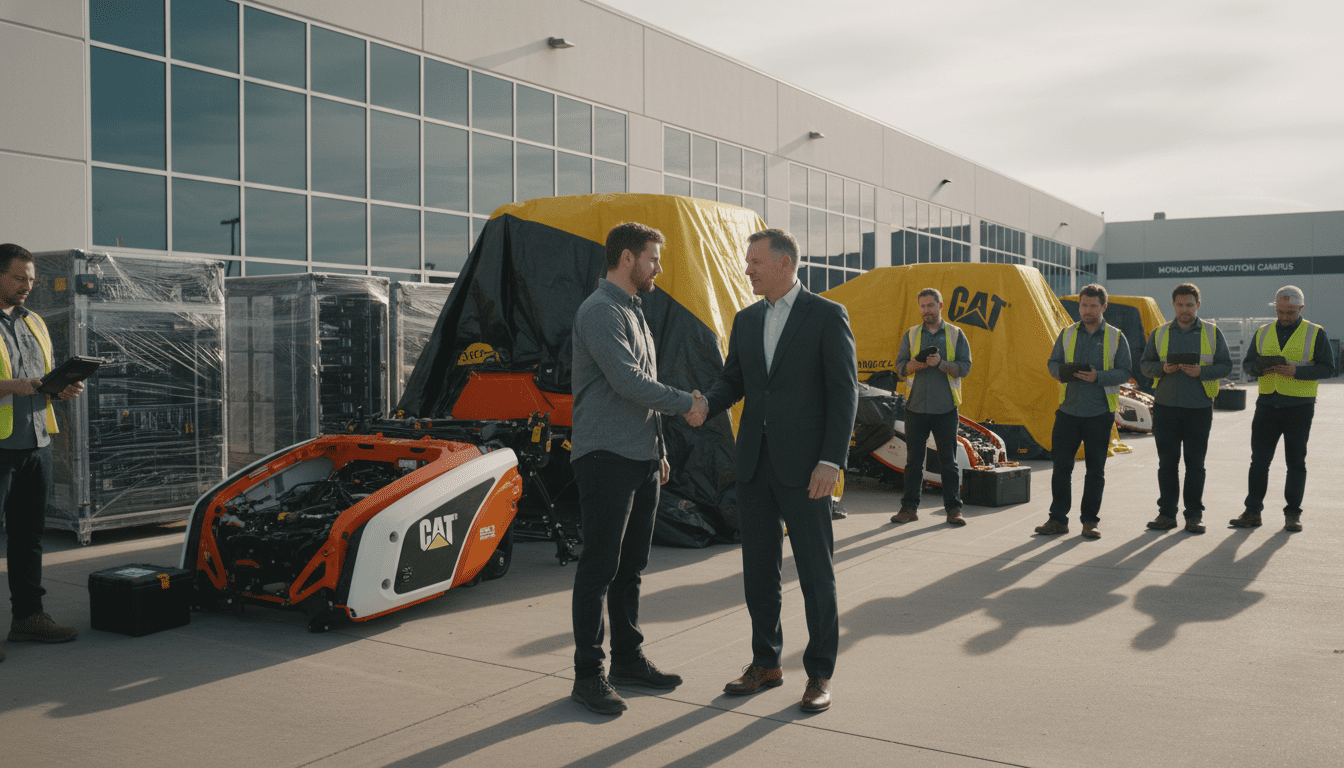
Caterpillar acquires Monarch Tractor assets in move that ends startup’s hardware push
Caterpillar buys Monarch Tractor assets after the startup’s pivot to software amid manufacturing and dealer lawsuits, reshaping autonomous agriculture.
Caterpillar acquires Monarch Tractor assets
Monarch Tractor’s assets have been acquired by Caterpillar, marking the end of the California startup’s attempt to pivot from hardware to a software‑first business. The transfer is documented in assignment filings with the United States Patent and Trademark Office and was first reported by Bloomberg. The deal follows months of financial strain, manufacturing disruption and legal challenges that left Monarch seeking new paths to sustainability.
Funding history and the software pivot
Monarch raised more than $200 million across multiple funding rounds since its 2018 founding by Carlo Mondavi, Praveen Penmetsa and former Tesla executive Mark Schwager. After initial production efforts, company leadership announced a shift toward licensing and software services, a strategic pivot that coincided with layoffs in early and later 2024. Company statements indicated the move aimed to monetize autonomous navigation technology rather than scale tractor production internally.
Manufacturing setbacks at Lordstown and Foxconn exit
Production plans faltered when Monarch’s manufacturing partner, Foxconn, sold the Lordstown, Ohio facility in August 2025, removing a key contract manufacturer. Foxconn had produced a limited number of Monarch tractors at the plant but ultimately redirected the factory when other vehicle partners faced bankruptcies. The loss of the Lordstown line left Monarch without a volume production partner at a critical moment in its transition.
Dealer lawsuits alleging defective autonomy
Multiple dealers who purchased Monarch tractors have filed federal lawsuits alleging the machines were defective and failed to perform autonomously as advertised. One dealer sued in September 2025, asserting the tractors could not operate reliably in the field; two additional dealer suits followed with similar claims. Monarch has disputed those allegations in court filings, while a filing by a former company defense lawyer indicated the firm entered into an assignment for the benefit of creditors as it struggled to meet obligations.
Leadership split and co‑founder departure
The company’s internal divisions became public after co‑founder Carlo Mondavi said he was pushed out following disagreements over the hardware versus software approach. Mondavi posted that he left more than a year earlier after pressing for hardware‑focused reliability fixes, which he said were blocked in favor of software remedies. CEO Praveen Penmetsa declined to comment beyond a company statement that the technology had been sold to a large global equipment manufacturer.
Asset sale and inventory disposition
Facing diminished manufacturing capacity and mounting obligations, Monarch auctioned most of its remaining tractors in early 2026. The liquidation of hardware inventory followed operational retrenchment and the company’s stated plan to restructure around software and licensing prior to the asset sale. The transaction with Caterpillar appears to consolidate intellectual property, patents and technology assets rather than preserve Monarch as an independent tractor manufacturer.
What Caterpillar stands to gain
For Caterpillar, acquiring Monarch’s assets provides access to autonomous‑agriculture technology, electric drivetrains and patent portfolios developed for driver‑optional tractors. The equipment giant has been expanding its capabilities in electrification and autonomy, and the Monarch assets could accelerate integration of precision navigation and software services across broader product lines. How Caterpillar will combine the acquired technology with existing dealer networks and manufacturing capacity remains to be clarified.
Industry implications for autonomous agriculture
The Monarch Tractor acquisition highlights the challenges startups face when attempting to bridge hardware manufacturing and complex autonomy software in agriculture. Production partnerships, supply chain stability and field reliability are critical when technology claims hinge on autonomous performance under varied crop and terrain conditions. The consolidation under an established OEM may shift development priorities toward robust, serviceable solutions that can be deployed at scale through existing aftersales channels.
The acquisition closes a chapter for a well‑funded startup that sought to transform labor and emissions profiles in specialty farming, while underscoring the capital and operational demands of bringing autonomous agricultural machines to market.
