
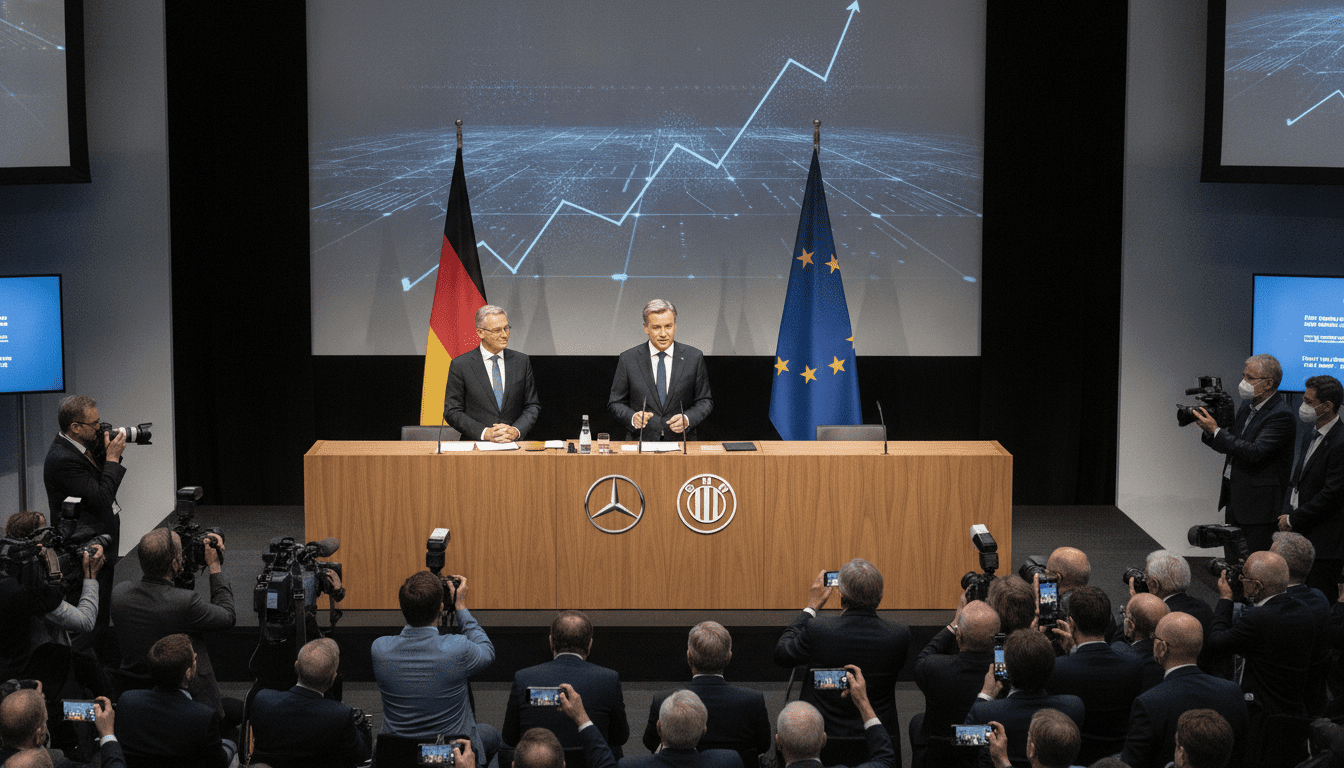
German premium automakers say they have closed the EV battery gap
Mercedes and BMW executives say German premium automakers have narrowed the electric-vehicle battery lead held by rivals, calling the shift a “new era” in technology and design.
German premium automakers are signaling a decisive push into next-generation battery and vehicle technology, with top executives framing recent developments as evidence the country’s high-end carmakers are catching up. Mercedes-Benz CEO Ola Källenius described the moment as “a new era,” and BMW’s newly installed boss Milan Nedeljkovic spoke of “technologically and emotionally new standards,” comments that underscore a strategic pivot toward battery innovation. The statements reflect rising confidence at the top of Germany’s luxury auto industry as it confronts intense competition from U.S. and Chinese rivals in electric vehicles.
Executive declarations and industry tone
Källenius and Nedeljkovic used sharply optimistic language to present recent advances as more than incremental improvements. Their remarks were aimed at investors, suppliers and consumers who have watched battery technology become central to market leadership. The tone marks a departure from earlier caution and suggests German premium automakers are ready to stake their reputations on rapid technological change.
Both executives tied technical progress to brand identity, arguing that performance and emotional appeal can coexist with electrification. That framing signals an attempt to shift the public narrative from merely catching up to setting new standards in the luxury EV segment. Stakeholders will be watching whether these declarations translate into measurable gains in product performance and customer perception.
Battery innovation at the core of strategy
Battery chemistry, cell architecture and thermal management are now front and center in the development roadmaps of German premium automakers. Improvements in energy density and fast-charging capability were cited internally as priorities that could close the performance gap with established EV leaders. Companies are also focusing on software that manages battery life and optimizes range in real-world conditions.
Manufacturers say incremental improvements in cells must be matched by system-level advances in vehicle integration, from cooling to weight reduction. That holistic approach is intended to deliver tangible benefits—longer range, shorter charge times and better durability—that customers will recognize. Analysts note that clear technical milestones will be essential for converting executive optimism into market momentum.
Supply chain and industrial scaling
Scaling cell production and securing raw materials remain critical hurdles for global automakers, and German premium automakers are no exception. Efforts to diversify supply chains, invest in local cell production and develop long-term supplier partnerships have accelerated. Those moves aim to reduce exposure to price volatility and geopolitical risk in battery materials markets.
Automakers are also evaluating recycling and second-life strategies to lower dependency on new raw materials and to meet tightening regulatory standards. Industrial-scale production will require coordinated investment across suppliers, assembly plants and logistics networks, and companies face a narrow window to align those pieces while demand for EVs continues to grow. Execution at this stage will determine whether the claimed technological gains can be manufactured at scale and cost-effectively.
Design and “emotional” standards in EVs
Beyond raw performance metrics, executives emphasize that electric models must deliver on the emotional attributes long associated with German luxury cars. That includes driving dynamics, interior craftsmanship and intuitive tech that enhances the user experience. BMW’s reference to “emotional” standards signals a deliberate attempt to marry cutting-edge battery tech with traditional brand strengths.
Interior architecture, sound design and user interfaces are being rethought to make EVs feel distinct from their combustion-engine predecessors. For premium buyers, those sensory and experiential elements can be decisive, and automakers are investing in them alongside battery systems. The result sought is an EV that impresses both technically and emotionally.
Market implications and competitive dynamics
If German premium automakers convert technical advances into superior products, the competitive map of the luxury EV market could shift. Stronger offerings from traditional premium brands would intensify pressure on U.S. and Chinese challengers and give consumers more choice in the high end. For dealers and financiers, the transition also raises questions about aftersales service, resale values and charging infrastructure needs.
Investors will scrutinize product launches, real-world range figures and production ramp rates as indicators of progress. Meanwhile, regulators and policymakers remain focused on supply chains, environmental impact and industrial policy, all of which will shape how quickly and sustainably the industry can scale. The interplay among these factors will determine whether the optimistic rhetoric from Stuttgart and Munich produces sustained competitive advantage.
German premium automakers have articulated a clear ambition to lead the next phase of automotive innovation, blending technical battery advances with the brand experiences that define luxury cars. Whether that vision translates into tangible market gains will depend on execution across engineering, manufacturing and customer-facing design, and on the industry’s ability to manage complex supply chain and regulatory challenges.
