
KNDS IPO announced as Germany and France to hold 80% ahead of dual Paris and Frankfurt listing
Germany and France to hold 80% of KNDS ahead of KNDS IPO, with a dual listing in Paris and Frankfurt; valuation €15–18bn and IPO expected before July 13.
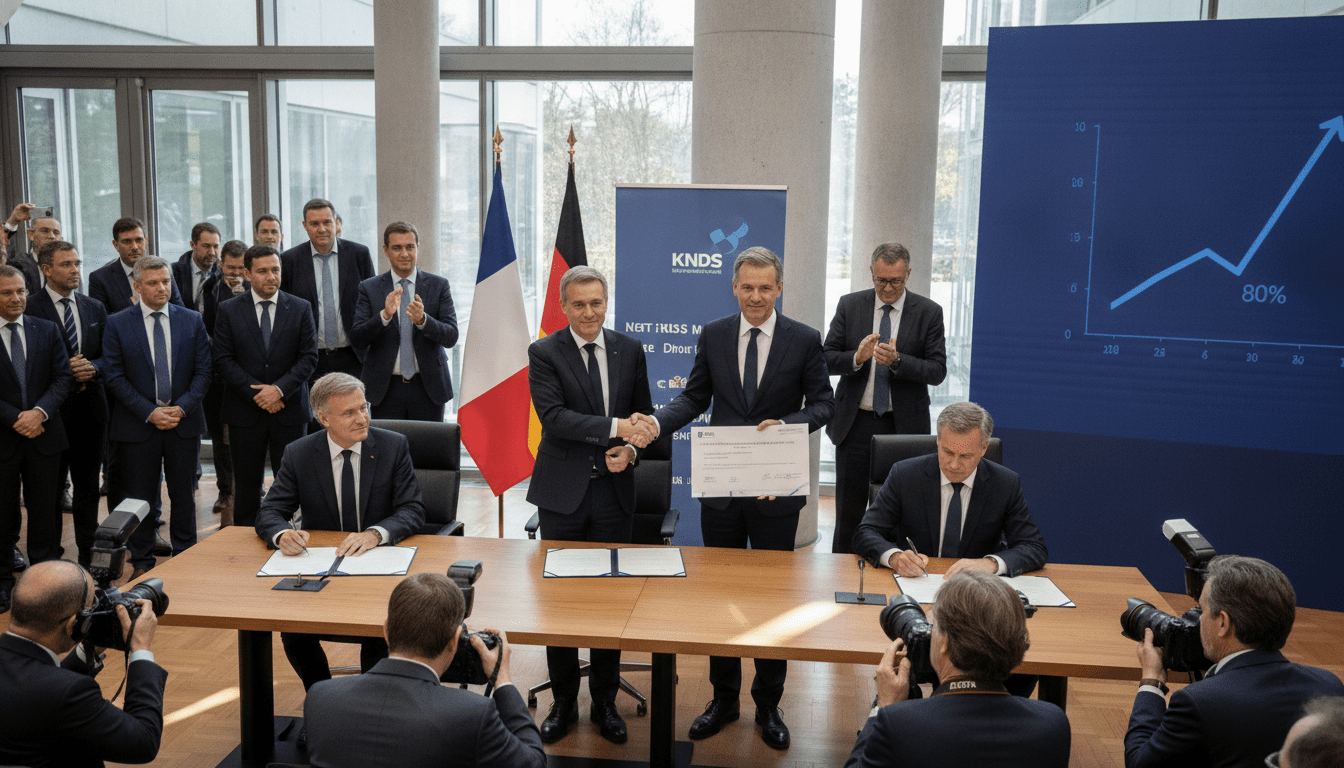
The KNDS IPO was announced on Wednesday as the Franco‑German defence group confirmed plans for a dual listing in Paris and Frankfurt, with Germany and France agreeing to control 80 percent of the company. The move will bring roughly 20 percent of shares to market, drawn equally from the two current owners, and follows a government deal that reshapes ownership of one of Europe’s largest defence manufacturers. The listing is being pitched as a way to secure industrial bases while unlocking capital for growth at a company that builds the Leopard 2 tank, the Boxer transport vehicle and the RCH artillery system.
Governments Agree to 80% Stake
The two governments have negotiated a transaction that will leave public authorities holding the vast majority of KNDS after the IPO. Under the announced plan, France will retain a 40 percent stake and the German federal government will assume a 40 percent stake, together representing 80 percent of the business.
The arrangement reflects a negotiated split in which the Wegmann family, the other historic German shareholder, will sell its holding to the state and into the public offering, enabling a joint Franco‑German ownership framework intended to safeguard strategic capabilities.
Offer Structure and Dual Listing
Only one fifth of KNDS’s shares will be placed with investors in the initial public offering, with 10 percent coming from each owner. The company confirmed it will seek simultaneous listings on the Paris and Frankfurt stock exchanges to attract both French and German capital and to position the firm as a major listed defence name in Europe.
Investment bankers have signalled a valuation range for KNDS at roughly €15–18 billion, a figure that will guide pricing talks ahead of the roadshow and bookbuilding. The dual listing is intended to broaden the investor base and provide liquidity in two of Europe’s largest markets.
Why Germany is Buying In
Berlin’s decision to take a direct stake stems from the defence group’s significance to German security and industrial policy. KNDS supplies core equipment to the Bundeswehr, including the Leopard 2 main battle tank and other armored systems seen as critical to national defence planning.
Officials have said the German participation aims to preserve production sites in Germany and to secure governmental influence over future strategic decisions at the company. The move also prevents a single foreign state from becoming the dominant external owner of technologies central to Germany’s armed forces.
KNDS Financial Picture and Valuation
KNDS reported revenues of about €4.4 billion in the most recent year and is targeting midterm annual sales of up to €12 billion as it scales production and pursues export opportunities. The company also carries a substantial order backlog of approximately €33 billion, providing visibility on future revenue streams and supporting the valuation range cited by advisers.
Those figures underpin investor interest but also introduce questions about delivery timelines and execution risks, particularly as the business seeks to ramp up production while managing export controls and long procurement cycles common in the defence sector.
Regulatory and Parliamentary Hurdles
The German investment remains subject to approval by the Bundestag’s budget committee, which must clear the federal purchase of shares financed from public resources. Reuters reporting cited a committee decision expected imminently, with earlier coverage indicating differing timelines for the vote.
French authorities will likewise need to finalise their internal approvals as steps are taken to contribute shares to the market. Both governments face scrutiny over the use of public funds and the implications of state ownership for competition and corporate governance.
Market Timing and Next Steps
Company statements indicate the IPO is targeted to take place before the summer market break, with July 13 named as a practical latest date because it precedes the French markets’ holiday period. That timetable leaves a compressed window for regulatory sign‑offs, pricing, and investor marketing.
If approvals proceed as planned, banks will move quickly into bookbuilding and allocation phases, setting a final price based on investor demand. Markets will watch closely for any change in the valuation range and for signals about the long‑term ownership structure after the minority free float is established.
The KNDS IPO marks a rare instance of coordinated state action to both preserve national industrial capacity and open a major defence group to public investors, balancing strategic policy goals with capital markets timelines. The coming weeks will determine whether the transaction clears parliamentary hurdles and how investors value a company positioned at the intersection of national security and European defence industrial strategy.
