
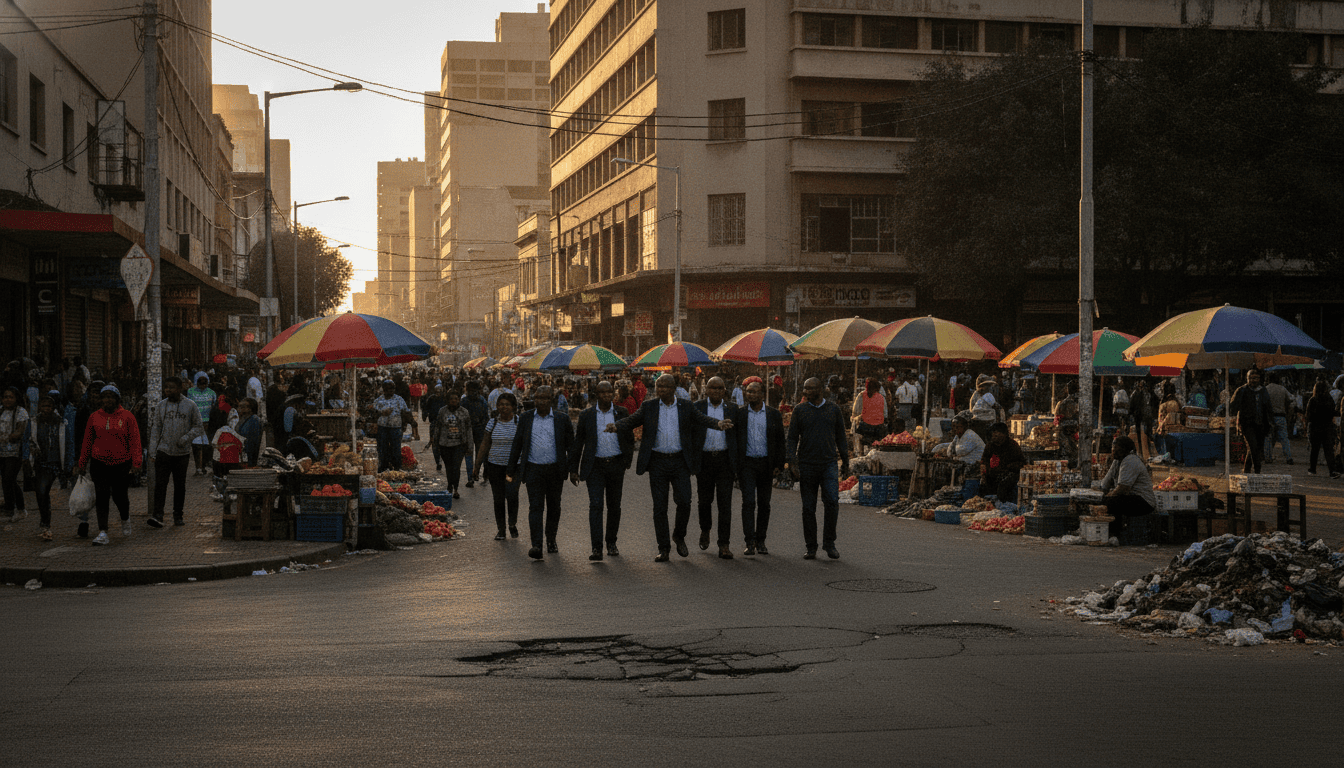
Johannesburg city centre revival driven by markets, books and fashion
Johannesburg city centre revival driven by street markets, bookstores and designers revitalizes commerce despite crumbling infrastructure and migration tensions.
The once-neglected heart of Johannesburg is showing signs of renewal as street markets, independent bookshops and small fashion ateliers rekindle economic activity in the central business district. This Johannesburg city centre revival is powered less by corporate towers and more by thousands of informal traders, immigrant entrepreneurs and local cultural initiatives. At the same time, failing infrastructure and political strains cast a long shadow over efforts to sustain a broad-based recovery.
Markets and informal trade power the local economy
Street markets clustered around the former Jeppe Street corridor form the beating heart of the downtown economy, where sellers hawk everything from electronics to clothing and household goods. Many vendors operate within complex supply chains that start in distant wholesale malls and end in neighboring countries, creating livelihoods for large extended networks. Observers calculate that the aggregate turnover of these traders can rival, and in some estimates surpass, the revenue of major suburban malls.
Historic buildings repurposed as micro-enterprise hubs
Grand old commercial blocks—marble lobbies, stained-glass windows and wooden lift doors intact—now conceal rows of compact retail units stacked with merchandise. These small “box” shops host a variety of micro-businesses and brokers who bridge imported goods to street-level demand. The adaptive reuse of heritage structures has broadened the market footprint while keeping foot traffic inside the central core.
Booksellers and a literature district emerge underground
A growing cluster of secondhand book traders and a reinvigorated city library have helped shape a nascent literature district within a one-kilometre radius around a Marshalltown bookshop. Underground stacks and storage vaults reportedly hold millions of volumes, from school textbooks to rare 17th-century Bibles, attracting readers and researchers. Local promoters have mapped vendors, organized walking tours and linked storefronts into a loose cultural circuit that brings visitors into parts of the city they might otherwise avoid.
Fashion ateliers and rooftop studios attract new customers
Tailors, textile buyers and designers are remaking fashion into a downtown attraction, offering bespoke garments alongside curated urban experiences. Designers lead clients on fabric-buying excursions, transform factory-style floors into ateliers and stage rooftop photo shoots that double as promotional events. These activities are spawning small supply chains and related services, from pattern cutters to photographers, and promise to anchor higher-value jobs in the district.
Infrastructure failures and governance challenges hinder progress
Despite entrepreneurial energy, Johannesburg’s recovery is constrained by chronic service delivery problems, rising municipal debt and intermittent governance crises. Longstanding gaps in water, power and traffic management magnify the daily cost of doing business and undermine public confidence. Recent federal warnings about the city’s financial health, alongside fluctuating mayoral leadership, have intensified calls for reforms before investment can scale.
Social tensions and security concerns affect participation
The city’s economic fabric is further strained by rising anti-immigrant sentiment and periodic enforcement sweeps that target undocumented traders, prompting many vendors and customers to avoid the centre. High-profile incidents involving informal settlements and fire safety have also heightened anxieties about safety and property rights. At the same time, grassroots initiatives and cohort-driven projects—led largely by younger residents—are creating localized solutions that aim to restore trust and footfall.
Community activists are filling gaps where municipal services fall short, repairing potholes, restoring lighting and managing pop-up social programs that support small enterprises. Cultural projects such as communal dinners, culinary gatherings and evening markets are reviving public life and providing platforms for cross-cultural exchange. These efforts demonstrate that revitalization will likely be incremental and community-led rather than top-down.
The downtown’s revival remains a work in progress, dependent on whether municipal reform, private investment and civic energy can align. Entrepreneurs, booksellers and designers have demonstrated the economic potential of a rehabilitated core, but broad recovery requires consistent public services and security assurances. For now, pockets of vibrancy coexist with structural decay, offering both reason for cautious optimism and a clear reminder of the long road ahead.
