
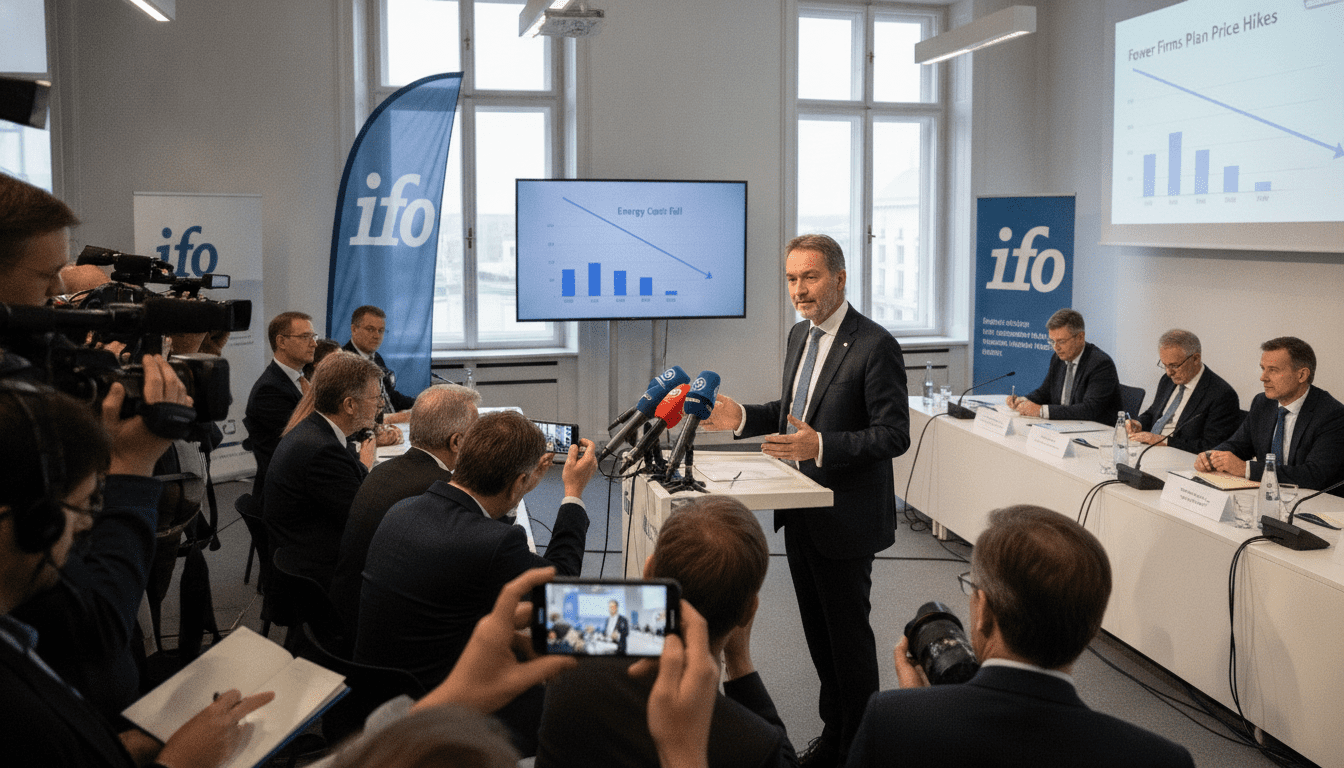
ifo price expectations drop to 26.5 in June as energy costs ease
ifo price expectations fall to 26.5 in June as energy costs decline; firms report fewer planned hikes, though food retailers continue to signal elevated price pressure.
The ifo price expectations indicator fell to 26.5 points in June from 30.0 in May, signaling that fewer German companies plan to raise their prices in the near term. The decline came as companies cited a lower energy price level, a development linked by some economists to easing supply concerns and diplomatic progress related to the Iran conflict. Despite the pullback, the reading remains well above the 2023–25 average, indicating that inflationary pressure has not disappeared.
Major slide in the headline indicator
The headline ifo Preiserwartungen shifted down by 3.5 points month‑on‑month, moving from a relatively high reading to a still‑positive level. Under the ifo measure, a positive score means more firms expect to lift prices than to cut them, and June’s 26.5 point reading continues to signal net planned increases. The figure is nevertheless noticeably above the three‑year mean of 18.3 points, underscoring that firms still see room to raise prices despite the recent easing.
Energy prices and international developments cited as drivers
Companies responding to the survey pointed to a lower energy price environment as a key reason for reduced plans to increase prices. Analysts and some respondents linked that decline to receding oil and gas market tensions and to reports of progress in diplomatic talks surrounding the Iran conflict. Lower input cost expectations have apparently improved firms’ short‑term outlooks, but firms also warned that the pass‑through into consumer prices will not be immediate.
Largest declines in energy‑intensive sectors
The most pronounced fall in the index occurred among energy‑intensive companies, where the indicator slid from 41.2 to 30.2 points. That drop reflects a sharp moderation in planned price increases within industries that face the biggest exposure to energy costs, including chemicals, metals and basic materials. Even after the reduction, the energy‑intensive sector’s reading remains elevated relative to pre‑pandemic norms, suggesting producers still expect to recover higher costs through prices where possible.
Retail and services also report lower pressure, food stays high
Non‑energy‑intensive firms saw the indicator ease from 30.3 to 27.1 points, with services, trade and manufacturing likewise signalling fewer planned hikes. The largest persistent pressure was in the food supply chain: the food retail indicator, while down from 55.3 in May to 48.5 in June, remains the highest among the surveyed sectors. That divergence suggests consumers may continue to face above‑average price rises at supermarkets even as other categories cool.
What the ifo Preiserwartungen index measures
The ifo indicator aggregates the net share of firms planning to raise prices, producing values that range from -100 to +100. A reading of +100 would mean all respondents intend to increase prices, while -100 would indicate universal plans to cut them; the magnitude of planned increases is not measured. Economists use shifts in the index as an early signal of potential movements in producer and consumer inflation, since firms’ pricing intentions can presage actual price adjustments.
Outlook from ifo and implications for inflation
ifo’s head of conjuncture, Timo Wollmershäuser, said the lower energy price level appears to have made firms more confident about the economic outlook, but he warned that producer and consumer prices are still likely to rise in the months ahead. The institute notes that a single monthly decline does not erase cumulative price pressures built up over the last two years, and that sectoral differences mean the inflation experience will remain uneven. Policymakers and markets will therefore weigh the easing captured in June against persistent hotspots such as food retail and the pace of wage growth.
The June survey illustrates a nuanced picture: easing input costs have dampened the immediate intent to raise prices, particularly among energy‑heavy industries, but broad‑based inflationary forces have not been eliminated. Firms and households alike should expect continued price adjustments, even if the frequency and scale of future increases moderate relative to recent peaks.
