
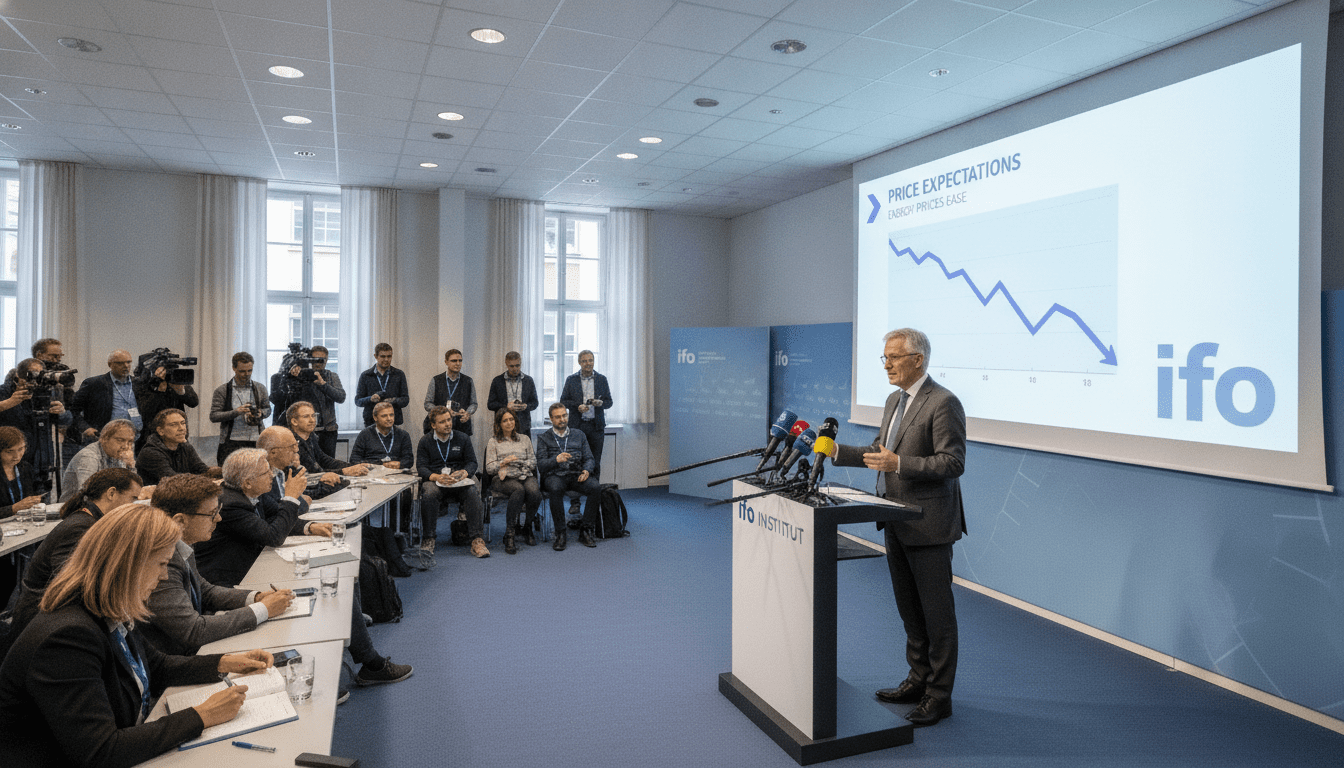
ifo price expectations ease in June 2026 as energy costs fall, ifo survey shows
ifo price expectations fall to 26.5 in June 2026 as energy costs ease; survey shows fewer firms plan price hikes, but ifo warns prices may still rise.
The ifo price expectations indicator fell to 26.5 points in June 2026, down from 30.0 in May 2026, signaling that fewer German companies plan to raise prices in the near term. The decline, the ifo Institute says, is linked to lower energy prices and developments in peace negotiations related to the Iran conflict, which appear to have eased input-cost pressures for firms. While companies report greater confidence about the economic outlook, ifo analysts caution that producer and consumer prices are still likely to rise in coming months.
Survey headline and month-on-month movement
The ifo Institute’s monthly survey registered a fall in the headline price expectations figure from 30.0 points in May 2026 to 26.5 points in June 2026. That movement reflects a moderation in the share of firms intending to pass higher costs on to customers, according to the institute’s published data. Despite the one-month reduction, the June reading remains elevated relative to the 2023–2025 average of 18.3 points, underlining persistent upward pressure on pricing.
Energy prices and geopolitical context cited by ifo
ifo researchers pointed to easing energy costs as a principal factor behind the moderated price expectations reported in June 2026. The institute noted that lower wholesale energy prices have reduced immediate cost pressures for many manufacturers and service providers. Analysts also referenced tentative progress in peace negotiations connected to the Iran conflict, suggesting that reduced risk premia for energy markets contributed to the improved sentiment among firms.
Comments from ifo’s economic team
Timo Wollmershäuser, head of ifo’s business cycle department, said the lower energy-price level appears to have made companies more confident about the economic situation. He nevertheless warned that confidence does not automatically translate into stable consumer prices, and the institute expects producer and consumer prices to continue their upward trajectory over the coming months. The ifo’s remarks underline a distinction between near-term business sentiment and the more persistent drivers of inflation.
Sectoral differences and the energy-intensive industries
The decline in price expectations was especially pronounced among energy-intensive companies, where the indicator dropped from 41.2 points in May 2026 to 30.2 points in June 2026. That larger swing reflects a higher sensitivity in those sectors to movements in energy costs and to supply-chain uncertainties. Even after the decline, expectations in energy-intensive industries remain well above the three-year average, indicating that firms still expect to face cost pressures relative to earlier periods.
Implications for inflation dynamics and corporate pricing
Economists say the ifo price expectations fall may translate into a slower pace of price increases for some goods and services, particularly where energy is a major input. At the same time, the ifo Institute’s projection that producer and consumer prices will continue rising suggests that inflationary momentum has not been fully arrested. The persistence of above-average expectations points to ongoing risks from wage settlements, supply constraints and residual pass-through from earlier commodity price spikes.
What businesses and consumers should monitor next
Firms and households should watch energy markets and developments in the geopolitical situation for signals of renewed cost pressure, analysts advise. Central bank decisions, wage negotiations and global supply-chain shifts will also influence how quickly price pressures re-emerge or dissipate. For now, the ifo survey indicates a modest easing in planned price increases, but the overall picture remains one of heightened vigilance among businesses.
The ifo Institute’s June 2026 reading offers a snapshot of corporate pricing plans amid shifting energy costs and geopolitical developments, showing moderated intentions to raise prices while leaving open the prospect of continued inflationary pressure.
