
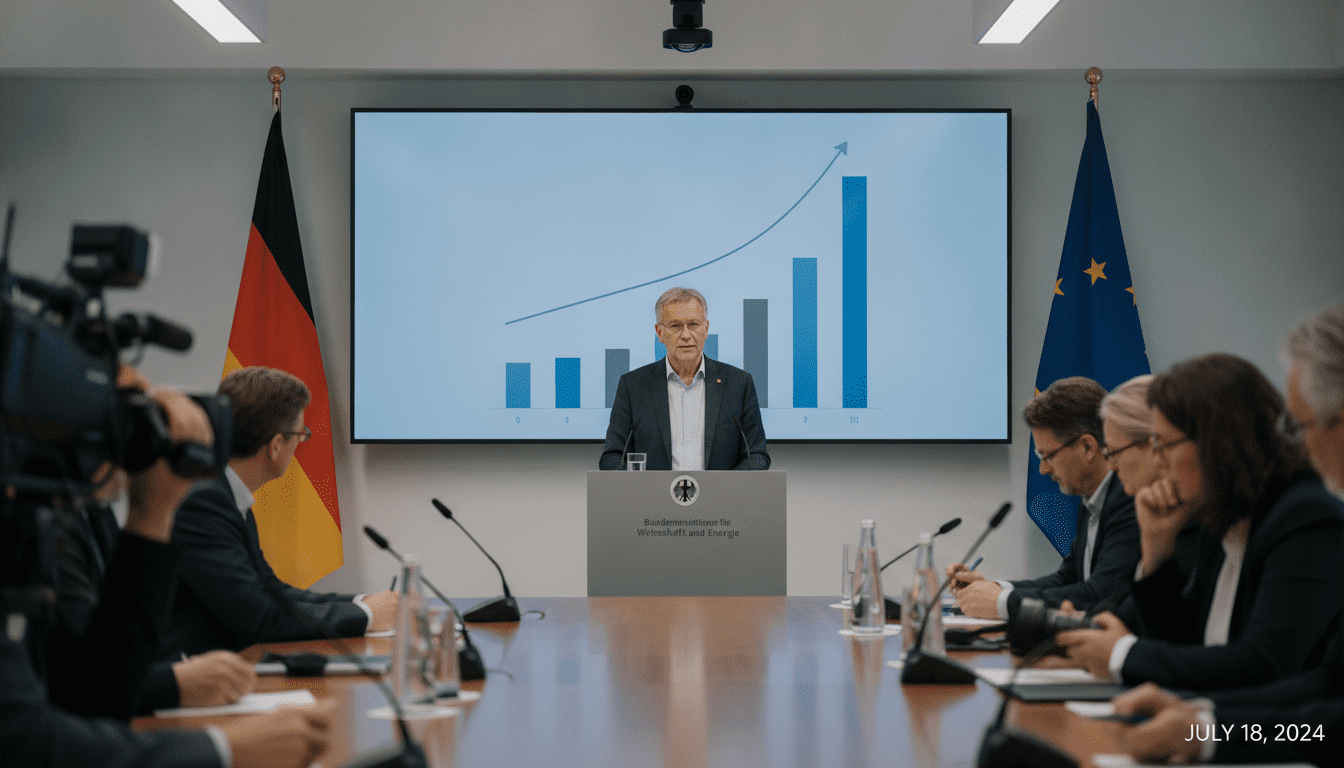
German consumer confidence edges up but remains far below pre‑crisis levels
GfK and NIM report a slight rise in German consumer confidence to -29.2 for July, but income and purchase intentions stay suppressed amid geopolitical uncertainty.
Germany’s consumer confidence indicator rose modestly for July, climbing 0.5 points to -29.2, according to data released by the GfK and the Nuremberg Institute for Market Decisions (NIM). The improvement reflects a small easing of worries after recent falls in oil prices, yet researchers warn the mood remains weak compared with the period before the Iran conflict. Analysts say the overall picture is one of tentative stabilization rather than recovery.
Income expectations show only slight improvement
Respondents reported only a marginal rise in expectations for their personal income, with the relevant indicator ticking up 0.8 points to -12.2. That means consumers still expect their financial situation to deteriorate over the coming months compared with the pre‑conflict baseline. NIM analyst Rolf Bürkl noted that while the uptick is measurable, it does not signal a return to previously observed confidence levels.
Household worries about future purchasing power remain a constraining factor for domestic demand. The limited gain in income outlook suggests many households remain cautious about spending beyond essentials. Economists point to lingering uncertainty about energy prices and broader geopolitical risks as reasons households are holding back.
Willingness to buy big‑ticket items eases
The barometer for willingness to make major purchases — such as automobiles and consumer electronics — slipped 0.2 points to -13.4 in June. That drop indicates fewer households are prepared to commit to high‑value purchases despite small improvements in some other sentiment measures. Retailers and manufacturers said the trend tempers hopes for a quick rebound in durable goods sales.
Falling intent to buy big‑ticket items typically feeds through to slower investment in sectors dependent on consumer finance. The trend also influences inventory planning and promotional strategies as firms adjust to weaker demand. Market participants will watch whether the small shift represents a temporary blip or the start of a more persistent weakness.
Economic expectations brighten modestly
Consumer assessments of the national economy improved by 2.5 points in June, moving the economic‑expectations indicator to -8.7. Although the majority of households still foresee a worsening economy over the next twelve months, the rise suggests pessimism is moderating. The change is being interpreted as a sign that consumers detect fewer downside risks than in earlier weeks.
Analysts caution that the improvement is relative and comes from a low base, so it should not be read as a reversal of trend. The movement in expectations mirrors shifts in commodity markets and headline news rather than clear domestic economic recovery. Continued monitoring will be necessary to determine whether expectations translate into stronger spending.
Price expectations decline as fuel relief fades
Consumers’ expectations for price developments over the next year fell by 2.5 points to -2.9, signaling lower anxiety about inflation in the near term. The researchers attribute part of that decline to the temporary effect of a fuel price rebate that had eased cost pressures at the pump and eased immediate inflation concerns. With the rebate ending at the close of the month, the drop in price worries may prove short‑lived.
A softer outlook for inflation can support confidence, but only if consumers believe the change is durable. Policymakers and market watchers will pay attention to whether core inflation measures also ease or if relief is confined to energy and temporarily subsidized items. A reacceleration of prices could quickly reverse the recent improvement in sentiment.
Geopolitical shocks continue to weigh on households
The GfK and NIM researchers emphasize that sentiment has not returned to pre‑crisis levels, citing the Iran conflict as a persistent drag on optimism. Volatility in global energy markets tied to geopolitical developments has influenced both inflation expectations and broader confidence. Even as oil prices have eased recently, the risk of renewed price spikes keeps many consumers cautious.
The interaction of external shocks and domestic economic conditions creates a fragile backdrop for spending. Households appear prepared to wait for clearer signals on stability before increasing discretionary purchases. Economists say that absent a sustained drop in uncertainty, policy measures or stronger wage dynamics will be needed to underpin a marked recovery in consumer sentiment.
Final paragraph: Observers say the latest GfK and NIM readings point to a slow, uneven path for German consumer confidence, where modest technical improvements coexist with deep‑seated caution among households, leaving the economy sensitive to further shocks.
