
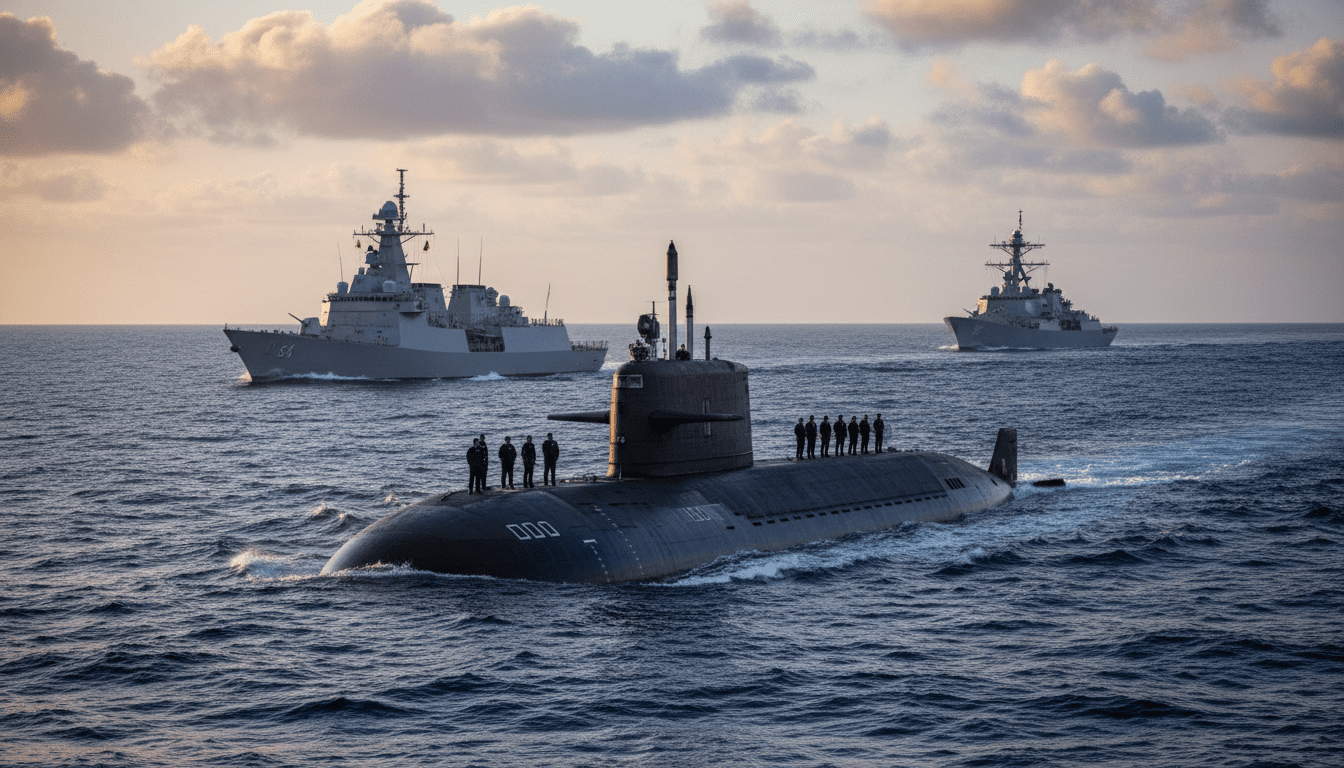
Germany offers minehunters and surveillance for multinational maritime security mission
Germany commits minehunters, a supply ship and aerial reconnaissance to a maritime security mission; France and Italy also signalled support after Paris consultations.
Germany said it is prepared to contribute mine-clearing and maritime surveillance assets to a multinational maritime security mission, Chancellor Merz announced, and indicated Berlin would welcome U.S. participation if possible. The German offer, described by government sources, includes minehunters, a logistics vessel and aerial reconnaissance capabilities to help secure free navigation. Leaders from France and Italy joined Berlin in signalling possible contributions during broad consultations held in Paris, where dozens of global partners joined by video link.
Germany’s proposed contribution
Germany has told partners it can provide mine countermeasure vessels, a supply ship and air assets to support a maritime security mission.
Officials framed the offer as focused on mine clearance and maritime domain awareness, two tasks seen as essential to keeping shipping lanes open.
Berlin emphasised that its participation would be contingent on political mandates and operational coordination with other navies, and it flagged the desirability of allied involvement.
Chancellor Merz said a U.S. role “if possible” would be welcome, reflecting Berlin’s preference for broad, credible coalition backing.
France and Italy signal support
French President Macron said France could mobilise elements of its already substantial regional naval presence to the operation, underscoring Paris’s readiness to act.
Italy’s Prime Minister Giorgia Meloni similarly indicated that Italian naval units could be made available, signalling a willingness among key European governments to step up.
The commitments from Paris and Rome framed the potential mission as primarily European-led but open to wider international involvement.
Together with Germany, France and Italy represent the industrial and military core that convened face-to-face in Paris to hammer out initial options.
Scope of the Paris consultations
The Paris meetings brought together leading European industrial nations directly at the table, with additional partners participating remotely.
Germany, France, the United Kingdom and Italy were present in person, while China, India and more than 40 other states from Asia, Africa and Latin America joined by videolink.
Organisers described the talks as exploratory and aimed at defining capabilities, legal frameworks and command arrangements for a coalition operation.
The consultations did not produce a final mandate but were intended to build a shared understanding of needs and contributions among a broad set of states.
Notable absences from the talks
Key wartime parties to the broader regional crisis — the United States, Israel and Iran — were not represented at the Paris discussions.
Their absence underscores diplomatic and geopolitical constraints that could shape the scope and authority of any multinational maritime security mission.
Western and non-Western partners at the meeting expressed a desire to avoid operational steps that might be interpreted as taking sides in the larger conflict.
That caution is likely to influence decisions on rules of engagement, legal cover and the political framing of mine clearance and surveillance activities.
Operational focus: mine clearance and maritime surveillance
Mine countermeasure vessels are designed to detect, classify and neutralise naval mines, a capability the German offer explicitly highlighted.
A logistic or supply ship would support prolonged operations at sea, providing maintenance, fuel and supplies to smaller specialised units deployed for mine clearance.
Aerial reconnaissance can extend situational awareness beyond the horizon, helping to identify threats, monitor shipping traffic and coordinate clearance efforts.
Combined, these capabilities aim to reduce navigational risk and restore confidence among commercial shippers in affected waterways.
Challenges and coordination needs
Coordinating a multinational maritime security mission will require clear legal authority, interoperable communication systems and accepted command arrangements.
Governments at the Paris talks acknowledged logistical hurdles, including basing, airspace access, and the protection of personnel engaged in mine clearance.
Political consensus will also be necessary to define the mission’s mandate so participating navies can act without ambiguity.
The involvement of non-Western partners by videolink at the consultations suggests organisers seek a wide diplomatic base to legitimise operations and share costs and responsibilities.
The deliberations in Paris mark the start of a complex process to build a coalition capable of addressing the immediate threats to commercial shipping and to sustain operations over time.
Officials indicated further technical planning and diplomatic consultations will follow as states consider formal commitments and tasking for any maritime security mission.
