
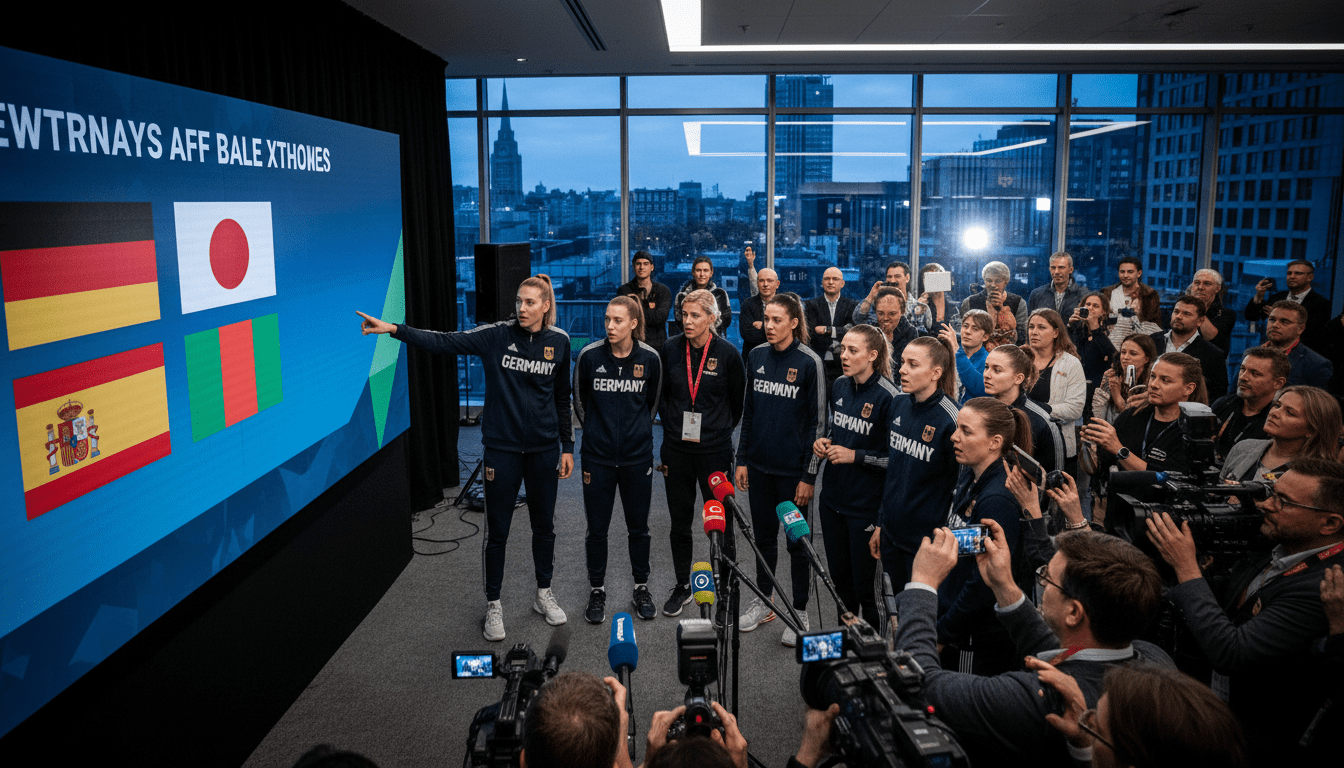
Germany women’s basketball World Cup draw pairs hosts with Spain, Japan and Mali
Germany women’s basketball World Cup draw pairs hosts with Spain, Japan and Mali for Sept 4–13 in Berlin; Nowitzki honored as ticket demand surges further.
The Germany women’s basketball World Cup draw placed the host nation in a group with Spain, Japan and Mali for the tournament running Sept. 4–13 in Berlin. The draw, staged at the Kraftwerk cultural venue, confirmed that group-stage games will be held at the Berlin Arena and the Max-Schmeling-Halle. Bundestrainer Olaf Lange’s squad, playing its first World Cup in 28 years, will aim to build on home-court momentum against established international opponents. Tournament organizers and national officials said the draw sets a compelling opening phase for fans in the German capital.
Group draw sets Germany against Spain, Japan and Mali
The composition of Group C pairs Germany with Spain, a perennial European contender, and Japan, a team known for discipline and pace at global tournaments. Mali completes the quartet as a rising African program that has produced several impactful performances on the international stage. The balance of styles — Spain’s structure, Japan’s speed and Mali’s physicality — presents a varied set of challenges for the German team in the preliminary round.
The draw ceremony featured prominent sporting figures who pulled the lots, including Australian basketball great Lauren Jackson, former German handball star Stefan Kretzschmar and German breakdance champion Jilou. Officials emphasized that the grouping offers both a realistic path to the knockout stages and a chance for the hosts to test themselves early against top opposition. With home support expected to be strong, Germany will look to secure a top finish in the pool.
Dates, venues and logistics for the Berlin-hosted tournament
Matches are scheduled across a ten-day window from Sept. 4 to Sept. 13, concentrated in two Berlin venues with capacity to host both group matches and the event’s later stages. The Berlin Arena will stage a significant portion of the group and knockout fixtures, while the Max-Schmeling-Halle will host additional group encounters and serve as a hub for the tournament’s fan activities. Organizers said transport links and venue operations have been coordinated to handle international teams and visitors.
Local authorities and the German Basketball Federation have highlighted fan infrastructure and broadcast readiness as priorities in the run-up to the event. Preparations include enhanced fan zones and community outreach to maximize attendance for Germany’s matches. The choice of the two arenas reflects a strategy to spread games across the city while concentrating marquee matchups for the final weekend.
Historic squad depth and WNBA presence elevate expectations
Germany arrives in Berlin with the country’s deepest roster selection in decades, featuring five players currently active in the WNBA: Satou and Nyara Sabally, Leonie Fiebich, Luisa Geiselsöder and Frieda Bühner. That representation in the world’s premier women’s league has raised expectations that the home side can compete at the highest level. National team staff have pointed to the blend of professional experience and youthful energy as a key asset.
This World Cup marks Germany’s first appearance on the global stage in nearly three decades, and officials stressed the symbolic value of competing at home. The presence of internationally based players also presents coaching decisions on rotations and minutes that will influence Germany’s tactical approach. Analysts say the squad’s WNBA experience should help in high-pressure moments and provide leadership throughout the tournament.
Nowitzki honored at ceremony and offers public support for the team
The draw night also served as a ceremonial occasion for Dirk Nowitzki, who was inducted into the FIBA Hall of Fame and received widespread applause. Nowitzki becomes the second German after Detlef Schrempf to be enshrined by the world governing body, and he used his platform to express confidence in the national women’s program. He encouraged the squad to embrace the home-court energy and aim for the later stages of the competition.
Nowitzki’s presence drew praise from federation officials, with DBB president Ingo Weiss describing him as a guiding figure for German basketball. The ceremony included personal acknowledgements and moments of reflection on Nowitzki’s international achievements, and it underscored the broader attention the World Cup has attracted. Federation leaders said the pairing of the draw event with the Hall of Fame recognition heightened public interest in the tournament.
Tournament format clarified and path to the quarterfinals explained
The competition format grants direct quarterfinal qualification to the four group winners, while the second- and third-placed teams enter a preliminary knockout round to determine the remaining four quarterfinalists. This structure rewards top group performance with rest and direct entry, while offering a second chance to teams that finish in the middle positions. Coaches across the groups have said the format places a premium on early victories to secure a smoother pathway.
Federation officials highlighted that Germany’s realistic target should be at least the quarterfinals, while acknowledging the unpredictable nature of tournament play. The scheduling and draw mean Germany’s opening matches will be crucial in setting momentum and seeding for potential knockout scenarios. Technical staff will monitor player workloads closely given the compact timetable.
Ticket sales indicate strong domestic interest, especially for final weekend
Organizers reported that more than 76,000 tickets have already been sold for matches in Berlin, signaling robust domestic demand for the home tournament. Tickets for the final weekend — encompassing the two semifinals, the bronze-medal game and the final — are particularly sought after, with more than 80 percent of those seats already allocated. Officials warned that remaining tickets for marquee sessions are limited and encouraged early planning for fans wishing to attend.
The surge in sales reflects both the anticipation surrounding Germany’s return to the World Cup and broader interest in women’s basketball. Local businesses and tourism officials have noted an uptick in hotel and hospitality inquiries tied to the dates of the event. Promoters said they will continue outreach to ensure that neutral and international supporters are accommodated for the busiest match days.
Germany’s return to the World Cup on home soil combines sporting ambition with a festival-like atmosphere in Berlin, and the next months will test the team’s readiness and the city’s capacity to host a major international tournament. The draw has provided a clear early roadmap: a challenging group stage, a compact schedule and a receptive home crowd that hopes to see the hosts advance deep into the competition.
