
Südbonus Controversy: German Plan to Favor South in Gas Power Auctions Draws Industry and Grid Warnings
Germany’s Südbonus plan for gas power auctions alarms Leag and 50Hertz; critics say southern preference risks northern regional capacity, jobs and resilience.
The federal proposal to apply a Südbonus in upcoming gas power plant auctions has prompted sharp objections from utilities, regional industry groups and the grid operator 50Hertz, who warn the policy could leave the north and east under-served. Leag and other eastern companies say the draft law’s southern weighting threatens investments in the Lausitz and other northern sites, risking jobs and regional stability. Lawmakers in the Bundestag and the Bundesrat have already begun debating the measure as stakeholders press for changes ahead of September’s first auction.
Leag’s response and the promise by the economy minister
When Economy Minister Katherina Reiche visited Leag’s Schwarze Pumpe plant last year she assured company leaders that gas-fired capacity would be built in the region and that auction rules would enable investment. Leag executives now say the current draft of the Strom-Versorgungssicherheits- und -Kapazitätengesetz contradicts that assurance by privileging southern grid regions in two-thirds of the planned capacity awards. The company and several regional employers have publicly urged lawmakers to amend the law to guarantee fair competition for northern and eastern sites.
50Hertz warns of regional resilience gaps
Transmission system operator 50Hertz has repeatedly cautioned that a southern weighting could leave the netztechnischen Norden without enough dispatchable gas capacity to ensure rapid recovery after grid failures. 50Hertz’s leadership argues that gas plants in the northeast are essential not only for supply in winter but also for blackstart and other regional system services. The operator’s technical concerns focus on regional availability of controllable generation, which cannot be substituted easily by plants located far from the affected network areas.
How the Südbonus is built into the draft law
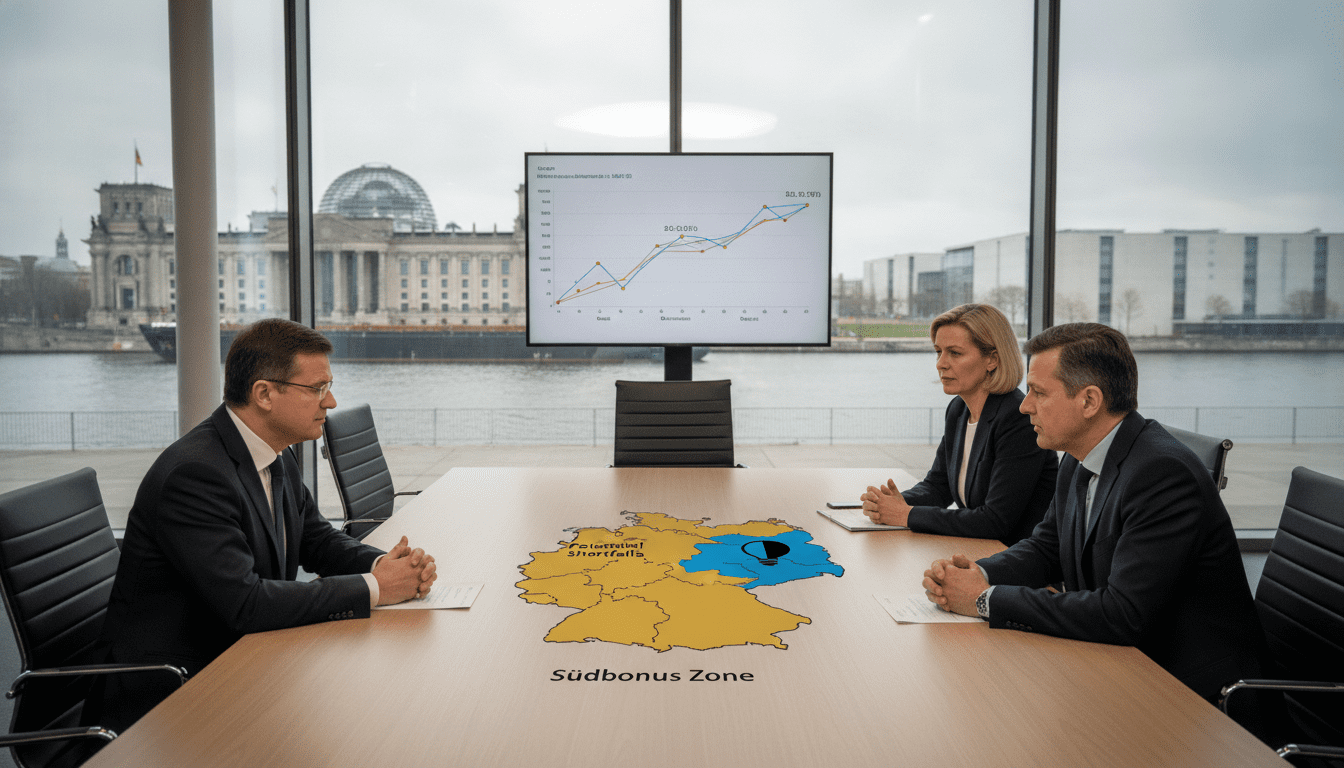
The government draft sets an allocation mechanism that prioritizes bids from the grid-technically defined south until two-thirds of the contested capacity is awarded to that region. The remaining one-third of capacity would be open to bids nationwide without bonus. That design means northern bidders would only compete for a minority share, leaving their chances of securing contracts uncertain. Critics say the statutory preference is a blunt instrument that addresses perceived southern shortfalls but does not reflect regional system-service needs such as blackstart capability.
Alternative models proposed by industry and grid experts
Several stakeholders have suggested tweaks to the auction architecture to preserve regional balance. Leag commissioned a “symmetrical corrective model” proposing dynamic south-or-north bonuses that activate only when regional thresholds are breached, ensuring minimum quotas in both halves of the grid. 50Hertz has floated a similar mechanism that would exercise a Südbonus only when necessary to meet system requirements, thereby limiting regional steering to exceptional cases. Consultants and market participants say these hybrid approaches would better align auctions with technical resilience while remaining compliant with EU state-aid rules.
Parliamentary steps and the regulatory timetable
The bill passed the federal cabinet in mid-May and has already seen a first reading in the Bundestag, with the Economy and Energy Committee scheduled to discuss it this week. The Bundesrat recently adopted a joint proposal from eastern states urging a split auction or guaranteed northern share to protect regional planning. The federal government, citing obligations under EU aid rules, rejected the Bundesrat’s request in its response. Complicating matters, the first tranche of 4.5 gigawatts is slated to be auctioned starting on September 8, a deadline that compresses legislative and regulatory preparation.
Local economic fears in the Lausitz and workforce concerns
Beyond technical grid arguments, the dispute touches on the social and economic transition in lignite regions. Leag plans to decommission roughly seven gigawatts of coal capacity in the Lausitz by 2038 and aims to replace some of that lost output with gas-fired plants. Local unions and works councils have warned that a skewed auction outcome could jeopardize job prospects for younger workers and slow local restructuring. Recent protests at Schwarze Pumpe, where employees and trainees voiced their anxieties, underscore the political sensitivity of capacity allocation for communities undergoing the coal exit.
Lawmakers and regulators now face a narrow window to reconcile legal constraints, grid-technical needs and regional economic concerns before the European Commission’s state-aid review and the September auction milestone. The outcome will shape not only where new gas capacity is built but also how Germany balances short-term security of supply with long-term regional fairness and industrial transition.
The debate over the Südbonus highlights a broader tension in Germany’s power transition: how to ensure enough flexible, dispatchable capacity in the right places while remaining compatible with competition and EU rules. As the parliamentary process advances, industry groups, grid operators and regional representatives are likely to press for legally robust amendments that protect northern and eastern capacity needs without undermining the government’s stated aim of stabilizing the electricity system.
