
German Premium Automakers Declare ‘New Era’ as Mercedes and BMW Push EV Drive
Mercedes and BMW chiefs declare a new era as German premium automakers accelerate electric vehicles with heavy investment in batteries, software and factories.
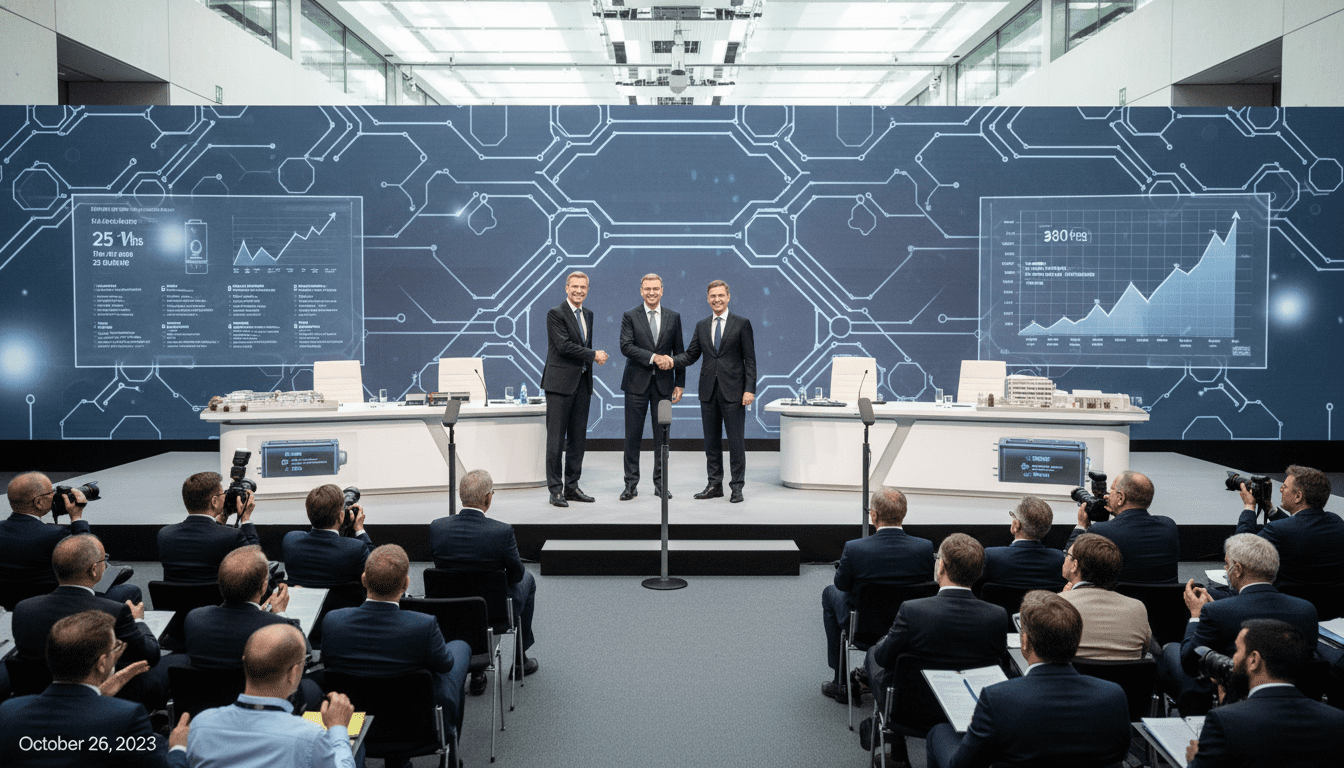
The leaders of Germany’s flagship luxury carmakers have signalled a decisive shift toward electrification, saying the industry is entering “a new era” marked by intensified investment and technological ambition. Mercedes-Benz chief Ola Källenius described the move as a transformation in product and strategy, while BMW CEO Milan Nedeljkovic said the companies aim to set “technologically and emotionally new standards.” The comments underscore a concerted push by German premium automakers to close gaps with global EV rivals and to reposition their brands around batteries, software and sustainable manufacturing.
CEOs frame shift as a decisive industry turning point
Mercedes-Benz CEO Ola Källenius characterised the strategy change as more than product evolution, calling it a generational shift in engineering and customer experience. BMW chief Milan Nedeljkovic framed the drive as raising both technical and emotional benchmarks for premium mobility. Their comments reflect board-level alignment at Germany’s largest luxury car groups to prioritise electric platforms, digital services and brand differentiation.
Batteries and software become central to competitiveness
Both companies are redirecting capital toward battery development and vehicle software to secure performance, range and user features that consumers expect from luxury models. Investment plans emphasise in-house capabilities, joint ventures and supplier partnerships to improve cell chemistry, packaging and thermal management. Executives argue that mastering batteries and software will determine future margins and brand desirability in a market where hardware parity narrows.
Production and supply chain retooling underway
German premium automakers are restructuring production lines and converting legacy plants to EV assembly, while expanding battery gigafactory capacity through joint ventures and long-term supply contracts. The retooling includes new paint shops, high-voltage assembly processes and testing facilities tailored to electric drivetrains. Companies are also reshaping procurement strategies to secure critical raw materials and to add resilience against geopolitical and market disruptions.
Global competition and market positioning sharpen focus
The statements come amid intensifying competition from established EV players and new entrants, particularly manufacturers from China and the United States. German premium automakers are positioning their products to emphasize engineering refinement, driving dynamics and safety while deploying connected features and lifestyle-oriented services. Management teams acknowledge that global rivals have advantages in scale or software ecosystems, and say the response is a sustained investment in innovation and customer-facing digital experiences.
Profitability and regulatory pressures shape strategy
Executives face the dual challenge of funding the electric transition while protecting historically high profit margins in the luxury segment. Investments in batteries and software must be balanced against pricing pressure and subsidies that vary across markets. Regulatory targets on CO2 emissions and incentives for electrification continue to influence product timing and regional rollouts, prompting companies to accelerate model launches and to refine electrification road maps.
Consumer acceptance and charging infrastructure remain key hurdles
While luxury buyers have shown early interest in premium electric models, broader adoption depends on clearer total-cost-of-ownership advantages and ubiquitous charging networks. Automakers are investing in partnerships to expand fast-charging access and in services that simplify home and public charging for customers. Industry executives caution that vehicle range, charging speed and an integrated user experience will be decisive in converting aspirational interest into sustained market share gains.
The recent declarations by Mercedes and BMW leadership mark a public recommitment by German premium automakers to lead in the electric era rather than follow, blending traditional engineering strengths with new investments in batteries, software and manufacturing capability. Market observers will watch closely whether these moves restore perceived technological leadership and translate into commercial success as global competition intensifies.
