
Municipal finance crisis: German local governments warn of collapse amid planned federal cuts
German municipalities warn of a municipal finance crisis as deficits near €32 billion and leaders call for immediate federal aid to avert service cuts.
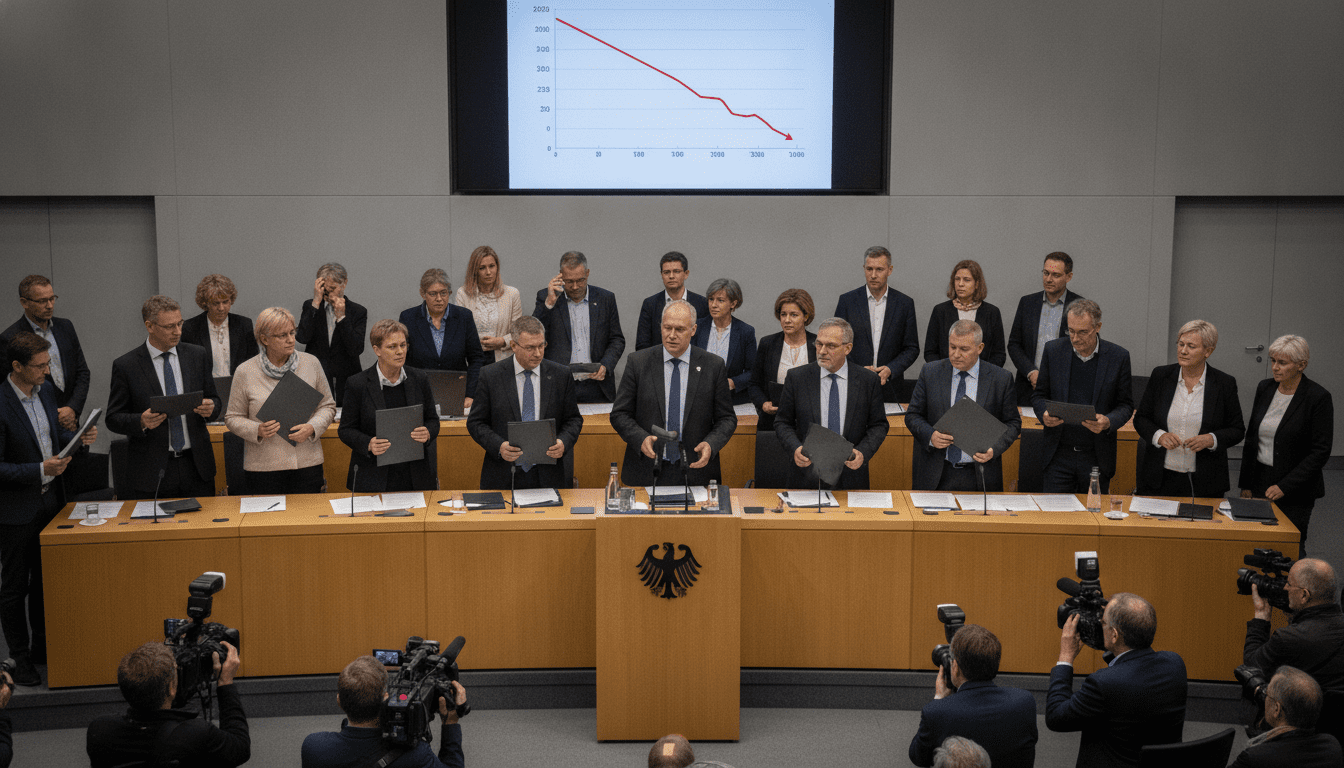
The municipal finance crisis has prompted Germany’s main local government associations to warn of an impending collapse after planned federal savings measures and sector reforms, with deficits estimated at around €30–32 billion. City and county leaders say hospital, health insurance and long-term care reforms will shift unsustainable costs to local budgets and overwhelm social services already under strain. The warning was issued jointly by the Association of German Cities (Städtetag), the German Counties Association (Landkreistag) and the German Association of Towns and Municipalities (Städte- und Gemeindebund), which announced a national day of action to press the federal government for relief.
Record shortfall documented in municipal finance report
The most recent municipal finance report by the Bertelsmann Foundation puts the collective deficit of cities, counties and municipalities at nearly €32 billion, the highest shortfall on record for local governments outside the three city-states. The study also notes aggregate municipal debt has climbed to almost €200 billion, a level municipal leaders call unsustainable for the scope of services they are required to provide. The report excludes Berlin, Hamburg and Bremen, focusing on the finances of the remaining federal states where the strain appears most acute.
Local leaders demand immediate federal emergency support
Burkhard Jung, president of the Association of German Cities, said “immediate aid” is needed to prevent a breakdown in essential services, arguing that social welfare offices are already shouldering much of the cost of long-term care. Achim Brötel, president of the German Counties Association, warned that maintaining the current level of the welfare state will become impossible if additional burdens are passed to municipalities. The three associations called for short-term transfers and a clear timetable for federal support while they prepare a nationwide campaign to highlight the funding gap.
Planned federal reforms intensify municipal burdens
Officials singled out the government’s planned savings measures and sector reforms — including the hospital sector, statutory health insurance (GKV) and long-term care — as drivers of the new burden on local budgets. Municipal representatives say these reforms, intended to control federal spending, would effectively shift responsibility and costs downward, pushing social and care-related expenditures onto local authorities. That reallocation would compound existing structural problems in municipal finance, leaving local councils to decide between cutting services, raising fees, or increasing local debt.
Scope of services exceeds current municipal capacity
Local leaders argued that municipalities are already performing many tasks that traditionally fall under federal or state responsibility, stretching limited budgets and administrative capacity. Ralph Spiegler, president of the German Association of Towns and Municipalities, said there is awareness at federal and state levels of the dire situation but little in the way of corrective action from the coalition government. Municipalities report rising operational costs for social services, education-related expenditures and infrastructure upkeep, all while revenue sources remain constrained by tax-sharing arrangements and local economic conditions.
Political and fiscal options under debate
The associations are calling for a mix of short-term emergency transfers and longer-term structural changes, including clearer delineation of responsibilities between federal, state and local governments. Proposals under informal discussion include targeted stabilization funds, temporary bridging grants for social services, and a review of which responsibilities should be re-assumed by federal or state authorities. Local leaders emphasized that any package must be predictable and sufficient to prevent a cascade of service reductions at the municipal level.
Germany’s municipal finance crisis has triggered an unusually coordinated response from the country’s major local government bodies, underscoring the political as well as fiscal stakes of the coming weeks. With a national day of action announced, municipal leaders aim to force the federal government to reconcile its savings agenda with the immediate need to stabilize local budgets and preserve core public services.
