
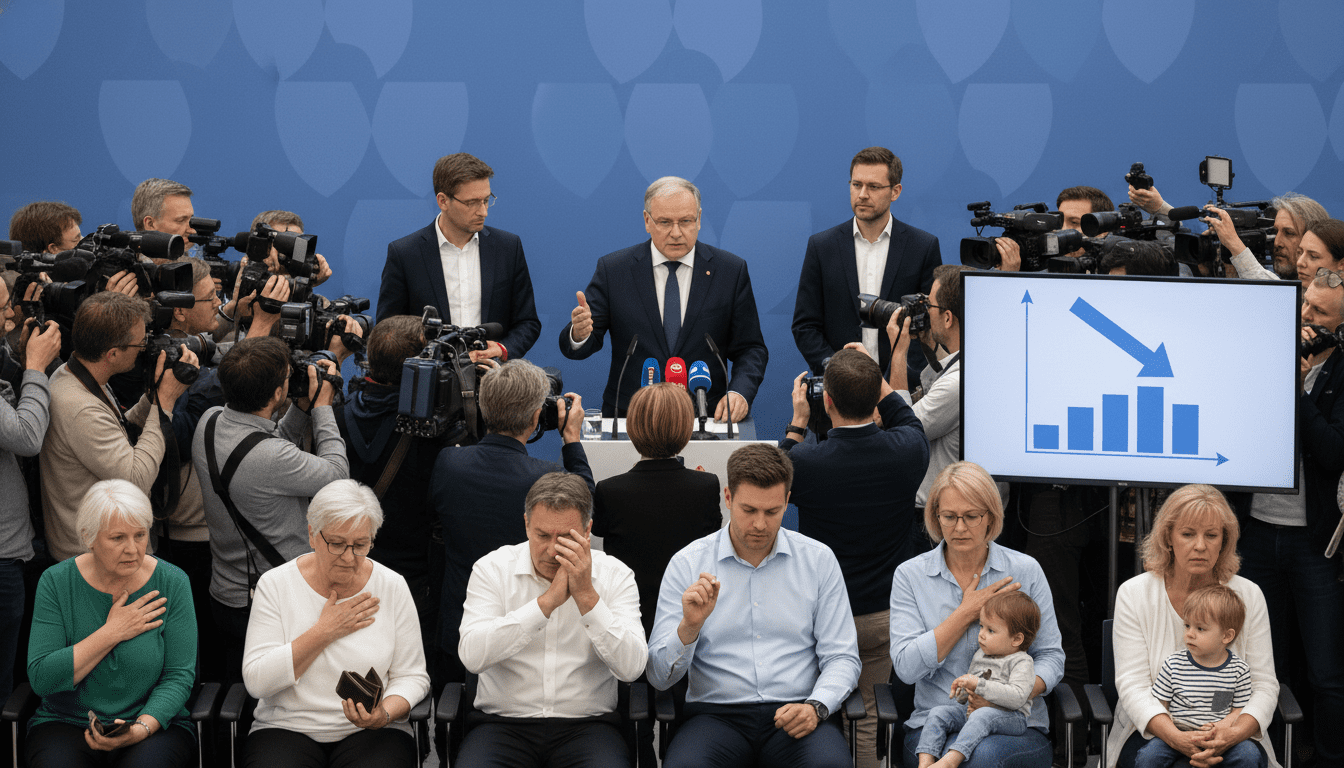
German health reform targets €20 billion cut from statutory insurers in 2027
German health reform aims to cut €20 billion from statutory insurers in 2027, shifting €3.8bn to patients and trimming services; critics warn of hardship.
The German health reform proposed by Federal Health Minister Nina Warken would force statutory health insurers to find roughly €20 billion in savings in 2027, with patients asked to shoulder part of the burden. The plan, outlined by the ministry in April 2026, responds to a surge in spending that lifted statutory insurers’ expenditures by 7.8 percent last year to €352 billion. Without measures, the government projects a shortfall of about €15 billion next year, prompting a package that includes cuts to provider budgets and direct savings from insured individuals.
Scale and savings target
The reform sets an overall target close to €20 billion in 2027 to stabilise the finances of Germany’s statutory health insurance system. About €3.8 billion of the planned reductions would come from changes that affect insured people directly, according to ministry figures. The remaining reductions are expected through negotiated cuts or slower future increases in payments to doctors and hospitals.
Proponents argue the combination of provider savings and reductions in covered services is necessary to prevent a rapid rise in contribution rates. The ministry frames the measures as a way to keep average contributions “nearly constant” in coming years while restoring fiscal balance to the system.
Measures that would affect patients
Among the patient-facing proposals are higher co-payments and the trimming or removal of certain covered services, with specific items still under discussion. Reports have highlighted potential cuts such as ending free co-insurance for non-working spouses and raising patient cost-sharing for medicines and therapies. The reform also contemplates reviewing preventive services, including a decision on skin cancer screening by the end of 2027.
Health officials say recalibrating benefits and co-payments will be calibrated to protect essential care while delivering the targeted savings. Critics note that even modest co-payment increases can translate quickly into higher out-of-pocket costs for people with chronic conditions.
Impact on providers and system payments
The package targets both ambulatory and inpatient sectors, with planned negotiations aimed at tempering the growth of payments to doctors and hospitals. Warken’s proposal calls for efficiency gains and spending discipline across provider contracts to capture a large share of the €20 billion target. Hospital associations and medical societies are being asked to identify areas where costs can be contained without compromising access.
Healthcare providers have signalled concern that rapid cuts could strain capacity and affect waiting times, particularly in specialised care. The ministry counters that efficiency measures and administrative savings can reduce waste while preserving core services.
Social and political pushback
Opposition politicians, patient groups and some medical organisations have warned the reform could disproportionately burden low-income households, chronically ill patients and caregivers. Critics say shifting €3.8 billion onto insured people risks widening health inequalities and may prompt high earners to consider moving to private insurance. Patient advocacy groups are particularly vocal about any proposal that would reduce preventive screenings or increase co-payments for long-term therapies.
Supporters of the reform respond that without timely adjustments the system’s financial instability would force more severe contribution increases later. The debate has already begun in parliament and among coalition partners, where several stakeholders are seeking guarantees for exemptions or hardship protections.
Timeline for decisions and parliamentary steps
Officials expect much of the fiscal impact to materialise in 2027, with specific legislative proposals to be drafted and debated in the months ahead. The ministry has set an internal deadline for resolving contested items such as the future of certain screenings and the structure of co-payments by the end of next year. Parliamentary committees will review draft laws, and negotiations with Länder and social partners are planned as the package moves through the legislative process.
Stakeholders emphasise that some measures may be phased in to reduce sudden shocks to patients and providers, while others could require regulatory changes to implement quickly. The final balance of savings will depend on bargaining outcomes with provider associations and the content of parliamentary amendments.
The ministry stresses the reform is aimed at preserving the long-term sustainability of statutory health insurance and avoiding abrupt contribution spikes in the near term.
Public and political reactions will determine how the package is amended before final votes, and interest groups on both sides are expected to intensify lobbying as the legislative timetable advances.
The coming months will test whether policymakers can reconcile fiscal targets with protections for vulnerable patients while maintaining broad public support for Germany’s statutory health insurance system.
