
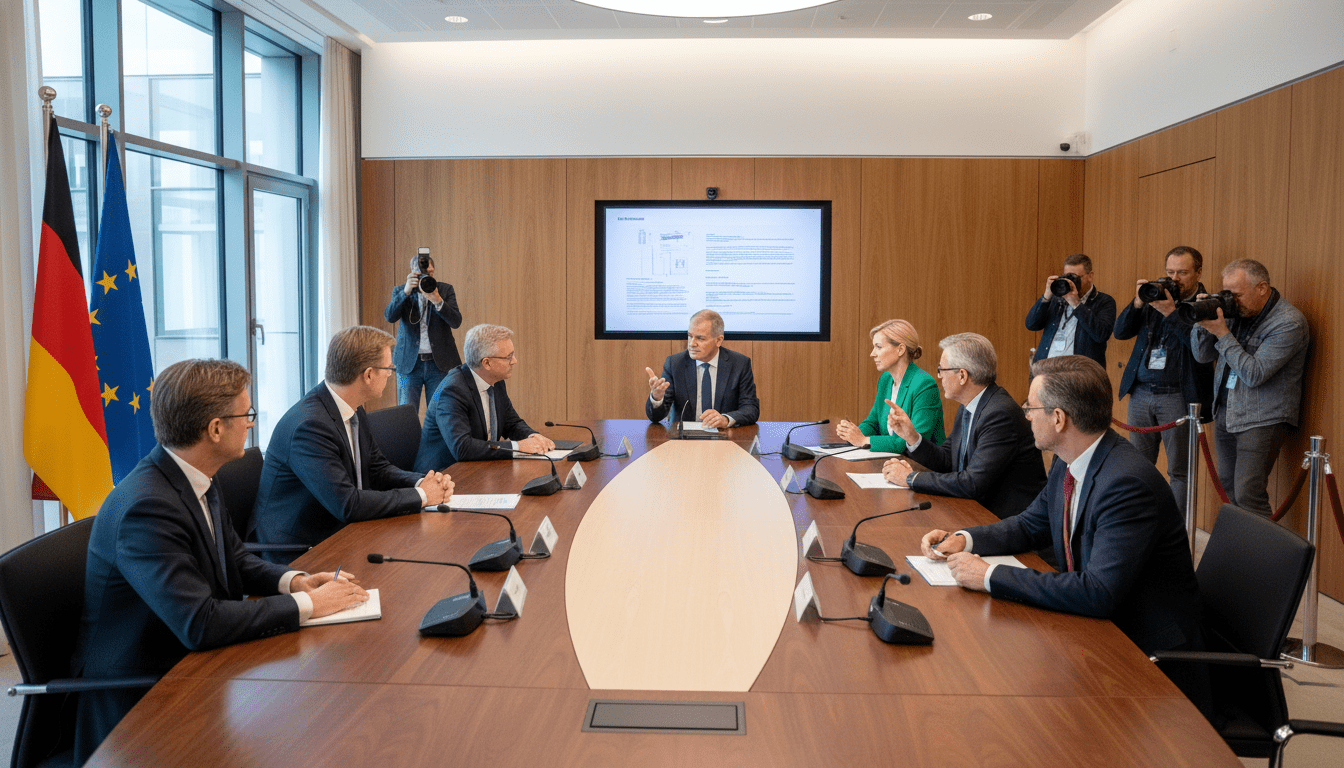
Germany Stalls on Eight-Hour Workday Reform as Economists Suggest Targeted Extensions
Germany’s coalition is deadlocked over changes to the eight-hour workday, with economists proposing that any extension be applied first to specific professions while unions warn of weakened labor protections.
The coalition government’s inability to agree on whether and how to alter the eight-hour workday has reignited a contentious debate about labor flexibility and worker protection in Germany. Economists are now urging a narrow, sector-specific approach that would extend maximum daily hours for certain roles as a temporary measure. Trade unions have responded with strong objections, arguing that such moves risk eroding decades of hard-won limits on working time.
Coalition gridlock over eight-hour day
The governing “black-red” coalition has so far failed to reach a compromise on proposals affecting the eight-hour workday. Lawmakers and ministers remain split on the scope and safeguards that should accompany any change. That stalemate has delayed legislative progress and heightened tensions between parties that must jointly sell any reform to voters.
Debate has centered on whether flexibility should be general or confined to narrowly defined circumstances. Political leaders have emphasized the need to balance competitiveness and public-service continuity against worker health and existing labor standards. With no agreement in sight, stakeholders from businesses to unions are preparing for protracted negotiations.
Economists propose targeted extension for specific professions
A number of economists have suggested a pragmatic alternative: extend the maximum working day only for particular professions facing acute staffing shortages. Under this model, exemptions would be temporary and sector-specific, applying for instance to certain healthcare roles, logistics operators or emergency services where continuous staffing is essential. Proponents argue such a targeted approach could maintain overall labor protections while addressing practical bottlenecks in critical services.
Analysts recommend combining any extension with clear limits on duration, mandatory rest intervals and enhanced compensation. They also advocate for rigorous evaluation metrics and sunset clauses so that any pilot arrangements are reviewed and either tightened or discontinued based on measured outcomes. The proposal is framed as a measured response to demographic pressure and supply-chain stresses rather than a wholesale dismantling of the eight-hour standard.
Unions warn of erosion of worker protections
Major trade unions have issued stark warnings against loosening the eight-hour workday, even if changes are limited to certain professions. Unions contend that incremental exceptions create precedent and open the door to broader rollbacks of working-time rights. They emphasize that longer hours increase fatigue, raise workplace safety risks and can undermine collective bargaining gains.
Union leaders demand that any discussion of extensions include enforceable safeguards, stronger monitoring of overtime, and guaranteed compensation for affected workers. They also insist that employers pursue recruitment and training solutions rather than relying on longer shifts to cover shortages. The current union stance signals likely industrial pushback if the coalition pursues narrow exemptions without robust worker protections.
Sectors and staffing realities cited as drivers
Policy discussions point to a handful of sectors frequently cited as candidates for targeted extensions: healthcare and nursing, logistics and freight, emergency response and some manufacturing niches. Supporters say these areas suffer particular pressure from aging workforces, unpredictable demand spikes and a shortage of qualified personnel. Extending daily hours selectively, they argue, could prevent service disruptions without changing norms across the broader economy.
Critics counter that extending hours may discourage recruitment and reduce long-term productivity by increasing burnout. Employers and sectoral associations appear split, with some urging flexibility as a short-term coping mechanism and others warning that structural investments—in training, automation and improved working conditions—are better solutions.
Legal and regulatory considerations for any change
Legal experts note that any adjustment to the eight-hour workday would need to fit within Germany’s domestic labor code and international commitments. That framework requires careful calibration of rest periods, maximum weekly limits and records of hours worked. Proposals for targeted extensions would likely demand accompanying regulations on overtime pay, compulsory breaks and workplace monitoring to ensure compliance.
Lawmakers will also have to consider judicial scrutiny and potential challenges from labor courts if changes are perceived to weaken statutory protections. Analysts say well-defined pilot programs with legal clarity are less vulnerable to successful legal challenges than open-ended exemptions.
Outlook for negotiations and possible timelines
Political leaders have signaled that talks will continue in coming weeks as the coalition seeks a compromise that can pass parliamentary muster. Any movement toward targeted extensions would probably be accompanied by strict conditions, sunset clauses and review mechanisms designed to reassure skeptical unions and voters. Employers and sector representatives will press for operational detail, while unions will demand enforceable guarantees.
Observers expect a phased approach if agreement is reached: narrow pilots, rigorous monitoring and an evidence-based decision on whether to expand, modify or terminate the measures. The final form of any reform will hinge on the depth of political consensus and the willingness of social partners to accept binding oversight.
The coalition’s impasse over the eight-hour workday foregrounds broader tensions between flexibility and protection in Germany’s labor market, and the outcome will shape debates on staffing, health and productivity for years to come.
