
Antoni Gaudí at 100: Sagrada Família completion and political legacy spark renewed debate
Antoni Gaudí’s 100th death anniversary has focused attention on the Sagrada Família’s nearing completion and reignited disputes over the architect’s political legacy in Catalonia.
Centenary draws public ceremonies and debates
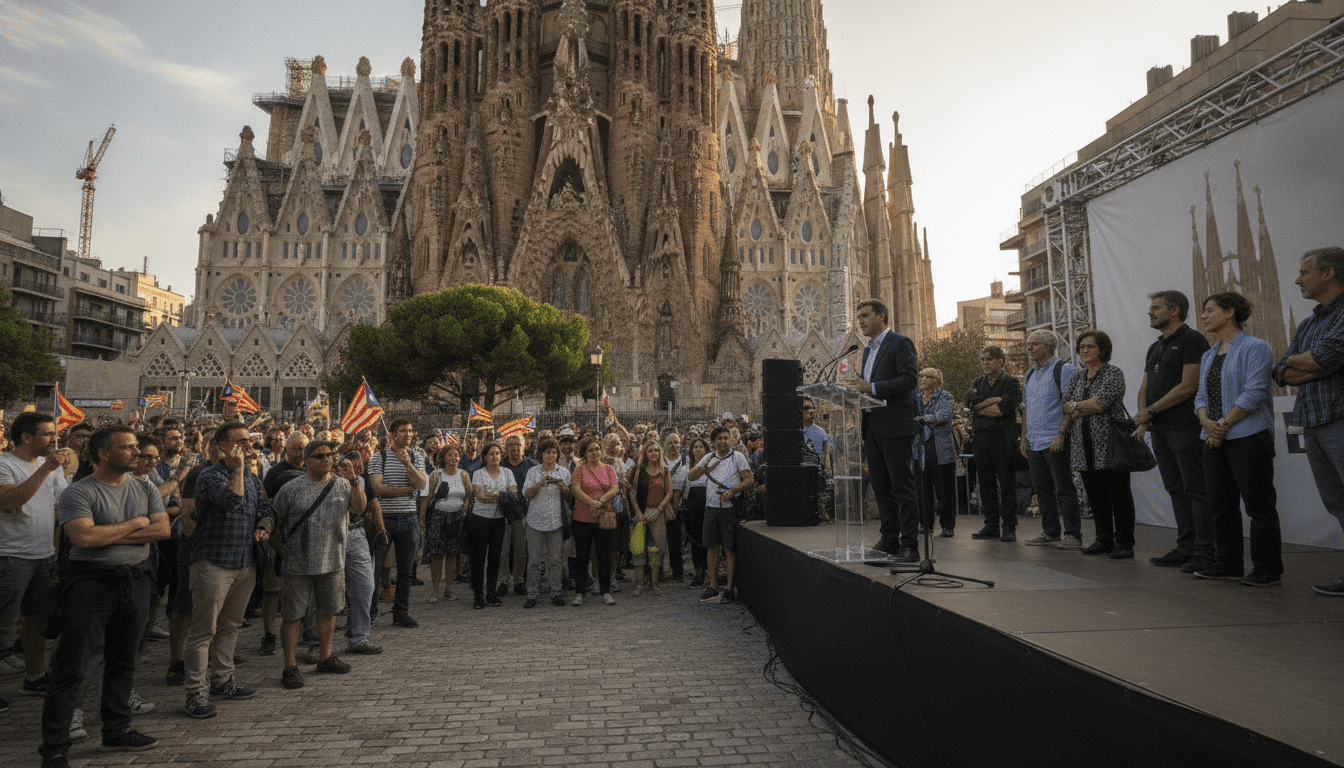
Antoni Gaudí’s death centenary on June 10, 2026, has prompted exhibitions, official commemorations and renewed public discussion about his life and work. The milestone arrives as construction on the Sagrada Família advances, with planners aiming to complete large portions of the basilica in the coming decade. Events marking the anniversary have sharpened scrutiny of how Gaudí is remembered — as a religious ascetic, an apolitical artist or a figure intertwined with Catalan identity.
Organizers and political actors have framed the centenary differently, turning memorials into stages for competing narratives. Cultural institutions emphasize architectural innovation and conservation, while political groups have contested symbolic ownership of Gaudí’s legacy. Those tensions reflect long-standing debates about regional identity and national history in Spain.
Early career and Modernisme roots
Born in 1852 in Reus to a coppersmith’s family, Gaudí emerged as a prominent voice of the Modernisme movement in Barcelona by the late 19th century. His early proposals, including a visionary university aula that embraced natural forms and engineered light, foreshadowed the organic vocabulary that would define his mature work. Gaudí’s personal life — devoutly Catholic, ascetic, and single — shaped his aesthetic and professional choices.
Modernisme architects used Catalan symbols and motifs to articulate a regional cultural revival that paralleled economic growth and urban expansion. Gaudí worked alongside contemporaries such as Lluís Domènech i Montaner and Josep Puig i Cadafalch, contributing landmarks that transformed Barcelona’s L’Eixample district and public spaces freed by the demolition of the city walls.
Sagrada Família: design, symbolism and light
The Sagrada Família developed from a modest devotional project into Gaudí’s most ambitious commission, driven by local donations and managed by a lay association. Gaudí reworked original neo-Gothic plans into a design inspired by Catalonia’s landscapes: Montserrat peaks, Pyrenean stalactites and forest-like interior columns. Light became a central architectural device, intended to color the interior at different times of day and to embody Mediterranean luminosity.
Gaudí proposed eighteen towers and a five-aisled basilica, embedding theological program and local iconography in sculptural façades and mosaics. His use of Catalan emblems — from the Senyera colors to marine motifs and the protector saint Sant Jordi — linked the building to regional memory while aspiring to universal religious themes.
Political ties and ambiguous activism
Though not a frontline politician, Gaudí maintained ties with figures of the Catalan bourgeois movement and received public support from the Lliga Regionalista, which regarded the Sagrada Família as a prestige project for Catalonia. Contemporary accounts show Gaudí expressing sympathy for Catalan self-government while avoiding explicit separatist agitation; historians emphasize a nuanced, often private engagement with regional politics.
At moments of repression, Gaudí’s actions became more visible. Under Primo de Rivera’s dictatorship he faced censorship and brief detention for speaking Catalan in a prohibited context. Later, his praise for leaders of the Catalan cause was sometimes muted or delayed by censorship and police oversight. Scholars differ on whether Gaudí favored federal reform within Spain or a distinct nationalist agenda.
Destruction, reconstruction and Franco-era rehabilitation
The Spanish Civil War and subsequent Franco regime profoundly affected the Sagrada Família and Gaudí’s reputation. Arson attacks in 1936 destroyed the church’s organ and many original models and plans, forcing later architects to reconstruct designs from photographs and fragments. Under Franco the Modernisme aesthetic was at times dismissed as decadent, even as the regime invested selectively in religious rebuilding.
From the 1940s onward a gradual rehabilitation of Gaudí took place within Spanish cultural discourse, culminating in exhibitions and publications that recast him as an undeniable creative genius. Reconstruction and fundraising were intermittent until international attention and tourism spurred progress in the late 20th century.
Centenary controversies and cultural memory
The 2026 centenary has reopened debates about appropriation and public memory. Leaders of Catalonia’s independence movement have accused Madrid of symbolic claims on Gaudí, pointing to the use of Spanish-language forms of his name and official messaging. Authorities managing the Sagrada Família have sought to distance the site from partisan actions, emphasizing its religious and cultural mission.
Recent biographies and scholarly reassessments have further complicated the picture, highlighting Gaudí’s conservative Catholicism, his aversion to social revolt, and his involvement in cultural organizations that promoted Catalan identity within a broader Spanish framework. The result is a layered legacy: Gaudí is celebrated globally as an architectural visionary while remaining a contested figure in local politics.
As the basilica approaches fuller completion — with conservation efforts, 3D reconstruction techniques and rising visitor numbers driving work forward — Gaudí’s centenary underscores how monuments function as living battlegrounds of interpretation. Public ceremonies and scholarly debate this year have shown that the architect’s stonework continues to provoke questions about who claims history and why.
The centenary has thus become both a celebration of an architect’s innovations and a referendum of sorts on collective memory, with the Sagrada Família standing at the center of competing claims about Catalonia’s past and future.
