
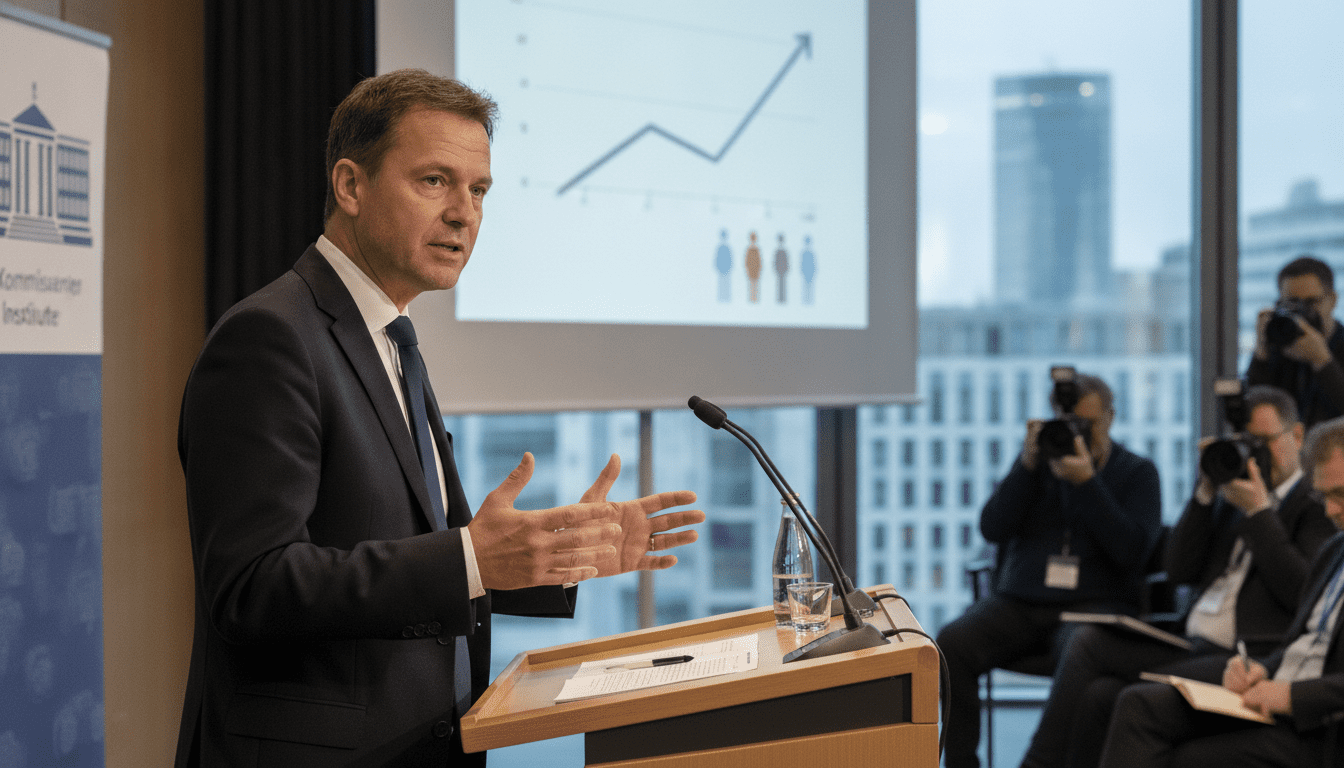
German pension commission proposals ‘too cautious,’ DIW head Marcel Fratzscher warns
Marcel Fratzscher says German pension commission proposals are too cautious and won’t fix old‑age poverty; government must act urgently before June 23, 2026.
Marcel Fratzscher, president of the German Institute for Economic Research (DIW), described the German pension commission proposals as a step in the right direction but insufficient to secure the statutory pension system, the economist told the Rheinische Post. The commission is set to present its recommendations on Tuesday, June 23, 2026, and Fratzscher urged the government to convert the proposals into firmer, more far‑reaching policy. He warned that without bolder measures the package will not resolve the three core problems he identified: high old‑age poverty, an excessive burden on younger generations, and persistent fairness imbalances.
Fratzscher: proposals need more courage and consistency
Fratzscher said the commission’s work contains “many sensible elements” but lacks the political courage and consistency required for long‑term stability. He highlighted that technical fixes alone would not reverse trends that are already increasing the risk of poverty among retirees. The DIW chief called for strengthening the basic pension, tightening means‑testing for large incomes and wealth in old age, and putting pension finances on a more sustainable footing.
Major recommendations include a phased rise to age 70
According to reporting from commission circles, the package under consideration would gradually raise the statutory retirement age to 70 by the 2090s, eliminate the entitlement to an unreduced pension from age 63, and create a funded supplementary pillar modeled on the Swedish system. The commission reportedly compiled roughly 30 individual proposals, aimed at combining parametric changes with structural shifts in coverage and financing. Supporters argue the mix is intended to spread risk, encourage longer working lives and reduce incentives for early retirement.
Broader contribution base and end to Minijob exemptions
Among the more consequential measures is an extension of compulsory contributions to groups currently outside the core system: self‑employed workers, many civil servants and elected officials would begin paying into the statutory scheme. The commission has also proposed abolishing the exemption of mini‑jobs from pension contributions, a move designed to shore up revenue and reduce segmentation in the labour market. Policymakers will have to weigh the social and political costs of expanding the contribution base against the longer‑term benefits for pension adequacy and fairness.
Trade‑offs for younger generations and the public finances
Economists and reform advocates say the proposals will shift some costs to younger cohorts through higher contributions or deferred benefits, even as they aim to curb unsustainable public spending pressures. Fratzscher emphasized the need to avoid solutions that simply pass the burden forward without addressing distributional fairness between generations. The government will face complex trade‑offs: raising the retirement age and expanding contributions strengthens solvency but may deepen concerns about intergenerational equity and labour market capacity.
Political test for the government ahead of implementation
The commission itself offers recommendations; it is now up to elected officials to decide which measures to adopt and how quickly to phase them in. Fratzscher demanded decisive political action to turn proposals into enforceable law and to bolster the basic pension so it becomes more protective against poverty. With public debate already underway, the proposals will test coalitions politically and force parties to balance fiscal responsibility with social protection.
The commission’s blueprint marks a clear attempt to modernize Germany’s pension architecture, combining longer working lives, a funded supplementary pillar and a wider contribution base, but experts like Fratzscher say the package in its current form does not go far enough to prevent rising old‑age poverty and to create a fairer, more sustainable system. The government now faces a narrowing window to translate technical recommendations into policy choices that can withstand demographic pressures while maintaining social cohesion.
