
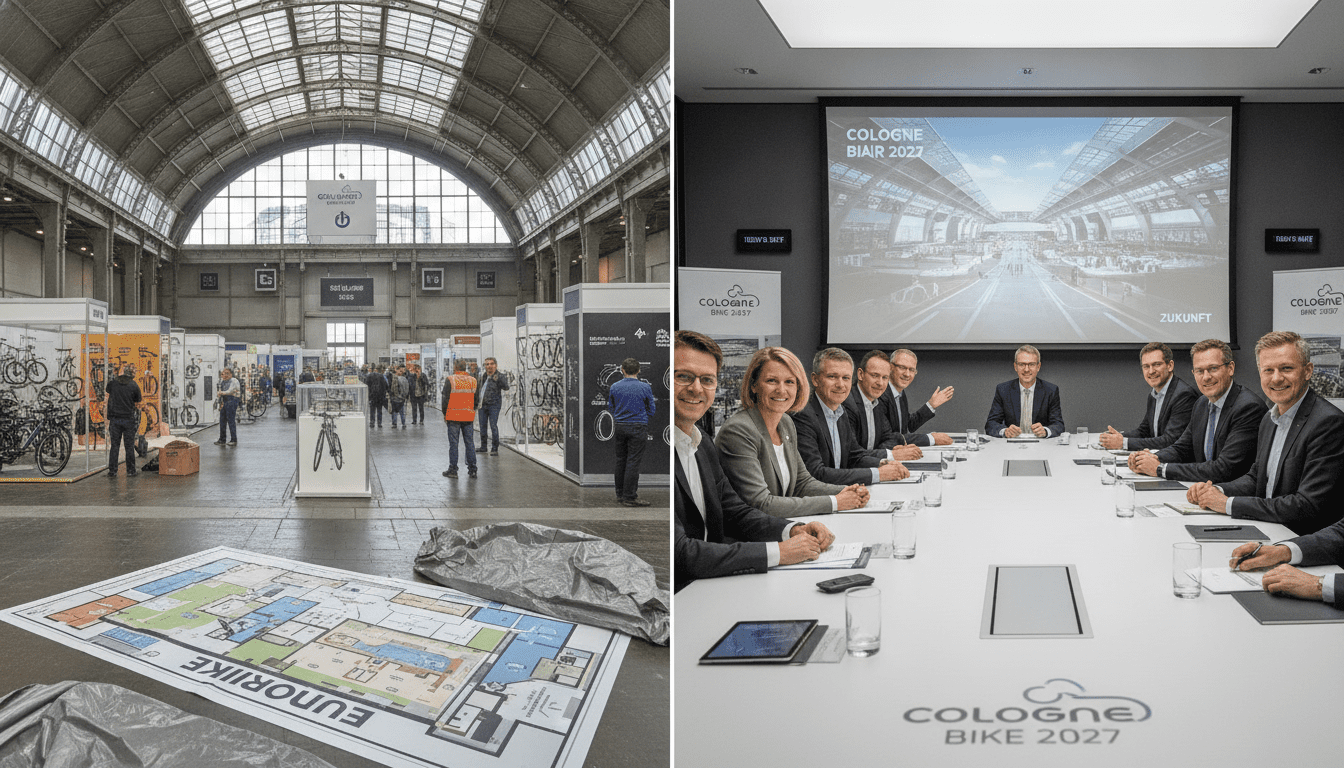
Eurobike’s future in doubt as German bicycle industry plans new European fair in Cologne
Eurobike’s future in Frankfurt is uncertain after the German Bicycle Industry Association announced plans for a new European bicycle fair in Cologne starting September 2027, challenging the long-running trade show.
The German Bicycle Industry Association unveiled on Tuesday a separate concept for a Europe-focused trade fair to be staged in Cologne from September 2027, signaling a major split with the current Frankfurt event known as Eurobike. The move comes as organizers and many manufacturers spar over the direction of the sector’s flagship exhibition and who it is meant to serve.
Exhibitor catalogue highlights Asian dominance in Frankfurt
A recent exhibitor catalogue for the Frankfurt event showed a pronounced tilt toward Asian companies, listing 293 exhibitors from the People’s Republic of China and 127 from Taiwan. In total, the catalogue identified 460 exhibitors from Asia compared with 282 from the entire European Union, a distribution that industry representatives say undermines the show’s European identity.
Several German manufacturers and traditional participants have reduced their presence this year, industry officials say, citing both a changing exhibitor mix and broader commercial calculations. The imbalance has prompted critics to suggest that the Frankfurt fair risks becoming an “Asia bike” rather than the European showcase many had expected.
Manufacturers cite weak visitor turnout and shifting priorities
Industry sources point to disappointing visitor numbers at Eurobike in 2025 as a catalyst for reassessment among exhibitors and trade bodies. After the strong e‑bike–led growth years during the pandemic, sales volumes and average prices have softened, prompting many small and mid‑sized suppliers to cut costs and rethink trade‑show investments.
For many in the German bicycle sector, the calculation is straightforward: trade fairs must deliver qualified buyers and strategic exposure, not merely rented square metres. Organizers in Frankfurt, critics argue, have prioritized floor-space sales over curating a European industry platform that reflects regulatory needs and product standards.
Legal action deepens the schism with Messe Frankfurt and Friedrichshafen
The dispute has escalated into litigation, with Messe Frankfurt and the Friedrichshafen trade‑fair company filing suit against the Bicycle Industry Association. Organizers say the association’s actions breached contractual obligations and business norms; the association portrays its move as a defence of European industry interests and of independent decision‑making.
Legal representatives on both sides characterize the proceedings as part of a broader battle over the future governance of the sector’s principal trade event. The lawsuits have widened the rift between exhibition organisers and manufacturers, reducing the likelihood of a quick reconciliation before 2027.
Regulatory concerns and accusations over product conformity
German trade associations have publicly complained that Frankfurt’s organisers allowed product displays they believe would not meet European approval standards, particularly from some overseas manufacturers. Organisers rejected those accusations, countering that industry groups were attempting to exclude legitimate international suppliers from the marketplace.
This clash over regulatory conformity and market access has hardened positions on both sides and influenced the association’s decision to seek a partner in Cologne that it says will place Europe and its regulatory requirements at the centre of the program. The new concept promises closer involvement from manufacturers and greater emphasis on products intended for the European market.
Cologne chosen to host a Europe‑centred platform from 2027
By selecting Cologne as the planned venue, the Bicycle Industry Association aims to establish a fair that explicitly targets European manufacturers, regulators and buyers. The association says it wants a staged event that supports the continent’s small and medium‑sized firms and helps shape policy debates on safety, sustainability and urban mobility.
Organisers in Cologne have been presented as willing partners in building an exhibition tailored to the needs of European stakeholders. Whether the new fair will draw enough exhibitors and visitors to rival or supplant Eurobike remains an open question, but the announcement has already prompted companies to re-evaluate their presence at Frankfurt.
Implications for trade shows and the bicycle sector ahead
The industry now faces a period of fragmentation and potential consolidation as manufacturers, organisers and associations recalibrate their strategies. Smaller companies, which make up much of the German bicycle industry, will be closely watching which platform offers better access to buyers, regulatory clarity and a return on investment.
Analysts expect the debate to force trade‑show organisers to be more selective about exhibitor rosters and to increase collaboration with industry bodies on safety and market‑access criteria. For now, the split underscores deep uncertainty about where Europe’s bicycle sector will gather to set trends and negotiate standards in the coming years.
The next decisive moments will come as legal challenges play out and as companies announce their 2027 plans, with manufacturers weighing whether to back a newly fashioned European fair in Cologne or remain with the legacy event in Frankfurt.
