
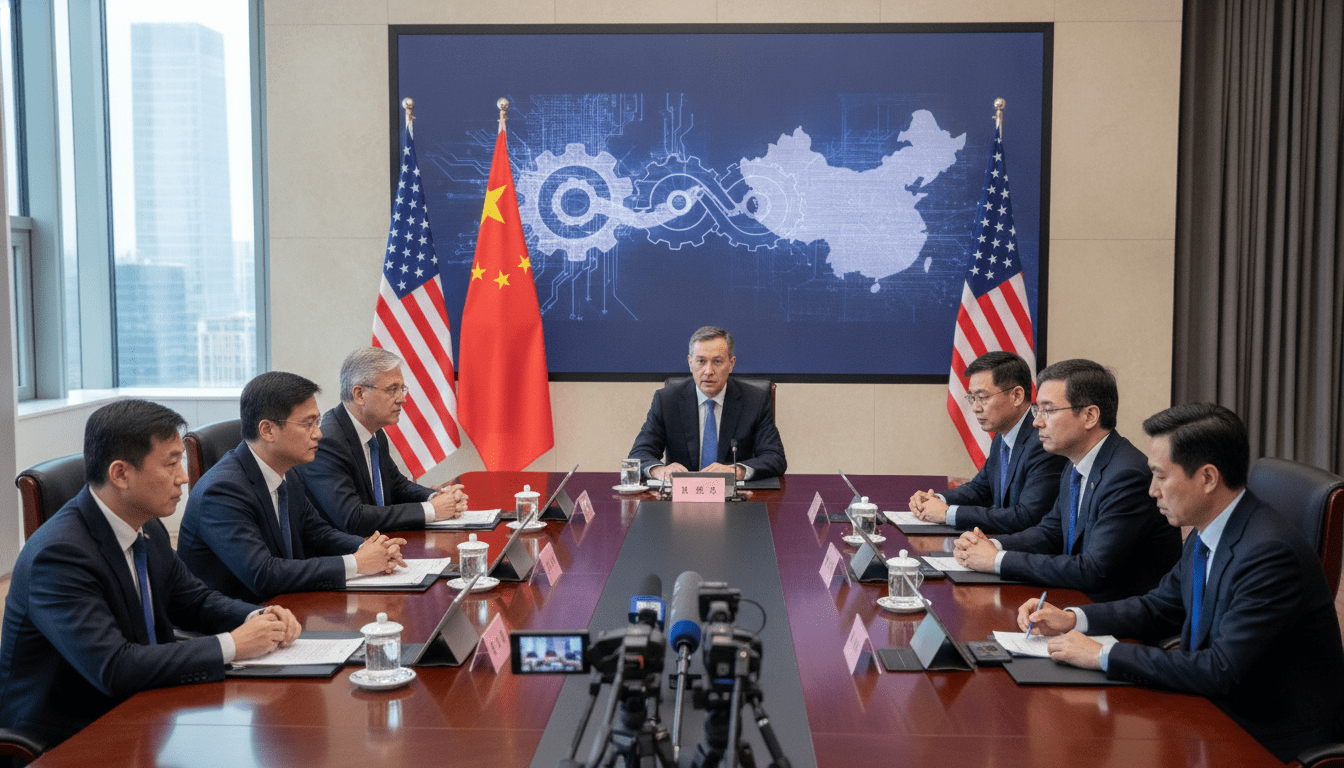
China imposes export controls on US firms, targeting dual-use goods and strategic materials
China imposes export controls on US firms, blocking dual-use goods to ten companies and restricting 46 others in response to a US military-linked entity list.
Beijing announces sweeping export controls
China on Monday announced export controls against ten U.S. companies it said are linked to the American military, barring them from obtaining goods from China that can be used for both civilian and military purposes. The Finance Ministry in Beijing said an additional 46 U.S. firms would face restrictions on selling products to buyers in China, a move framed as a reciprocal response to recent U.S. measures. The measures target strategically important raw materials and technologies, particularly those relevant to defense and advanced manufacturing.
Defense contractors and rare-earth supply chains singled out
The list includes arms manufacturers and defense divisions of major conglomerates such as Lockheed Martin, Raytheon and Boeing, according to the Chinese announcement. Chinese officials highlighted materials like rare-earth elements and specialized magnets that have dual civilian and military applications as a central concern. Several of the U.S. entities affected have little or no commercial footprint in China, but their inclusion underscores Beijing’s focus on chokepoints in the global materials and components supply chain.
Action framed as response to U.S. military-linked entity list
China presented the export controls as a response to a U.S. Department of Defense list published on June 8, 2026, that named 188 Chinese companies Washington said had ties to the Chinese military. That U.S. list included a range of civilian technology firms and automakers, such as Alibaba, Baidu and BYD, which the Pentagon said could support China’s military-civil fusion strategy. China denounced the U.S. step as a “malicious practice” and said such measures wielded under the pretext of national security risk provoking geopolitical conflict and disrupting industrial and trade chains.
Analysts describe measures as largely symbolic
Market analysts interviewed by Reuters suggested the Chinese controls may have more symbolic than immediate economic effect, noting that many sanctioned U.S. defense companies do not conduct significant business in China. The economic impact is further mitigated by exemptions: companies operating in China with U.S. capital were reported to be outside the scope of the new restrictions. Still, analysts warned that symbolism can matter in geopolitics, influencing corporate decisions, investor sentiment and future regulatory moves.
Potential for supply-chain disruptions and strategic diversification
Despite limited short-term trade effects, policymakers and industry officials say the controls heighten incentives for governments and companies to diversify supply chains, particularly for rare-earth minerals and advanced components. Western firms have been accelerating efforts to build North American and allied supply chains for magnets and strategic materials, a sector still dominated by Chinese suppliers. The Chinese move may spur further investment in alternative production capacity, but observers caution that shifting complex upstream industries takes years and substantial capital.
Diplomatic repercussions and possible escalation
The controls add a fresh layer to an already tense economic dispute between Washington and Beijing, increasing the risk of tit-for-tat measures and regulatory fragmentation. Chinese Vice Premier Ding Xuexiang publicly criticized the use of national-security justifications for trade restrictions, warning that such practices could increase geopolitical tensions and the chance of supply-chain interruptions. U.S. officials have not yet outlined a formal response; diplomats in both capitals are likely to face pressure to manage escalation while protecting strategic industries.
The immediate economic fallout appears contained, but the announcement will matter to corporate planners and policymakers who monitor technological chokepoints and material access. Companies that rely on tightly integrated cross-border supply chains will reassess exposure and contingency plans, and governments may accelerate investment in domestic production, stockpiles and allied sourcing. Continued diplomatic engagement and clear rules for exemptions and licensing will be crucial to prevent further deterioration in trade ties and to limit the wider economic consequences.
