
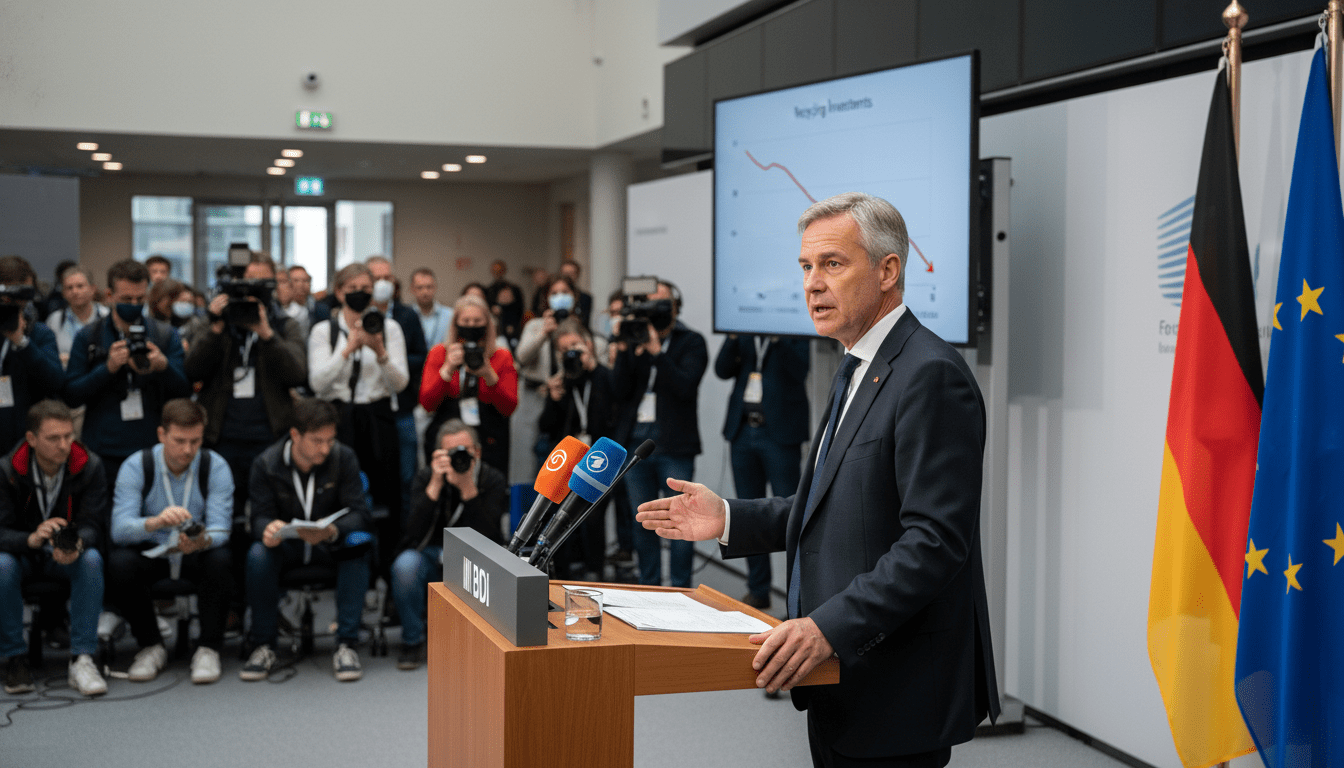
German industry lobby urges government to drop proposed German plastic levy over recycling and competitiveness concerns
BDI urges Berlin to reject a German plastic levy, arguing it will not improve recycling and would raise €1.4bn for EU payments while further burdening industry.
The Bundesverband der Deutschen Industrie (BDI) has delivered a forceful warning to Berlin against introducing a national plastic levy, arguing the measure would not advance recycling goals and risks damaging industrial competitiveness. The industry group says the proposed German plastic levy is effectively a revenue tool for EU payments rather than a targeted instrument to promote circular economy measures. The appeal arrives as the federal budget for 2027 contemplates a levy that finance officials estimate could raise roughly €1.4 billion annually.
BDI frames levy as budget instrument, not circular-economy tool
The BDI told the chancellery and several federal ministries that a national plastic levy would lack the steering effect required to increase recycling rates. In its letter, the industry association emphasized that the proposed tax would function primarily as a general contribution to EU finances rather than as funding tied to concrete recycling improvements. BDI officials also warned of significant administrative burdens and the danger that the levy would simply reallocate costs without changing producers’ incentives.
Letter sent to chancellery, finance, economy and environment ministries
The association’s correspondence was addressed to the Chancellery, the Finance Ministry and the ministries responsible for economic and environmental policy. The BDI’s appeal recalled earlier parliamentary debates in which the opposition parties opposed similar levy plans on grounds that they could hinder innovation. The letter reiterates those concerns and asks policymakers to reconsider instrument design before moving forward with the budgetary measure.
Finance ministry projects €1.4 billion for EU payments
The plastic levy appears in the governing coalition’s budget outline for 2027, with the Finance Ministry estimating annual revenues of about €1.4 billion to cover EU payments linked to non-recycled plastic packaging. Under current EU rules, member states have obligations tied to waste and packaging streams and may choose how to meet the financial requirement. The BDI argues that treating the levy as a general revenue source for those payments, rather than as a targeted policy to expand recycling capacity, misframes the objective and places an unequal burden on firms.
Plastics industry warns of competitiveness squeeze and declining output
Plastics producers and trade associations have echoed the BDI’s alarm, citing a combination of elevated energy costs, expanding regulation and waning domestic production. Industry data cited by manufacturers indicate a multi‑year decline in local plastics output, with a fall of around a quarter over a recent four‑year span. Producers say a targeted tax on plastic would further erode competitiveness and could encourage substitution toward materials that may be harder to recycle, such as multi‑layer composite packaging.
Concerns for investments in recycling and packaging innovation
BDI and industry groups caution that the levy could undermine investments in recyclable packaging design and in sorting and recycling technologies. They argue that adding a cost layer risks delaying or cancelling planned upgrades to recycling infrastructure and may deter companies from developing new, more easily recycled polymer solutions. The BDI also pointed out that many manufacturers already contribute to a single‑use plastics fund that helps pay municipal cleanup costs, meaning the levy could duplicate charges without clear environmental gains.
Policy debate sharpens as budget talks proceed
The proposed levy has become a flashpoint in broader budget negotiations, with critics on both economic and environmental grounds urging reappraisal of the instrument. Lawmakers who previously opposed similar measures warned that a blunt financial levy could produce perverse incentives, while proponents contend that the EU’s payment obligations must be met and that the state needs revenue streams to cover them. With the 2027 budget timetable advancing, parties will face choices about whether to replace the levy with alternative measures or adjust its structure to tie revenues explicitly to recycling projects.
The dispute highlights a central tension in waste and resource policy: how to align fiscal measures with circular‑economy objectives without unduly penalizing industry or prompting shifts to less sustainable materials. As ministers and stakeholders await further consultations, the debate will test whether fiscal tools can be designed to both satisfy EU obligations and support concrete investments in sorting, recycling and recyclable packaging development.
