
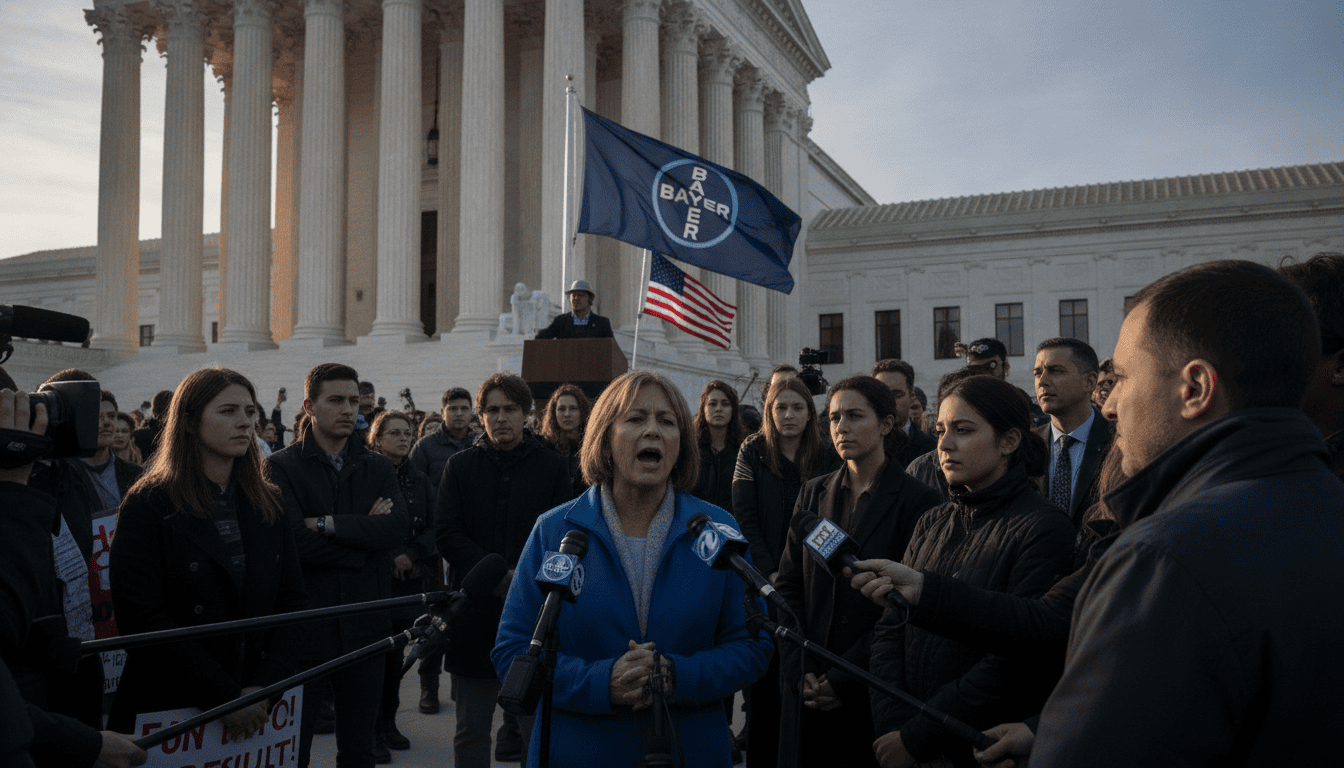
Supreme Court Rules for Bayer in Glyphosate Case, Overturning $1.25M Verdict
U.S. Supreme Court rules that federal pesticide law preempts state failure-to-warn claims, overturning a $1.25M award and narrowing glyphosate litigation.
High court reverses Missouri jury verdict in Monsanto v. Durnell
The U.S. Supreme Court on June 25, 2026, ruled that the Federal Insecticide, Fungicide, and Rodenticide Act (FIFRA) preempts state-law failure-to-warn claims, reversing a Missouri appeals court and vacating a jury award against Monsanto, now owned by Bayer. The majority opinion, delivered by Justice Brett Kavanaugh, concluded that manufacturers must use EPA-approved pesticide labels and cannot be compelled by state juries to add warnings that the Environmental Protection Agency has not required. (law.cornell.edu)
The decision was reached by a 7–2 majority and remanded the case for further proceedings consistent with the opinion. The ruling focused on the statutory preemption language in FIFRA and its aim to ensure national uniformity in pesticide labeling, effectively limiting the ability of state courts to impose additional labeling requirements on glyphosate-based products. (law.cornell.edu)
Details of the Durnell lawsuit and the overturned award
The plaintiff, John L. Durnell, a Missouri resident who said he used Roundup products for about two decades, originally won a jury verdict that included more than $1 million in damages. At trial a jury concluded Monsanto failed to warn users about cancer risks, a finding that formed the basis for the compensatory award. The Supreme Court’s reversal nullified that award on preemption grounds. (law.cornell.edu)
Durnell’s claim alleged that long-term exposure to glyphosate-based herbicides caused him to develop non-Hodgkin lymphoma. The Missouri trial, which included testimony about exposure and health outcomes, produced a verdict that echoed earlier state-court decisions in other Roundup-related suits — decisions the high court’s majority rejected as incompatible with FIFRA’s labeling regime. (law.cornell.edu)
Legal reasoning: FIFRA preemption and its limits
The Court’s opinion emphasized that FIFRA requires pesticide manufacturers to follow EPA-approved labels and that the statute contains an express preemption clause forbidding states from imposing labeling requirements “in addition to or different from” federal rules. The majority relied on longstanding precedent interpreting similar preemption provisions and found that allowing state failure-to-warn claims would undermine federal uniformity. (law.cornell.edu)
Justices Jackson and Gorsuch dissented, arguing that state-law claims can coexist with federal regulation in some circumstances and expressing concern that the decision narrows access to state courts for users alleging harm. The split underscores continuing judicial debate over the interplay between federal regulatory determinations and state tort remedies. (law.cornell.edu)
What the ruling means for glyphosate litigation nationwide
Legal analysts and news outlets immediately framed the decision as a major win for Bayer that could shield the company from a significant portion of U.S. Roundup litigation. Observers say the ruling narrows a route by which plaintiffs have sought to hold manufacturers civilly liable for alleged cancer risks tied to glyphosate, potentially reducing the number and scope of future state-court claims. (apnews.com)
Industry groups hailed the ruling as a restoration of regulatory primacy, arguing it prevents a patchwork of state labeling requirements that could conflict with EPA judgments. Critics warn the decision may limit legal recourse for individuals who say they were harmed by products whose federal labels did not include certain warnings. The practical effect will depend on how lower courts apply the Supreme Court’s framework on remand. (apnews.com)
Bayer and company statements after the decision
Bayer issued statements welcoming the ruling as confirmation that federal law governs pesticide labeling and that EPA assessments of glyphosate should control state-court disputes. Company communications characterized the decision as providing legal certainty for farmers and pesticide producers who comply with federal labeling requirements. Bayer also referenced ongoing settlement discussions and prior measures taken to resolve longstanding Roundup litigation. (bayer.com)
Market observers noted that the decision may alleviate some regulatory and financial pressure on Bayer in the United States, though the company continues to face regulatory scrutiny and litigation in other jurisdictions. Bayer’s public response emphasized reliance on scientific assessments and the regulatory process for determining product safety. (bayer.com)
Plaintiff’s account and a new alliance after the ruling
In a recent podcast interview, the plaintiff described his long use of glyphosate products, his cancer diagnosis, and the emotional impact of the Supreme Court ruling. He said the loss of the damages award is significant financially, but that his motivation remains focused on accountability and preventing future harm. The interview also revealed that he plans to pursue an unusual alliance aimed at pressing for alternative avenues of redress and public awareness. (zeit.de)
The plaintiff’s decision to continue seeking remedies underscores the human dimension of high-court litigation that often focuses on statutory interpretation and regulatory preemption. Advocacy groups and legal counsel for plaintiffs are expected to reassess strategies in light of the ruling, considering federal and state procedural pathways that may survive preemption limits. (zeit.de)
Next steps and potential policy implications
Lower courts will now apply the Supreme Court’s reasoning as they reconsider Durnell’s case and related matters on remand, and lawmakers may respond with proposals to clarify the balance between federal assessment and state tort law. The decision could prompt renewed debate in Congress about FIFRA’s scope and whether statutory changes are needed to preserve state oversight or to affirm federal primacy. (law.cornell.edu)
Regulators, plaintiffs’ attorneys, and agricultural stakeholders will watch closely how the EPA’s label decisions are interpreted in future disputes and whether other legal theories remain available to people who claim harm from pesticide exposure. For many litigants and companies alike, the ruling reshapes expectations about where disputes over chemical risks are resolved. (law.cornell.edu)
The Supreme Court’s decision in Monsanto v. Durnell closes one chapter in the long-running litigation over glyphosate but opens another in which courts, regulators and legislators will determine how to balance uniform federal regulation with state-level remedies and public health concerns.
