
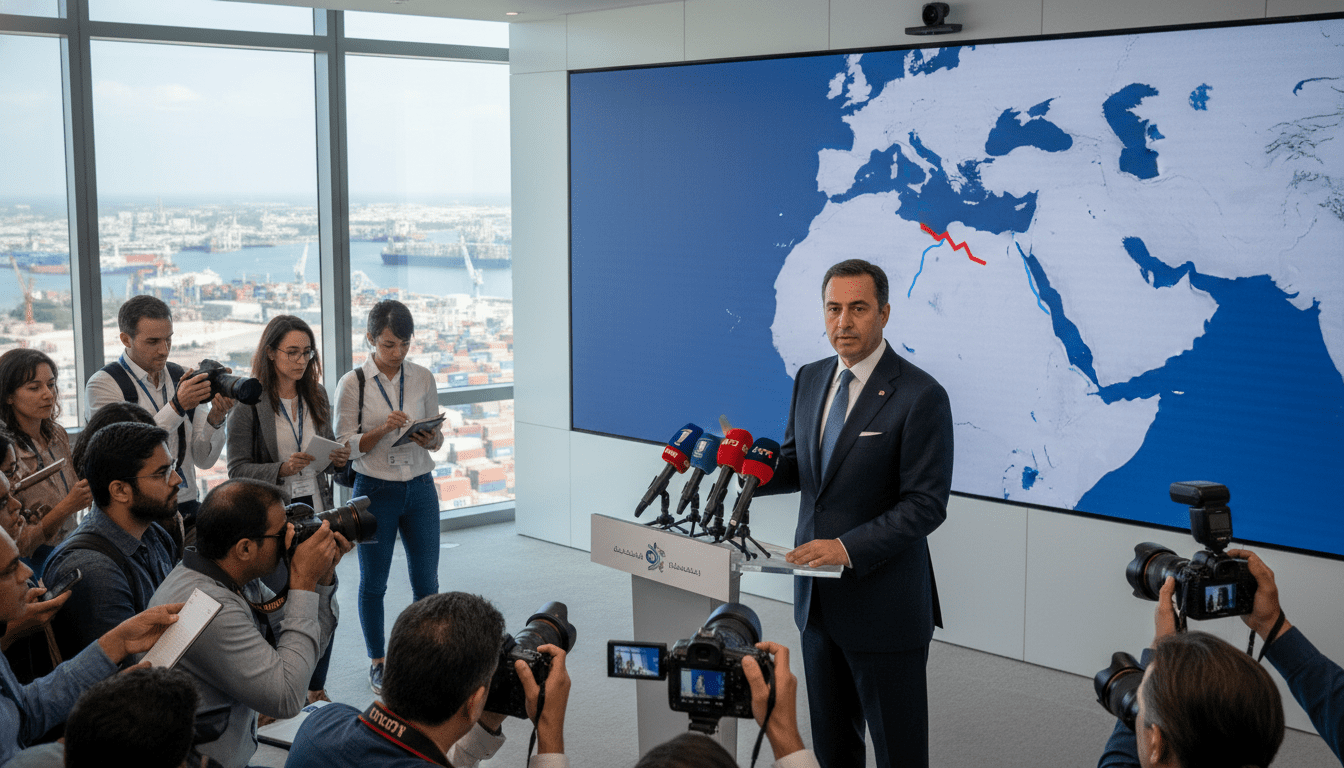
UAE Business Leader Badr Jafar Warns Strait of Hormuz Closure Threatens Trade Hub Status
Badr Jafar says Strait of Hormuz closure disrupted UAE ports and energy exports, forcing reroutes to protect the emirates’ role as a resilient global trade hub.
The closure of the Strait of Hormuz has directly affected operations in the United Arab Emirates, according to business leader Badr Jafar, who runs container, oil and gas concerns that rely on the waterway. In a phone interview he said shipments and schedules were disrupted when maritime traffic through the strait was halted, exposing supply-chain vulnerabilities for ports such as Khor Fakkan. The disruption has prompted companies and authorities to accelerate contingency measures to sustain the UAE’s position as a regional logistics and energy nexus.
Jafar describes immediate operational impacts
Badr Jafar told reporters that vessels serving his Khor Fakkan container terminal and affiliated energy logistics operations were delayed or diverted during the closure of the Strait of Hormuz. He said the interruption forced rapid re-planning of ship rotations and created immediate congestion risks at terminals that remained open. Jafar characterized the episode as a test of the UAE’s operational resilience and the readiness of private operators to respond to acute shocks.
Khor Fakkan terminal adjusts schedules and capacity
Terminal managers at Khor Fakkan moved quickly to adjust berthing schedules and redeploy equipment to handle offloaded cargo, Jafar said. Those measures included extended gate hours, additional labor shifts and temporary storage expansion to prevent backlogs from cascading into longer delays. Despite the adjustments, he warned that prolonged or repeated closures would strain capacity and raise costs across the logistics chain.
Energy shipments rerouted, increasing costs and transit times
The closure of the Strait of Hormuz also disrupted crude and refined product flows, according to Jafar, who oversees oil and gas logistics companies. Tanker operators were forced to take longer routes or wait for clearances, raising fuel bills and insurance premiums and adding days to transit times. Jafar emphasized that while the UAE has substantial storage and alternative pipeline options, those measures are more costly than the direct maritime routes through the strait.
UAE ports and authorities pursue alternative corridors
In response to the disruption, port operators and government agencies are expanding multimodal links and exploring alternate maritime corridors to maintain trade continuity. Investments under way include feeder services, increased use of Gulf hinterland connections, and expedited customs processes to move goods faster through alternative routes. Jafar said public-private cooperation has intensified as companies seek to diversify dependencies on any single chokepoint.
Private operators deploy contingency playbooks
Private logistics companies, including terminal operators and shippers, enacted contingency plans that emphasized rerouting, cargo consolidation and digital scheduling tools to regain predictability. Jafar highlighted the role of rapid data sharing and dynamic manifesting in reducing idle time for vessels and trucks. He also noted that operators are negotiating temporary contractual adjustments with customers to absorb some of the near-term cost impacts while working to minimize long-term rate increases.
Diplomatic and commercial responses aim to reassure markets
Commercial leaders and government officials have been in contact with international shipping lines and insurers to coordinate reopening protocols and reassure markets about cargo security. Jafar said that diplomatic channels are important for restoring confidence, but that the private sector must also demonstrate practical solutions on the ground. He added that a combination of political dialogue and operational fixes will be necessary to prevent the kind of market dislocation that follows any sustained maritime choke-point disruption.
The closure of the Strait of Hormuz has underscored the delicate balance between geopolitics and global supply chains, according to Jafar’s account, and has pushed the UAE to accelerate measures that reduce exposure to single-route risks. Companies and ports are now testing contingency capacities and recalibrating commercial terms while authorities pursue alternative corridors and international engagement. The near-term aim, he said, is to keep goods and energy flowing without eroding the emirates’ long-term competitiveness as a global trade hub.
