
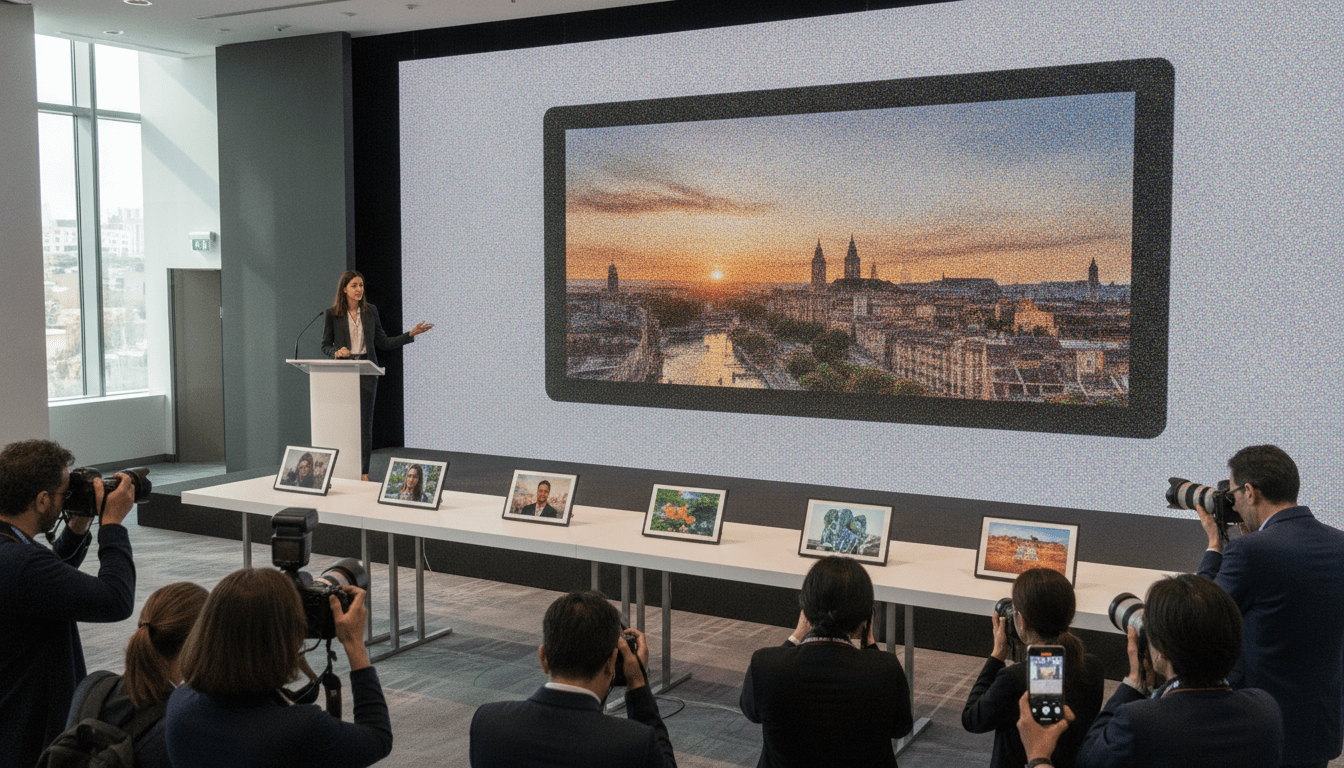
Aura Ink frame brings six-color e-ink and dithering to digital photo displays
Aura’s Ink frame uses six-color e-ink and a dithering algorithm to display print-like family photos on a 13.3-inch frame with monthly USB-C charging now.
The newly revealed Aura Ink frame applies color e-ink to the digital photo-frame market, promising a print-like look for family images while avoiding a bright LED screen. The 13.3-inch Ink accepts uploads through Aura’s app and runs on a battery that typically requires a USB-C charge about once a month. Aura positions the device as a premium alternative to conventional digital frames, trading exact color fidelity for a subtler, paper-like presentation.
Aura unveils Ink e-ink photo frame
Aura’s latest model uses a color e-ink panel and is being marketed alongside the company’s existing LED Aspen frame as a higher-end option. The Ink measures 13.3 inches and carries a $499 price tag, while the Aspen remains available at a lower cost with LED illumination. Company founders who launched Aura roughly a decade ago have pursued less obtrusive, more artlike displays, and the Ink is the first model that attempts that goal using color e-ink.
Six-color e-ink constraints and market context
Color e-ink remains rare in consumer hardware because the technology is currently limited in its native palette, a constraint set by display manufacturers rather than frame makers. The available color set is usually confined to a small group of hues — commonly red, blue, green, yellow, white and black — so few devices have attempted full-color photo reproduction. That scarcity has kept most color e-ink hardware out of mainstream circulation and left companies to work around the limitation.
Dithering algorithm translates photos to six tones
To overcome the restricted palette, Aura developed a dithering technique that breaks images into patterns the eye interprets as softer gradients and expanded tones. The company trained and tuned that processing specifically for portraits and family photos, where subtle skin tones and midrange hues matter most. Reviewers and some photographers note that the result is not a perfect color match to an LED or print, but many find the rendered images aesthetically pleasing and closer to a printed photograph than a typical backlit screen.
App integration and shared libraries
The Ink links to Aura’s mobile app, which supports photo uploads from phones, email, the web and popular cloud services such as iCloud and Google Photos. The app also offers shared libraries and simple social features so family members can contribute images remotely, a convenience intended to help less technical users keep the frame updated. Aura says the setup is straightforward enough for non‑technical relatives, a key usability consideration for a product often bought as a gift.
Display cadence, rendering and power behavior
By default the Ink advances images once per day, typically performing that update during nighttime hours, and the frame will sleep when not in use to conserve charge. If a user changes images manually through the app, the device runs its dithering process and can take roughly a minute to render the six‑color version on screen. Aura quotes a battery cadence of around one monthly USB-C charge under normal use, and mounting hardware is designed for easy removal and rehang, according to testers.
Design comparison and trade-offs
Aura also supplied its 12-inch LED Aspen frame as a point of comparison; testers described the Aspen as a premium LED option with anti‑glare matting that helps mimic printed photos. The Ink’s aesthetic is intentionally different: its slightly altered color balance and grain produced by the e-ink rendering can read as an intentional, analog-like finish or as a limitation, depending on the viewer’s standards. At $499 the Ink sits in the premium segment, making the trade-off between color accuracy and a gentler, less intrusive display the central purchasing consideration.
The Ink represents a notable technical effort to bring e-ink’s low‑eye‑strain benefits into a decorative home product while retaining connectivity and sharing features expected from modern digital frames. For buyers who prize a printed look and subtle room lighting over exact color reproduction, Aura’s Ink frame appears to be a compelling, if premium, option.
