
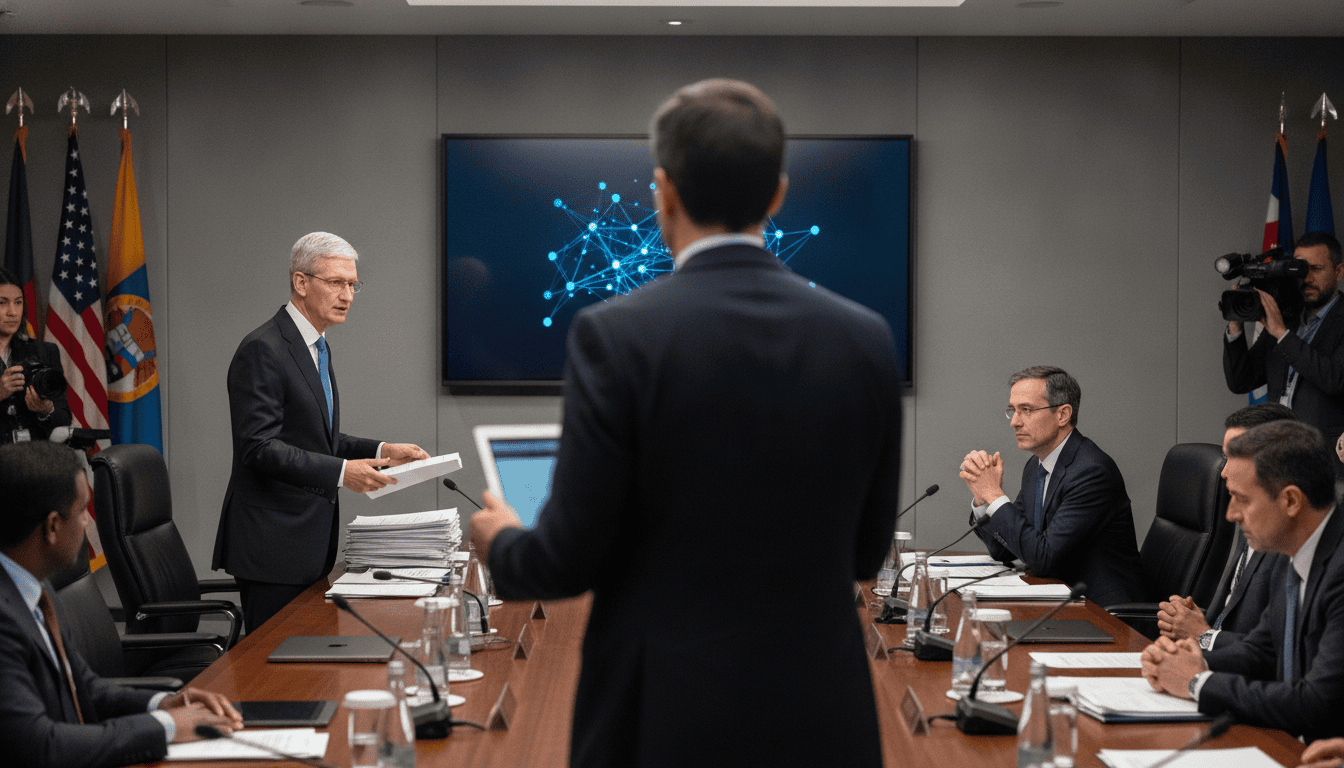
Apple sues OpenAI in California court, alleging theft of trade secrets by former Apple staff
Apple sues OpenAI over alleged theft of trade secrets, accusing former Apple staff of bringing prototypes to interviews and transferring confidential files.
Apple filed a lawsuit against OpenAI on July 10, 2026, in a California court, alleging that the developer of ChatGPT used stolen trade secrets to accelerate its hardware initiatives. The complaint, filed by the iPhone maker, says more than 400 former Apple employees now work at OpenAI and that some carried confidential materials or advised recruits to conceal departures. Apple’s action marks a dramatic escalation in tensions between the two companies that had appeared collaborative as recently as 2024.
Apple files suit in California court
Apple’s complaint names OpenAI, the design company Io Products, and two former Apple engineers as defendants in the litigation filed on July 10, 2026. The company accuses defendants of a pattern of misappropriation tied to recruitment and development activities aimed at building hardware. Apple says its internal review identified instances where proprietary information left Apple’s secure environment and was used or requested outside the company.
The filing frames the conduct as systematic rather than isolated, and it seeks relief through the courts to stop further alleged misuse and recover damages. Apple also says it raised early concerns in February 2026 and received no substantive response from OpenAI, according to the court papers.
Details of trade-secret allegations
Apple alleges that former employees instructed job candidates and recruits to bring physical components or “actual parts” of Apple products to interviews and demonstrations. Those activities, the complaint contends, exposed confidential design work and sensitive technical details that are not publicly known. Apple describes these examples as indicative of a wider pattern that threatens its product roadmap and competitive position.
The complaint includes specific claims that internal Apple systems and files were accessed after employees left the company, and that confidential documents relating to hardware design and development were copied and transferred. Apple says these actions harmed its business and violated non-disclosure and other legal obligations.
Accused employees and recruitment practices
Two former Apple employees are named personally in the suit: Tang Yew Tan, who Apple says is now OpenAI’s head of hardware and who reportedly spent 24 years at Apple; and Chang Liu, alleged to have left Apple in early 2026 after an eight-year tenure. The complaint asserts Tan encouraged recruits to conceal their departure plans and to present Apple parts during hiring processes. Liu is accused of retaining access to a company device and downloading files containing sensitive product information after he left.
Apple’s lawyers argue these practices were part of a deliberate recruitment and retention strategy that exploited knowledge and materials originating at Apple. OpenAI’s roster of former Apple staff, Apple says, increases the risk that proprietary techniques and designs could be transferred to competitors.
OpenAI’s hardware push and Io Products deal
Apple’s suit highlights OpenAI’s recent moves into consumer hardware, including its acquisition last year of Io Products for $6.5 billion and the company’s public partnership with Jony Ive. That transaction, Apple says, signaled a direct challenge to Apple’s dominance in device design and spurred competition for talent with deep institutional knowledge of Apple products. Industry observers at the time described the move as positioning OpenAI to develop new AI-integrated hardware.
Apple frames the lawsuit as a response to that competitive threat, saying it believes confidential design methods and sensitive product data could be leveraged to speed OpenAI’s entry into markets historically dominated by Apple. The complaint does not list Jony Ive as a defendant.
Responses from OpenAI and public figures
OpenAI has rejected the allegations, stating it is not interested in acquiring other companies’ trade secrets and that it intends to defend itself vigorously. The company’s brief public statement maintains that OpenAI aims to develop its hardware ambitions lawfully and ethically. OpenAI did not, Apple says, respond to the February 2026 letter flagging concerns during Apple’s early inquiries.
The dispute has also drawn commentary from other tech figures. Elon Musk, who has a history of public conflict with OpenAI and filed a separate lawsuit against the company in 2024, criticized OpenAI’s leadership on social media. Musk’s own litigation produced a jury decision this spring against him, which he has said he will appeal.
Potential legal and market consequences
The case could prompt extended discovery into hiring practices, data access controls and the movement of talent between major technology firms. If Apple proves misappropriation, courts could impose injunctions, monetary damages and stricter oversight of personnel who transition between competitors. The litigation also raises questions about how companies safeguard sensitive design work in an era of intense competition for AI and hardware expertise.
Market observers say the suit could chill collaboration across the sector and complicate partnerships that rely on shared research and personnel mobility. Legal experts note that trade-secret cases often hinge on granular technical proofs and chain-of-custody records, meaning the dispute may take months to play out in court.
The filing represents a turning point in relations between two of Silicon Valley’s most prominent tech groups, underscoring how competition for AI-enabled hardware has intensified and how legal tools are being used to contest it.
