
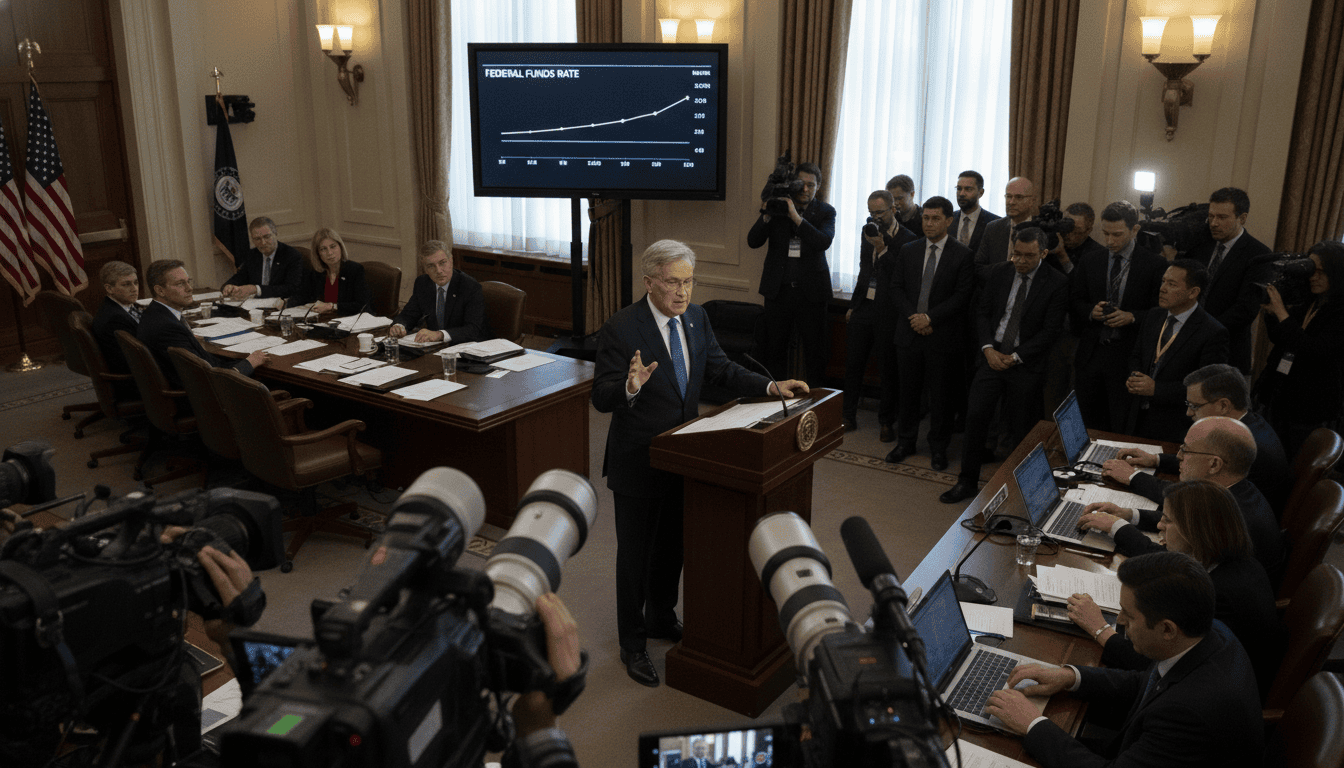
Federal Reserve Holds Interest Rate at 3.5–3.75% as Three Officials Push for Hike
Federal Reserve holds interest rate at 3.5–3.75% after a 9-3 vote to pause; markets now expect a likely September hike amid persistent inflation pressures.
The Federal Reserve held its benchmark federal funds rate at 3.5–3.75% on Wednesday, with the policy committee voting 9–3 against an immediate increase. The decision, the second under Chair Kevin Warsh, keeps the central bank on pause even as three regional officials dissented in favor of a 25 basis-point hike. Federal Reserve holds interest rate remains the central phrase driving market attention as traders reassess the timing of future moves.
Fed keeps federal funds rate unchanged
The Federal Open Market Committee reaffirmed the current target range, citing mixed signals from inflation and growth data. Committee members judged that maintaining the rate band for now would allow more time to evaluate the impact of recent energy price shocks. The decision leaves the Federal Reserve holds interest rate policy in a holding pattern while staff continue to monitor incoming economic indicators.
Three dissenters push for a 25 basis-point rise
Nine of the committee’s twelve members supported the pause, while three officials favored a one-step increase of 25 basis points. Those dissenting votes reflect an internal split over the speed and extent of policy restraint needed to bring inflation back toward the Fed’s goal. The recorded dissents underscore that the Federal Reserve holds interest rate only for the moment and that a majority still views further tightening as a live option.
Inflation and energy shock cited in deliberations
Policy discussions referenced a recent rise in consumer prices tied to an energy-price shock following the conflict in Iran, which lifted headline inflation. Although inflation has eased from earlier peaks, the consumer price index remained elevated at roughly 3.5 percent in June, a level the Fed considers still too high. Officials signaled that the persistence of inflation, particularly if driven by volatile energy costs, could justify renewed tightening.
Markets price a likely September hike
Financial markets reacted to the pause by shifting expectations toward a September rate decision rather than an immediate move. Traders have increased the probability of a quarter-point rise at the Fed’s next scheduled meeting, reflecting the committee’s hawkish signals despite the unanimous pause. Market pricing now closely watches economic releases this summer for clues about the timing and size of any future Federal Reserve interest rate adjustments.
Warsh’s stance and policy outlook
Chair Kevin Warsh, who took the helm late in May, has established a reputation as an inflation-focused policymaker and has warned against tolerating persistently high price rises. Warsh has been described by colleagues and observers as leaning toward a firmer approach to monetary policy when inflation risks re-emerge. Under his leadership the committee has balanced the need to contain inflation with concerns about economic growth, keeping the door open for further action.
Political pressure from the White House and investors
President Donald Trump continues to call for lower interest rates, arguing that cuts would stimulate growth, even as Fed officials emphasize their mandate to control inflation. The political debate adds an extra layer of scrutiny to Fed communications and magnifies market sensitivity to policy statements. Nonetheless, the central bank stressed its independence in setting policy based on economic data rather than political preferences.
Economic forecasters and investors will now turn their attention to upcoming data on employment, consumer prices, and production to gauge the Fed’s next steps. With the committee split and geopolitical risks influencing energy markets, each new release will be read for its implications on the path of inflation and interest rates.
The Federal Reserve holds interest rate at 3.5–3.75% for the moment, but the balance of risks and the recent dissent suggest policymakers are prepared to act if inflation fails to continue its descent.
