
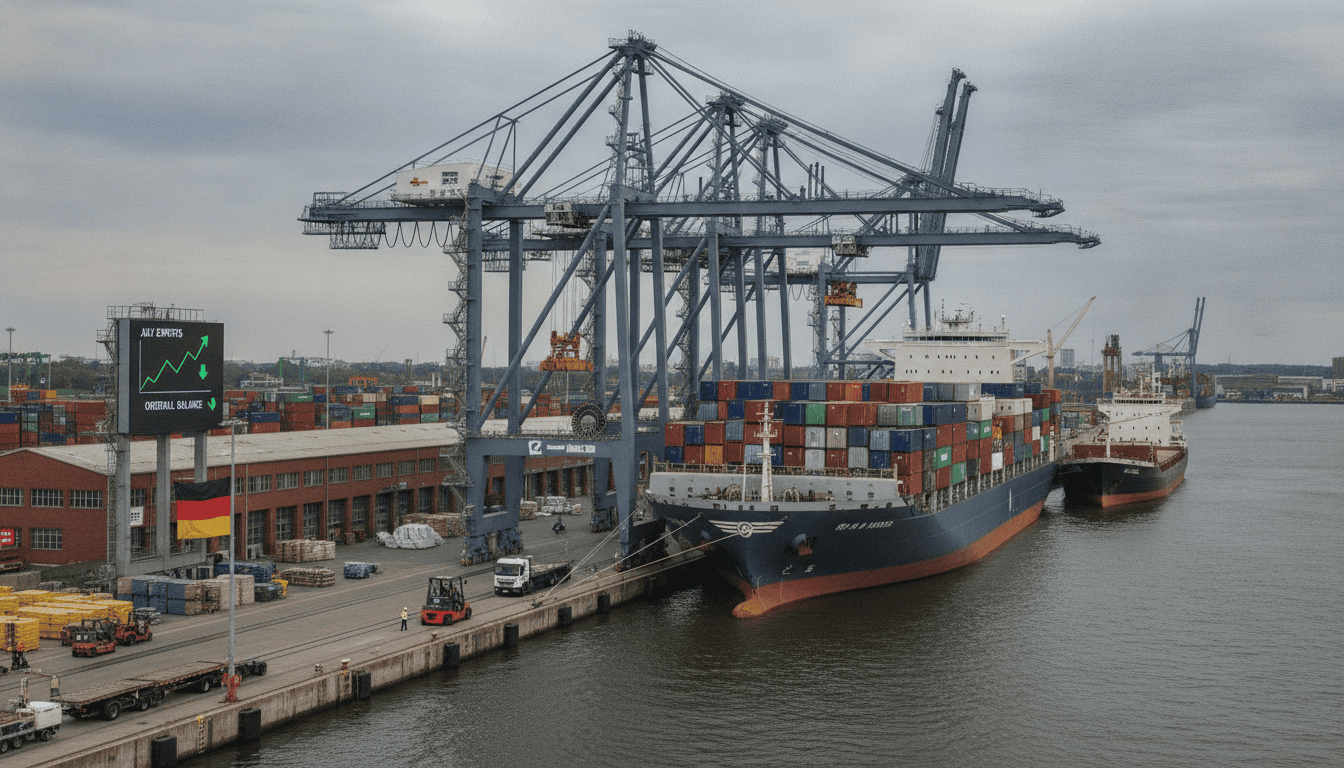
German export expectations tick up in July as ifo barometer reaches −3.3
Germany’s export expectations rose in July 2026 as the ifo barometer climbed to −3.3, signaling modest improvement in sentiment even as many exporters face persistent headwinds.
German export expectations improved slightly at the start of the second half of 2026, the Munich-based ifo Institute reported, with the Export Expectations Barometer rising to −3.3 points in July from −3.6 in June. The increase marks the second consecutive monthly gain, but ifo survey head Klaus Wohlrabe warned that the export sector “has still not really got going” and companies are hoping for renewed impulses from overseas markets. The shift in the barometer reflects varied conditions across industries rather than a broad-based upswing.
ifo data and headline figures
The ifo Institute’s July 2026 survey showed the export expectations indicator at −3.3, a modest rise from June’s −3.6 and the second monthly uptick this year. The institute’s monthly pulse on exporters captures forward-looking sentiment and acts as an early gauge of export momentum. While the indicator remains below zero, the direction of change suggests firms are slightly less pessimistic about near-term foreign demand.
Sector-level winners: electrical equipment, beverages, machinery and food
Responses to the ifo survey revealed clear winners within the export landscape, with manufacturers of electrical equipment and beverage producers expressing strong optimism about future shipments. Machinery and food producers also reported improving outlooks after a period of weaker expectations, signaling that some traditional export champions may be regaining confidence. These pockets of strength indicate demand resilience in specialized and branded segments where German firms maintain technology or reputational advantages.
Sectors under pressure: electronics, optical goods and metals
Not all industries shared the brighter tone; manufacturers of electronic and optical products registered a sharp deterioration in export expectations according to the ifo results. Producers of metal goods likewise forecast falling foreign sales, a development that highlights uneven recovery prospects across manufacturing subsectors. These declines point to competitive pressures and demand softness in markets where German suppliers face more direct substitution or cost-based competition.
Automotive outlook clouded by tariffs and Chinese competition
The automotive sector saw a rise in export expectations but remained in negative territory, underlining continuing challenges for carmakers and suppliers. Survey respondents cited US tariffs and intensifying competition from Chinese electric-vehicle manufacturers as important constraints on export growth. That combination of trade policy friction and rapid market-entry by new competitors is complicating recovery prospects for a sector that is central to Germany’s export profile.
Trade volumes rose but policy risks loom, says BGA
Official trade data for January through May 2026 showed German goods exports up about 3% to more than €676 billion, the ifo release noted, offering a reminder that exports continue to contribute materially to economic output. Dirk Jandura, president of the Federal Association of Foreign Trade (BGA), commented that “the world still buys German products” while warning that global trade has become more political and fiercely contested. Jandura called for a long-term national trade strategy to open new markets, strengthen existing partnerships and preserve the international competitiveness of Germany’s industrial base.
Companies surveyed by ifo emphasized that stronger impulses from overseas markets would be key to transforming current anticipation into higher shipment volumes. Several respondents in capital goods and consumer segments indicated they are awaiting clearer demand signals from Asia and the Americas before committing to expanded production or hiring. That caution helps explain why sentiment can improve modestly without an immediate translation into robust export growth.
Outlook and implications for policymakers and exporters
For policymakers, the mixed ifo readings reinforce the need to balance near-term support for exporters with strategic measures to mitigate geopolitical and competitive risks. Industry groups and trade associations are likely to press for targeted export promotion, trade diplomacy, and incentives that help firms scale in fast-growing markets. Exporters, meanwhile, face the operational challenge of reallocating resources toward niches and regions where German products retain a pricing or quality edge.
Market analysts say the barometer’s gradual improvement is not a signal that risks have disappeared, but it does provide a narrow window of opportunity for firms to press forward on diversification and innovation. If international demand strengthens, particularly in machinery and branded consumer goods, the modest uptick in expectations could foreshadow a more durable recovery in exports. Conversely, renewed trade frictions or a sharper slowdown in key markets would reverse sentiment gains quickly.
The ifo Institute and trade bodies will monitor incoming trade and production data in the coming months to determine whether the July rise represents a turning point or a temporary reprieve for German exporters. Observers say the directions firms take now in market diversification, pricing, and product positioning will shape export performance through the rest of 2026.
