
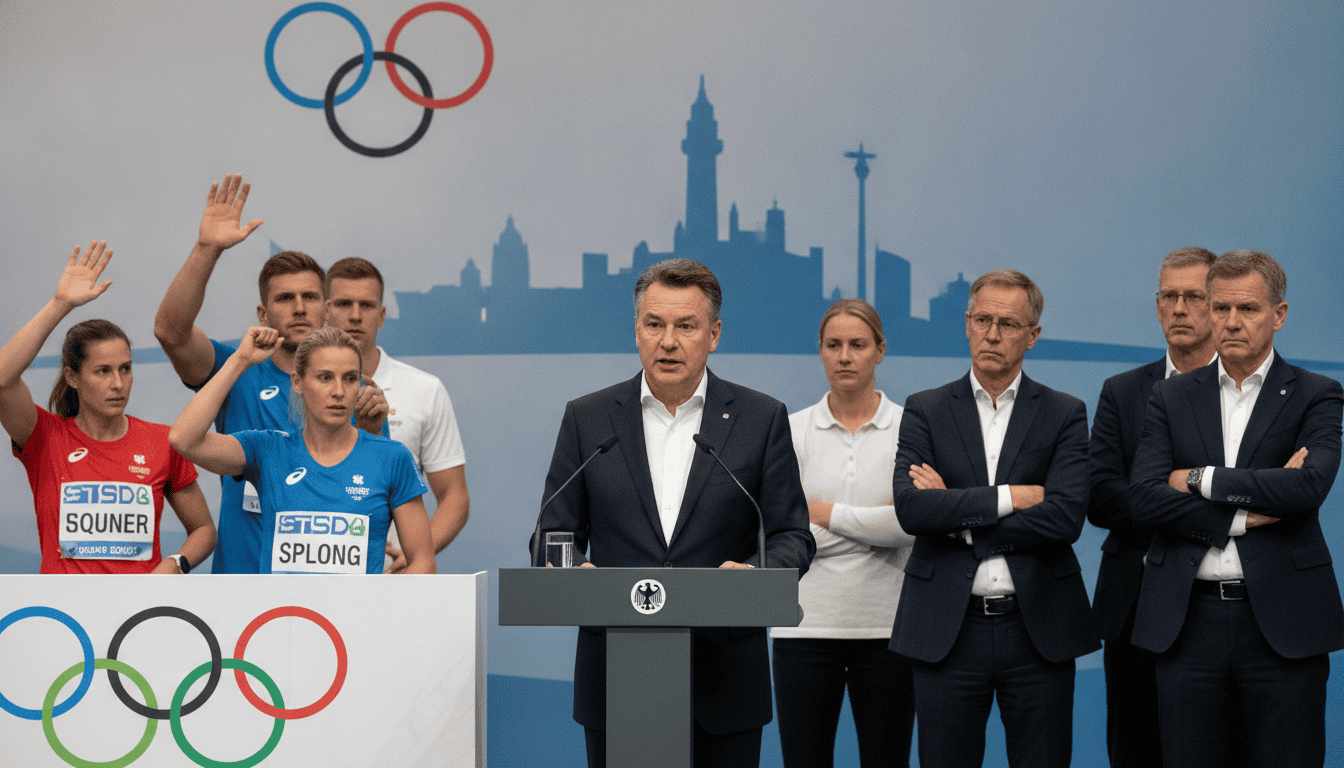
German elite sport lobby marginalized as football’s influence drives appointments
Appointment decisions in Berlin expose strains in the German elite sport lobby, as football’s dominance sidelines Olympic sports and the DOSB voices concern.
Political Appointment Catches DOSB by Surprise
The German elite sport lobby found itself sidelined after a recent personnel decision in Berlin caught the German Olympic Sports Confederation (DOSB) unprepared. Officials in the DOSB headquarters in Frankfurt reported surprise and consternation at the move, which they interpreted as a sign of disregard for the broader elite sport community. The lack of prior consultation underscored longstanding tensions between political actors and sports federations outside of football.
The reaction in the DOSB highlights how decisions made in ministerial circles can reverberate across associations that collectively represent millions of members. For many smaller federations, the episode reinforced a sense that their concerns receive less political weight than those of football interests.
Merz and Watzke’s Sauerland Ties Influence Sports Policy
Observers link the appointment to informal networks around conservative leader Friedrich Merz and Borussia Dortmund president Hans-Joachim Watzke. That regional affinity, often described as a “Sauerland connection,” appears to shape whom decision-makers consult when filling high-profile roles. Political leaders with close relationships to football executives can amplify the influence of the sport in recruitment decisions.
Critics argue this dynamic narrows the pool of voices shaping national sport policy and privileges actors familiar with top-level football. Proponents counter that established relationships can speed decision-making, but detractors say speed should not come at the cost of inclusive consultation.
Football’s Dominance vs. Funding for Olympic Disciplines
The episode laid bare an uncomfortable reality: football in Germany commands a cultural and financial heft that other elite sports lack. Major clubs and leagues operate with commercial revenues that leave them less dependent on state support, while many Olympic disciplines struggle to secure travel budgets and basic funding. This disparity fuels resentment among federations that must fight for every euro to enable athlete participation at international events.
The political calculus that favors visible, popular sports complicates support for disciplines with smaller audiences but strong international traditions. Stakeholders warn that overlooking these sports risks weakening Germany’s broader competitive capacity and undermining grassroots pathways that feed national teams.
Choice of Candidate Sparks Representation Concerns
The government’s consideration of a former national footballer for a high-profile cultural and sports role intensified unease within the DOSB community. While the candidate’s profile brings name recognition and UEFA experience, sports administrators outside football viewed the selection as symbolic rather than substantively representative. Many argued that appointing a football figure to act as a public face of national sport reinforces the perception that non-football disciplines are an afterthought.
Officials pointed out that day-to-day “Sacharbeit,” the technical work of sports administration, remains the responsibility of the chancellery’s sports department. Yet a public champion with cross-sport credibility was cited as missing from current plans, a gap that critics say weakens any campaign to rally national support behind Olympic bids or long-term funding reforms.
Chancellor’s Olympic Ambitions Lack a Public Evangelist
The debate rekindled discussions about how Germany should present itself to the International Olympic Committee if it pursues hosting rights. Observers noted that while political leaders can advocate directly, the presence of a charismatic, internationally recognized sports figure can be decisive in building momentum. Examples from other contexts show that high-profile advocates help translate domestic policy into persuasive bids on the world stage.
Instead of a unifying ambassador, the current approach appears fragmented: substantive preparation handled by technocrats, while public-facing appointments risk favoring sectoral loyalties. Analysts warn that without a coherent promotional strategy and an inclusive leadership team, any Olympic bid could struggle to gain broad-based national and international support.
Implications for Sport Governance and Funding Priorities
The appointment controversy underscores deeper governance questions about who speaks for elite sport in Germany and how funding priorities are set. If football’s ascendancy continues to shape appointments and political attention, federations representing Olympic disciplines may face sustained disadvantages. This could affect athlete development programs, international competitiveness, and the viability of less-commercial sports at the elite level.
Calls for a more consultative process are growing among sport officials who seek predictable funding and clear lines of communication with government. They argue that strengthening institutional dialogue would make policy outcomes more balanced and reduce the appearance that patronage and personal networks determine key roles.
Germany’s sports landscape now faces a choice between maintaining the status quo—where football dominates political attention—or forging a more pluralistic approach that treats Olympic and non-football disciplines as strategic national assets. The coming weeks will test whether policymakers respond to criticisms by broadening consultation or continue to rely on familiar networks and high-profile football figures.
The debate has placed a spotlight on the fragile relationship between political decision-makers and the full spectrum of German sport, and it has underscored the urgent need for a visible, inclusive strategy if the country hopes to unite stakeholders behind future bids and funding reforms.
