
Neura Robotics funding secures $1.4 billion to scale Physical AI and launch robot ‘gyms’
Neura Robotics funding: German startup raises $1.4 billion to build Physical AI infrastructure, robot training ‘gyms’, secure partners and prepare industrial scale-up.
Neura Robotics announced a $1.4 billion financing round that accelerates its push to commercialize Physical AI and train humanoid robots at scale. The funding will bankroll new infrastructure, international expansion and a network of robot “gyms” where industrial customers can teach machines tasks via sensors and apps. Company leaders said the round brings strategic investors and technology partners together to tackle the data, compute and platform challenges of physical automation.
Neura Robotics raises $1.4 billion to expand Physical AI
Neura’s announcement marks one of Europe’s largest recent investments in robotics and embodied artificial intelligence. Executives framed the round as necessary to move beyond prototypes toward industrial-scale production and global deployment. They emphasized that substantial capital is required not just for hardware but for the sensor, data and software ecosystems that make Physical AI practical.
‘Gyms’ created to teach humanoid and cognitive robots
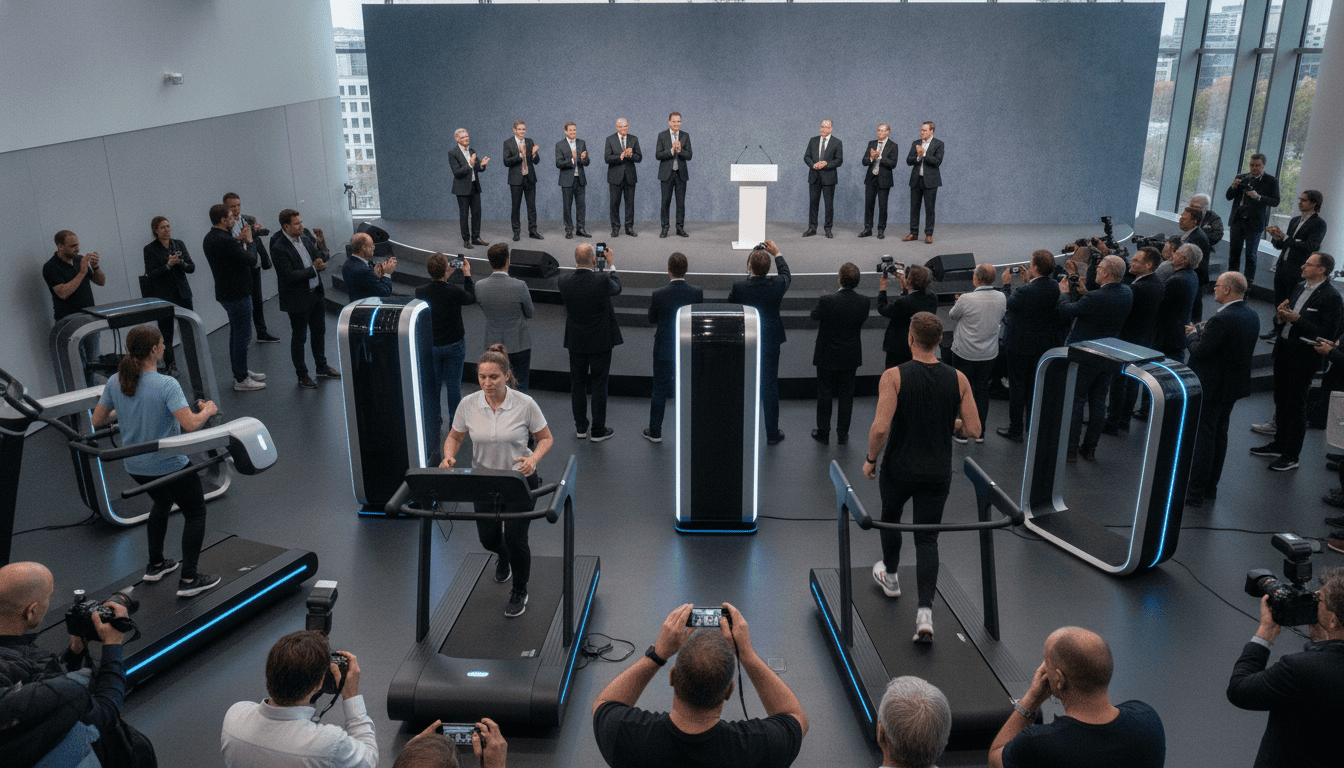
A central element of the plan is a set of training facilities Neura calls “gyms,” described as spaces where customers can load task-specific routines onto robots via an app. Each gym will host roughly 100 humanoid and cognitive robots, equipped with sensors to collect the high-quality data needed to teach physical tasks. Customers will be able to develop and test applications such as screwing, machining and material handling, and then deploy those processes through Neura’s platform.
Strategic partners and investor mix, including Tether
The financing round drew a mix of corporate and financial backers, including semiconductor, cloud and industrial partners, alongside large private investors. Company executives highlighted collaborations with firms spanning chipmakers, automation suppliers and cloud providers to address compute and integration needs. The presence of non-traditional investors like Tether was defended as complementary to the company’s vision for secure machine-to-machine transactions and platform-based knowledge transfer.
Scaling, data and the technical challenge of Physical AI
Neura executives stressed that Physical AI differs from conventional software AI because it requires rich, structured sensor data that largely does not yet exist. To overcome that gap, the company plans to build sensor networks, new standards for robotic “nervous systems,” and compute infrastructure tailored to physical learning. Scaling will also depend on partnerships that can provide both industrial customers to generate use cases and cloud and edge providers to host models and orchestrate fleets.
Safety policy and refusal of military applications
The company reiterated a deliberate stance against military uses of its robots, saying its mission focuses on augmenting human work in civilian industries. Leaders framed safety as foundational, not an afterthought, and described multiple independent control layers to prevent unintended behavior. They argued that physical systems face inherent constraints — energy, environment and regulatory oversight — that distinguish them from unconstrained software models and reduce the risk of rapid, uncontrolled escalation.
Commercial outlook, profitability and IPO prospects
Neura leaders said the $1.4 billion infusion is designed to carry the firm to profitability while preserving optionality on timing for a public offering. Executives signaled a multi-stage growth plan: increase production of mid-generation machines, gather operational data in gyms and partner facilities, and then scale toward broader deployments. An eventual IPO was presented as a vehicle to share the company’s gains with the public, contingent on demonstrable exponential growth and sustainable margins.
The company also highlighted sectoral consequences if its timetable holds: routine industrial tasks could be automated at lower cost than human labor in many contexts, and manufacturing footprints might rebalance geographically as algorithmic knowledge becomes a portable asset. Neura’s approach emphasizes keeping customer know-how within secure accounts on its platform, enabling transactional exchanges of skills or services without outsourcing core intellectual property.
Neura Robotics funding and its planned investments place the German startup at the intersection of robotics, cloud platforms and industrial transformation, with backers and partners assembled to tackle both engineering and commercial hurdles. The next 12 to 18 months will test whether the gyms and partnerships can produce the clean sensor data, repeatable processes and developer adoption the company needs to move from promising demonstrations to large-scale deployments.
