
German pharmacies face retail assault as dm, Rossmann and Lidl expand into medicine sales
German pharmacies are contending with intensified competition as drogerie chains and supermarkets push into over-the-counter and online medicine sales, forcing local operators to become digital entrepreneurs. The trend, which accelerated after dm entered the medication shipping market in December 2025, has pushed pharmacists like Cologne-based Gence Polat to reinvent their practices with apps, same‑day delivery and logistics start‑ups. Amid fixed dispensing fees, rising costs and a steady loss of branches, the fight over everyday medicines is becoming a test of access, public health responsibilities and business model survival for German pharmacies.
Drogerie chains enter OTC and Versandhandel
In December 2025 dm opened the door for major retailers to sell medicines online, and reports indicate that Rossmann and Lidl are preparing similar moves. This shift expands competition beyond established online pharmacy players and brings high‑volume retail logistics into the market for non-prescription medicines. Retailers present the change as customer convenience within the EU single market, but the entry of chains into Versandhandel raises questions about service quality and local provision.
Longstanding pressures on pharmacy economics
Community pharmacies are operating under fixed dispensing fees that limit revenue per sale even as operating costs rise, a squeeze that has already driven a notable decline in branch numbers. Many pharmacies report slimmer margins and difficult choices between reducing services and investing in digital capabilities. The structural pressure means that even well‑rooted neighborhood apothecaries are reassessing how to remain viable without sacrificing their role in urgent care and counselling.
A Cologne pharmacist pivots to a healthtech solution
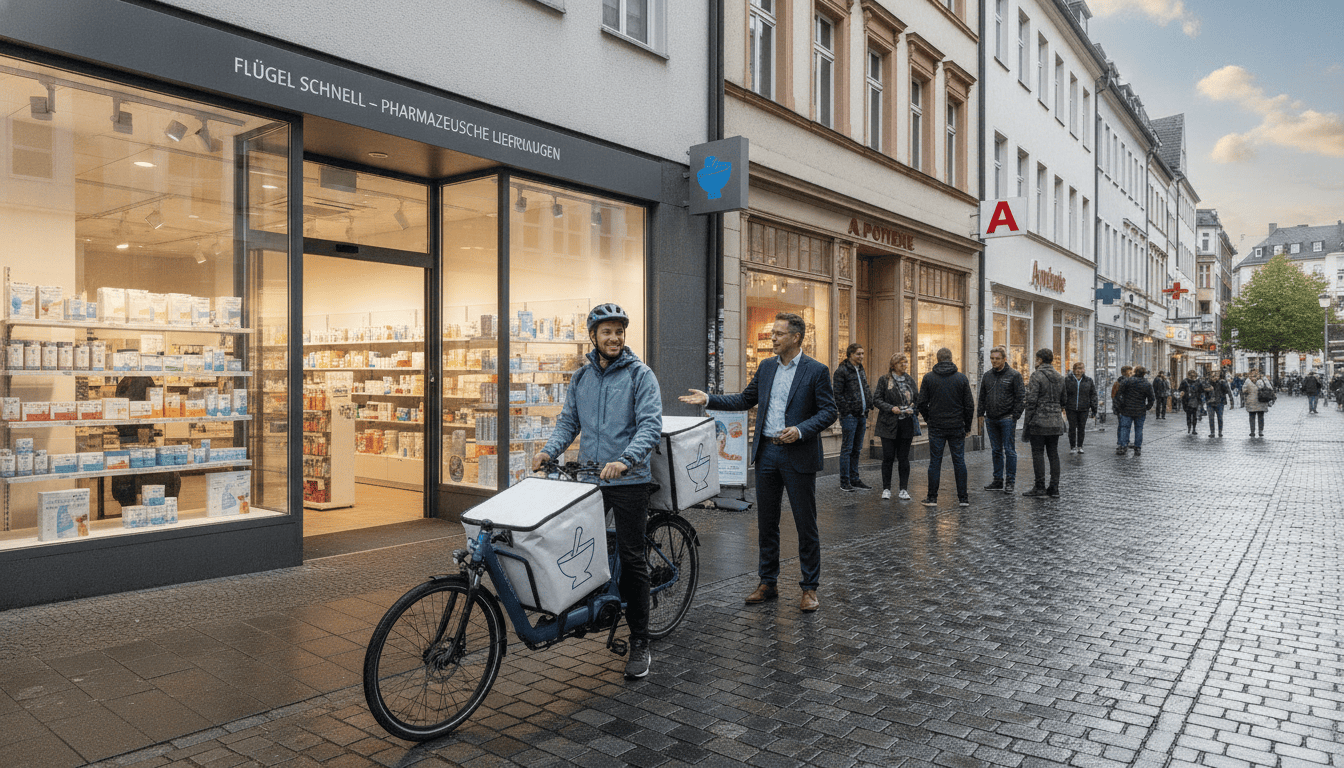
Facing that pressure, pharmacist Gence Polat in the Kalk district of Cologne has moved from counter service to entrepreneurship, founding the logistics start‑up E‑Boten with his brother. The venture bundles pharmacy logistics, digital route planning and same‑day delivery for local customers, aiming to replicate retail convenience while keeping medication distribution tied to pharmacies. Polat has added an app and social channels to coordinate orders and outreach, signaling a shift from single storefront to networked healthcare delivery.
Community care and language support at risk
Pharmacists and professional bodies stress that a pharmacy’s value extends far beyond shelving and checkout; in many neighborhoods they provide acute advice, medication reconciliation and language mediation for patients with limited German. Where large retailers standardize packaging and processes, personalized counselling—particularly important in migrant‑dense areas—may be harder to sustain. The potential loss of on‑site consultation risks widening barriers to safe medication use for some vulnerable groups.
Regulatory debate and market logic collide
The move by drogerie and supermarket chains has prompted debate among regulators, pharmacists and consumer advocates over how to balance market liberalization with public health needs. Retailers argue that broader access and efficient logistics benefit consumers, while pharmacy representatives warn that market logic does not automatically preserve the advisory and immediate care functions pharmacies provide. The discussion now centers on whether adjustments to remuneration, licensing or service requirements are needed to protect community access.
What reinvention looks like for local apothecaries
Some pharmacies are responding by forming alliances, investing in delivery platforms and emphasising consultative services that cannot be replaced by automated retail. Polat’s E‑Boten model illustrates one path: integrate digital tools and fleet logistics while keeping pharmacies at the centre of supply and advice. Others are exploring cooperative platforms for joint ordering, shared delivery networks and telepharmacy consultations to spread costs and reach.
The future of German pharmacies will likely be shaped by a mix of market competition, regulatory decisions and how quickly community operators can scale digital services without abandoning core patient care. If local apothecaries can combine the speed and convenience customers expect with the advisory roles only pharmacists can offer, they may carve out a sustainable niche despite retail pressure.
