
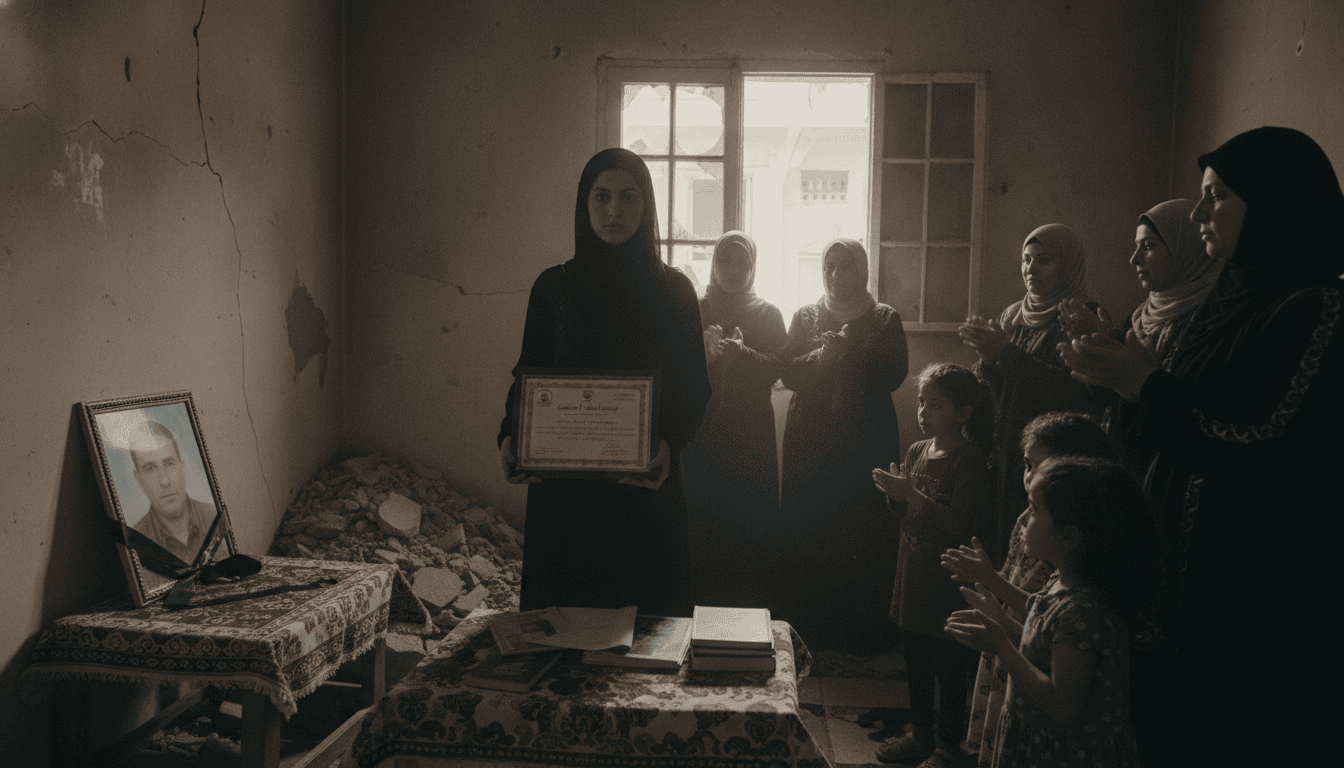
Gaza Student Saba Rabah Tops Palestine High School Exams Despite Loss and Displacement
Gaza student Saba Rabah topped Palestine’s national high school exams despite losing her father and being displaced, highlighting resilience and prompting aid calls.
Saba Rabah’s result was announced as the highest score in this year’s Palestine national high school exams, a landmark achievement amid months of intense conflict in Gaza. Her success comes after the death of her father and the forced displacement of her family, circumstances that undercut the normal conditions for study. The announcement has drawn attention both inside Palestine and among international observers to the challenges students face in wartime.
Top Score Confirmed by Education Authorities
The Palestinian Ministry of Education confirmed the national exam rankings, placing Saba Rabah at the top of the cohort. Officials said the exams proceeded under exceptional circumstances and that results were compiled from centers across the West Bank and Gaza. Education authorities emphasized the need to preserve academic standards while acknowledging the extraordinary obstacles many students encountered.
Education ministry representatives have outlined plans to ensure winners receive recognition and support, though details on scholarships or further assistance have not been fully released. Local schools in Gaza and refugee camps reported holding small-scale celebrations where conditions allowed. The ministry also noted that logistical disruptions affected exam administration in several areas, requiring contingency measures.
Family Loss and Forced Displacement
Saba Rabah’s academic success came against a backdrop of personal tragedy: her father was killed during the conflict, and her family was displaced from their home. The loss has added a layer of personal grief to the broader community trauma experienced across Gaza. Relatives and neighbors described the family’s ordeal as emblematic of the civilian toll of the fighting.
Displacement interrupted daily routines, housing, and access to study spaces, forcing many students to adapt to crowded shelters, temporary accommodations, or makeshift study areas. In such settings, quiet and stability are scarce, yet Rabah and others reported persisting with revision and taking exams where possible. The case has highlighted how family bereavement and uprooting compound educational disruption.
Studying Through Bombings and Blackouts
Students in Gaza who sat the national exams reported studying amid intermittent bombings, power blackouts, and scarce internet access. These conditions complicated revision, access to digital learning materials, and communication with teachers. Despite those constraints, Rabah reportedly continued her studies, managing to prepare for the exams under extreme stress.
Teachers and classmates recounted coping strategies that included group study sessions in safer locations and reliance on printed materials when online resources were unavailable. Education workers stressed that the emotional strain of living in a conflict zone affects concentration, memory, and exam performance, making Rabah’s top score particularly notable. Mental health professionals warned that continued exposure to violence places long-term pressures on students’ wellbeing.
Education Officials and Public Reaction
Reaction to Rabah’s achievement has been widespread, with education officials, school leaders, and members of the public offering congratulations. Social media posts from within Palestine praised her perseverance and used the result to draw attention to the broader plight of students in Gaza. Local civil society groups called for expanded support for displaced students and targeted aid for schooling infrastructure.
At the same time, calls for practical support have intensified, with advocacy groups urging donors and authorities to prioritize educational continuity. Community leaders urged that recognition be paired with concrete assistance—scholarships, counseling services, and stable learning environments—to translate symbolic victory into longer-term opportunities. Several organizations pledged to coordinate relief efforts focused on students, though logistical and security challenges remain.
Wider Implications for Palestinian Education Policy
Rabah’s top ranking has prompted renewed discussion about the resilience of Palestinian students and the structural barriers they face. Education analysts said the result underscores both the determination of individual students and the fragility of educational systems under conflict. Policy discussions are likely to focus on emergency education funding, teacher support programs, and the reconstruction of school facilities.
International donors and education NGOs could be prompted to reassess priorities, balancing immediate humanitarian needs with longer-term investments in curricula, teacher training, and psychosocial services. Observers noted that preserving exam integrity and student progression will be crucial if tens of thousands of pupils are to continue academic paths disrupted by violence. The outcome also raises questions about pathways to higher education for top scorers from Gaza, including access to scholarships and mobility.
Saba Rabah’s achievement has become a symbol of individual endurance in the face of devastating circumstances, drawing attention to the thousands of students whose schooling continues amid conflict. Her top score may open doors for personal advancement, but it also serves as a reminder that systemic support and protection for education are urgently needed across Palestine.
