
Cologne river water heat pump breaks ground in Niehl, aiming to heat 50,000 homes
Cologne river water heat pump breaks ground in Niehl: 150 MW plant in Niehl to heat 50,000 homes with €280m investment and €100m subsidy, expected online by 2028.
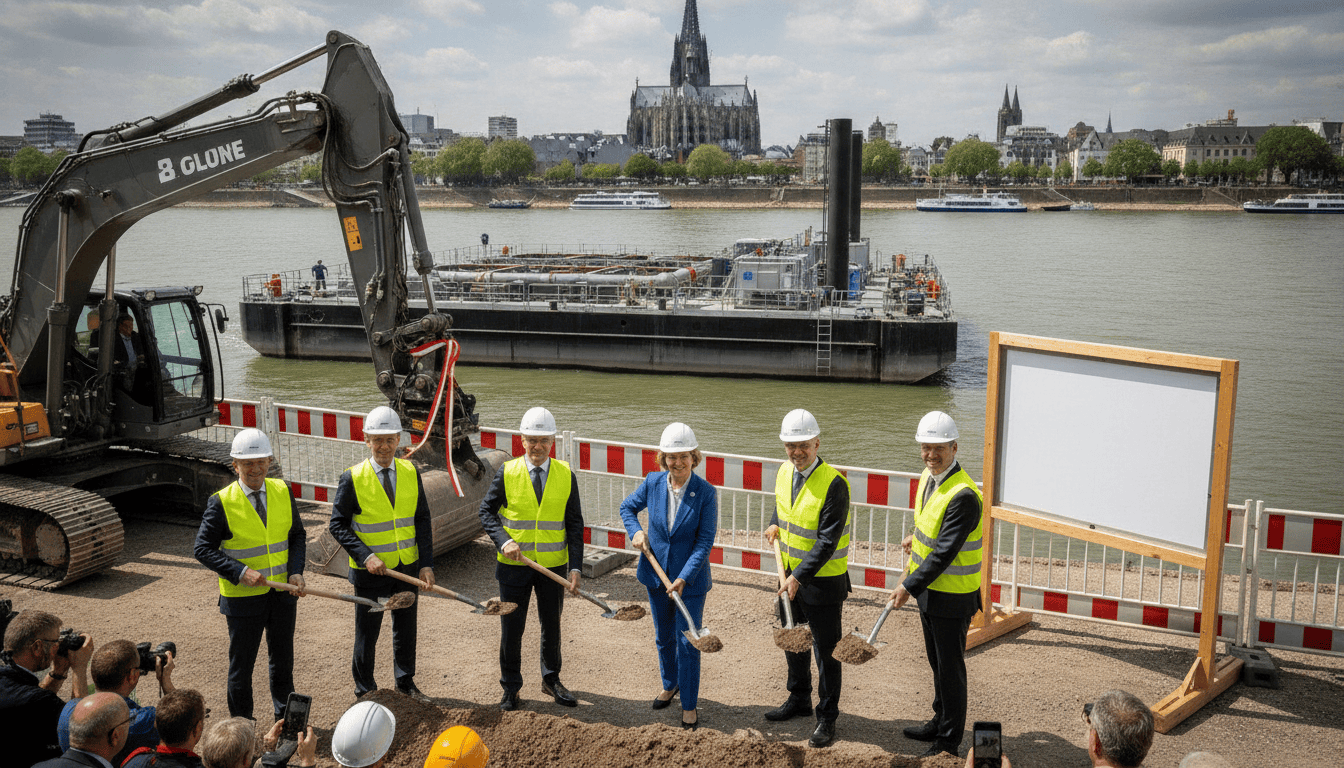
The Cologne river water heat pump project broke ground on a sunny July afternoon in the Niehl harbour basin, where officials laid the foundation slab for what is billed as Europe’s largest river-source heat pump. The Cologne river water heat pump will have an installed capacity of about 150 megawatts and is designed to supply low‑carbon district heat for roughly 50,000 households. Local and federal ministers, city officials and the utility Rheinenergie attended the ceremony as construction moves toward an expected commissioning in the 2028 heating season.
Groundbreaking ceremony and local leadership
A small concrete pad and framed construction area marked the site where three large heat pump modules will stand, and officials donned helmets for an inspection of the preparatory works. Federal Economics Minister Katherina Reiche, North Rhine‑Westphalia Economics Minister Mona Neubaur, Cologne Mayor Torsten Burmester and Rheinenergie CEO Andreas Feicht joined the event to highlight the project’s scale. Organizers described the scheme as a showcase for using river water as a primary heat source for a dense urban network.
Technical design and capacity
The installation will draw from the Niehl harbour basin and is engineered to handle up to 30,000 cubic metres of Rhine water per hour in peak conditions. Operators plan to run the three heat pump modules using renewable electricity when prices allow, producing up to 150 MW of thermal output. Rheinenergie expects the system to decarbonize about 30 percent of Cologne’s existing district heating load once the plant reaches full operation.
Economic model and grid integration
Planners intend a hybrid operating strategy to reduce running costs: the heat pumps will operate primarily when renewable power is abundant and electricity prices are low, while a nearby gas‑and‑steam turbine plant can supply heat when power is expensive. Both facilities will use a shared water discharge structure, allowing the river return flow to alternate between warm outflow from the turbine and cooler water from the heat pump. The operator characterizes this “mixed calculation” as a way to smooth costs and integrate fluctuating renewable generation.
Project financing and ownership
The total investment for the project is about €280 million, of which roughly €100 million comes from federal and EU funding, according to statements at the ceremony. Rheinenergie carries the majority ownership, with the city of Cologne holding just over three quarters of the company and Westenergie—an E.ON subsidiary—owning the remainder. Officials at the event emphasized that subsidy support is leveraged to attract additional private capital for large‑scale low‑carbon infrastructure.
Regulatory and environmental hurdles
The project experienced roughly a year’s delay amid complex permit discussions with authorities and conservation groups, officials acknowledged. Early permission talks flagged a fish‑protection issue: small fish can be drawn into the intake and might become prey at the discharge site, prompting concerns from environmental advocates. Rheinenergie now plans a “fish management” regime that reintroduces caught fish further downstream as part of its mitigation measures, and one final permit for thermal discharge remains pending.
Policy context and market outlook
The Cologne scheme arrives as Germany’s policy and market backdrop for heating transitions has shifted. A recently passed buildings modernization law removed the previous mandate that new heating systems must run at least 65 percent on renewables, a change the industry says alters incentives for household conversion. Yet utilities argue the law has less immediate impact on large district‑heating customers such as institutional housing providers, who remain focused on decarbonization goals.
An empirical analysis by the Energy Economics Institute at the University of Cologne, led by Ann‑Kathrin Klaas, cited at the event indicates the market for large heat pumps is expanding rapidly. The study projects that currently announced projects could raise installed large‑heat‑pump capacity from about 200 MW today to nearly 1,150 MW by 2030, a nearly sixfold increase. The authors note new plants will draw not only from rivers but also from industrial waste heat, wastewater and sewage, signalling a broader shift in heat sourcing.
Industry barriers and competitive dynamics
Think tanks and research institutes warn the push for large heat pumps faces structural headwinds, including the relative tax and levy burden on electricity compared with gas. Analyses by Agora Energiewende and Fraunhofer institutes have argued that higher electricity charges and slow approval processes can make heat pumps less competitive than gas‑fired alternatives. Proponents counter that falling renewable‑generation costs and strategic use of low‑price power windows will improve the economics of river‑sourced systems over time.
Rheinenergie officials remain optimistic that the Niehl project will become a model for other cities despite competition from similar builds elsewhere; a comparable river heat pump under construction in Mannheim is expected to reach 165 MW when complete. Cologne’s project team stresses that its combination of public support, paired generation options and lessons from permitting will help accelerate the roll‑out of comparable plants across Germany and Europe.
The site now transitions from ceremonial foundation works to heavy civil engineering and the installation of metre‑thick pipes and three large heat pump modules, with Rheinenergie targeting the 2028 heating season for first deliveries of river‑sourced district heat.
