
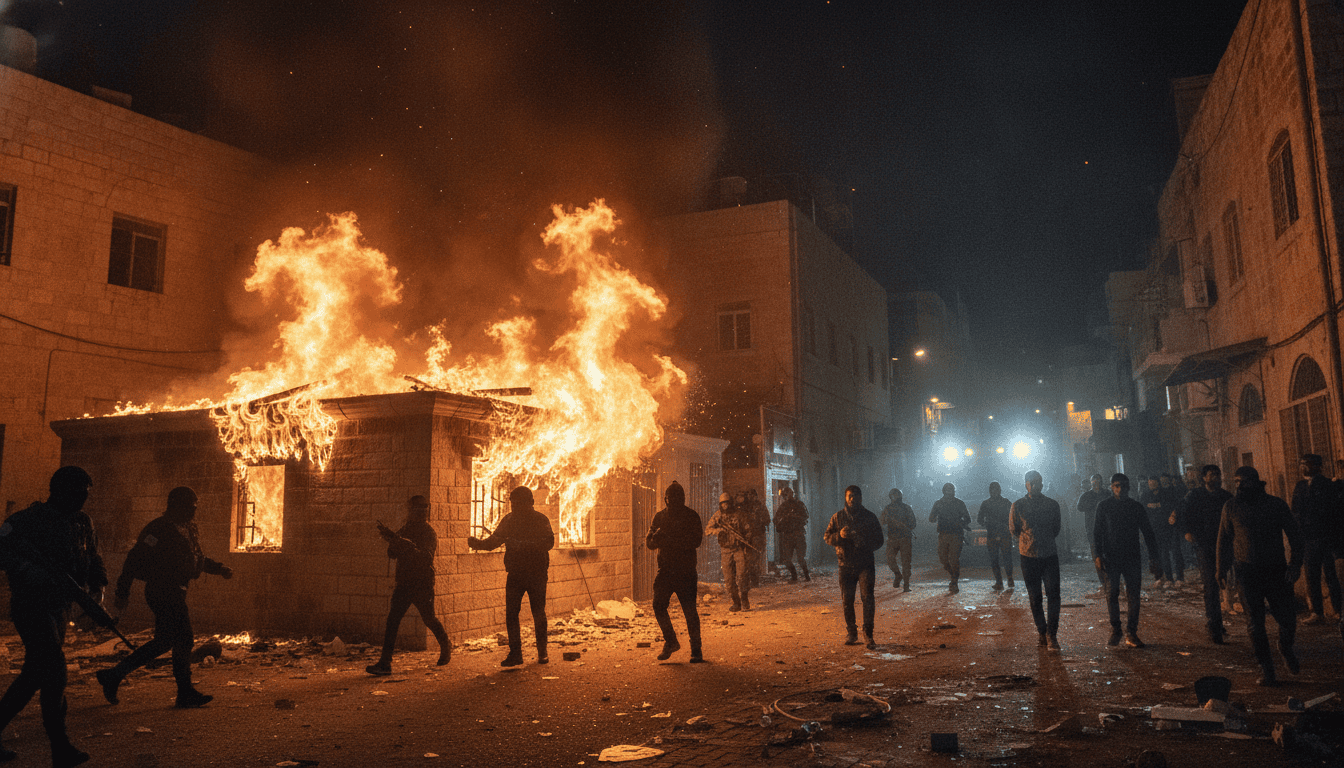
Rafidia raid: Israeli forces launch major operation near Nablus amid wider West Bank tensions
Israeli forces launched a major raid in Rafidia near Nablus, a development that local and regional outlets say is linked to a series of coordinated operations and settler attacks across the West Bank. The Rafidia raid is reported alongside multiple detentions, the burning of a mosque in Kur, demolitions in Jenin and the establishment of a new outpost in the central West Bank. Officials and agencies cited by local media describe an escalating pattern of confrontations and property damage that has deepened tensions across the occupied territories. Israeli media and Palestinian news agencies reported arrests at a Tel Aviv demonstration and lethal shootings near Nablus in the period surrounding the raids.
Major raid reported in Rafidia near Nablus
Al Jazeera reported that Israeli troops carried out what it described as a “major raid” in the Rafidia neighborhood of Nablus, with soldiers observed moving through residential areas and detaining suspects. Local accounts and footage circulated on social media depict a heavy security presence and exchanges between forces and residents during the operation. Palestinian sources said the raids were part of wider security sweeps in the northern West Bank that targeted locations in and around Nablus.
Detentions across Tulkarem and Jenin governorates
Wafa news agency reported that Israeli forces detained 16 Palestinians in raids across the Tulkarem and Jenin governorates, including a woman and several individuals identified as former prisoners. The detentions, according to Palestinian officials cited by local media, occurred during night and early-morning operations that security services described as seeking suspects linked to recent incidents in the area. Families of the detainees and local human rights monitors called for information on the legal basis for the arrests and immediate access to the detained individuals.
Mosque arson in Kur and recent attack in Qusra condemned
In the village of Kur, Israeli settlers reportedly set fire to parts of a mosque and sprayed racist slogans on its walls, an act local officials and religious authorities called a deliberate attack on religious freedoms. The assault follows a separate incident in Qusra, south of Nablus, where a mosque under construction was targeted in what Palestinian religious officials termed a pattern of systematic attacks. The Ministry of Awqaf and Religious Affairs issued a formal condemnation, describing the incidents as part of a campaign that infringes on Palestinians’ right to worship and cultural heritage.
New outpost in Deir Istiya and demolition in Jalbun
Residents and local councils reported that Israeli settlers established a new illegal outpost in Deir Istiya in the central West Bank, expanding settlement presence in the area according to Palestinian officials. In Jenin governorate, Israeli forces demolished a Palestinian house under construction in the village of Jalbun, citing military or planning grounds in statements relayed by local media. The twin developments underscore rising concerns among Palestinians about land seizure and the disruption of civilian life in communities across the West Bank.
Protests in Tel Aviv and deadly shooting near Nablus
Israeli media reported that police detained nine people at a Tel Aviv demonstration against settler violence in the West Bank, an event held amid widespread public debate inside Israel over the security situation. The arrests came a day after Israeli forces shot dead four Palestinians in Tal, a town near Nablus, a fatal incident that local sources say intensified demonstrations and calls for accountability. Organizers of protests in Israel framed their actions as opposition to settler excesses, while authorities said they were maintaining public order in the face of heightened tensions.
The sequence of raids, detentions, settler attacks and demolitions has drawn reactions from Palestinian officials, religious authorities and civil society groups, who warn of an intensifying campaign that affects daily life and religious sites. Israeli officials and security spokespeople have framed some operations as necessary for law enforcement and counterterrorism, though detailed official statements on recent moves and the legal reasoning for specific demolitions and detentions have been limited in public releases. Human rights organizations monitoring the occupied territories urged transparent investigations into allegations of property destruction, attacks on religious sites, and the circumstances surrounding lethal incidents.
International observers and diplomatic missions monitoring the West Bank urged restraint and called for steps to reduce violence, according to statements relayed by regional media, noting the potential for local incidents to spark wider confrontations. Community leaders in affected towns described heightened fear and disruptions to schooling, worship and commerce as checkpoints, patrols and settlement activity increased. Local aid and humanitarian groups reported impediments to access for families seeking to visit or care for detained relatives.
As accounts continue to emerge from Nablus, Tulkarem, Jenin and other West Bank communities, independent verification of some reported incidents remains limited, with varying narratives offered by Palestinian news agencies and Israeli media outlets. Both sides cited security concerns and claims of provocation; international rights monitors emphasized the need for proportionality and adherence to legal obligations under occupation law. Calls for independent inquiries into attacks on religious sites and the care of detainees are likely to persist as the situation develops.
The Rafidia raid and the mosaic of related incidents across the West Bank signal a volatile period of localized confrontations and political fallout, with communities on both sides bracing for further developments and policymakers under pressure to provide clarity and de-escalation measures.
