
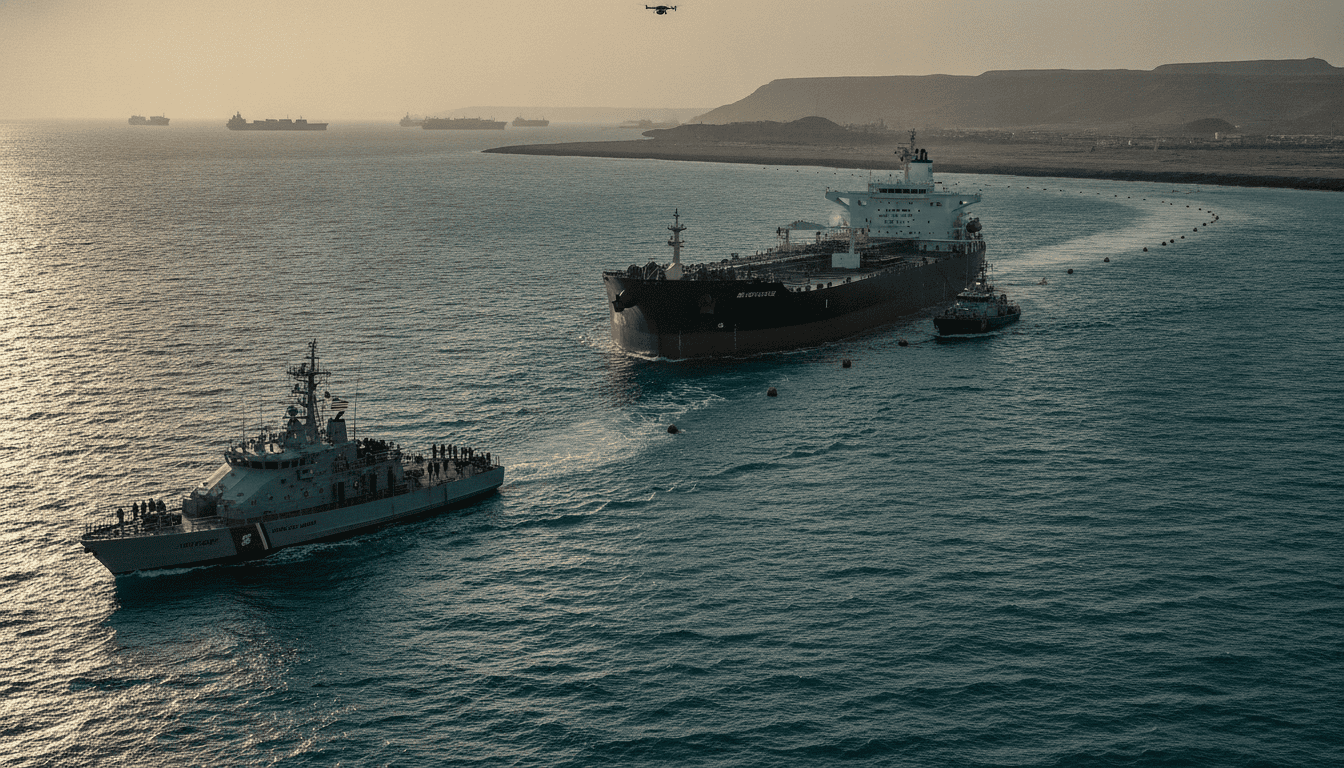
Iran accuses US of forcing a new route through the Strait of Hormuz, escalating maritime tensions
Iran accuses US of forcing a new route through the Strait of Hormuz, saying the move breaches their interim MoU and raises regional tensions and security.
Iran on Saturday accused the United States of attempting to compel a new shipping route through the Strait of Hormuz without Tehran’s consent, a move Tehran says violates an interim memorandum and has increased tensions in the strategic waterway. The allegation, made by Foreign Minister Abbas Araghchi in an interview with Iranian media, centers on competing interpretations of who may set transit routes and coordination mechanisms under the parties’ June memorandum of understanding. Officials in Tehran say Washington should have consulted with Iran before altering navigational arrangements that both sides committed to discuss.
Araghchi’s claim and the MoU dispute
Iran’s foreign minister argued that the June memorandum gives Tehran the right to designate transit routes and require ships to coordinate with Iranian authorities when passing through the strait. He said Washington’s reported push to open an alternative route bypassing Iranian oversight constitutes a breach of that agreement and a source of renewed friction. Iranian officials also said the MoU established a direct communications channel to resolve such disagreements, which they say the United States has failed to use adequately.
Araghchi’s statements arrived amid signs of halting de‑escalation, with Tehran and Washington exchanging messages through intermediaries even as mutual strikes earlier this month had damaged the interim deal. Iranian reporting said there were no direct overnight attacks on major Iranian cities on Saturday, a brief pause following nearly two weeks of nightly strikes that had intensified mistrust. Tehran has framed the dispute over maritime control as both a legal and security matter tied to sovereign prerogatives under the memorandum.
U.S. messaging and shifts in rhetoric
U.S. statements have rejected Iran’s claim that Tehran controls the Strait of Hormuz and argued that the waterway must remain open to international navigation without unilateral restrictions. President Donald Trump, who had earlier threatened “massive” attacks, appeared to moderate that rhetoric by saying he was “willing to listen” to talks, and U.S. and Iranian sources have confirmed message exchanges. U.S. Central Command spokespeople have described actions taken to prevent vessels they say attempted to flout a U.S. maritime blockade.
Despite the softer tone in public remarks, U.S. military officials have said they remain prepared to act to keep traffic moving through the strait, and have emphasized enforcement measures they consider necessary to protect commercial shipping. The dual approach — restrained public diplomacy alongside active naval operations — reflects Washington’s stated objective of maintaining unimpeded passage while deterring what it deems unlawful interference.
Naval incidents and blockade enforcement
Since mid‑July, U.S. forces say they have reasserted maritime controls in the region and have taken direct action against vessels they contend were violating a blockade of Iranian ports. U.S. Central Command reported disabling at least one tanker that purportedly ignored repeated warnings and said it had redirected a number of vessels after restarting enforcement on July 14. Tehran, for its part, has accused U.S. forces of imposing an unlawful blockade and of using coercive tactics to reshape transit routes in the strait.
Analysts note that such maritime confrontations carry the risk of rapid escalation because they involve physical interdiction of commercial shipping and repeated close encounters between naval vessels. Former diplomats and defence officials quoted by regional media have described a “hot and cold” pattern in which military pressure alternates with diplomatic outreach as each side seeks leverage without triggering full‑scale conflict.
Wider regional spillovers: Houthis and Red Sea routes
The maritime dispute between Washington and Tehran has intersected with actions by Iran‑aligned groups elsewhere, notably Yemen’s Houthi movement, which has disrupted traffic in the Bab al‑Mandeb and Red Sea approaches. Houthi strikes and reported targeting of infrastructure linked to regional oil exports have prompted air operations by the Saudi‑led coalition and raised concerns about the security of alternative shipping corridors. Saudi civil defence authorities reported sirens and precautionary measures in coastal provinces hosting energy facilities amid claims of Houthi attacks on assets tied to a major state oil company.
Those developments complicate efforts to reroute or diversify shipping away from the Strait of Hormuz, since alternative passages remain vulnerable to other state and non‑state actors. Maritime insurers, shipping companies and regional governments are closely watching how combined naval operations and militia strikes will affect freight flows and insurance costs for vessels transiting the Middle East.
Diplomatic options and obstacles to compromise
Mediators relaying proposals between Tehran and Washington say differences remain deep, with both sides expressing mistrust over verification and enforcement of any new arrangements. Iranian officials reported that proposals had been conveyed by intermediaries and that Tehran was reviewing them, but those same sources cautioned there had been little concrete progress. U.S. decision‑makers face domestic political pressures that complicate concessions, while Tehran must weigh domestic and regional standing before accepting any interpretive shift over control of the strait.
Observers suggest that restoring robust, direct communications and a clear, jointly overseen mechanism for transit coordination would be the quickest path to defuse immediate maritime friction. Yet entrenched strategic aims — including Washington’s insistence on unimpeded international navigation and Tehran’s insistence on sovereign oversight under its reading of the MoU — mean negotiations could be protracted and fragile.
The dispute underscores the strategic sensitivity of the Strait of Hormuz, a choke point through which a significant share of global oil shipments pass, and the degree to which maritime rules and on‑the‑ground practices can become focal points for broader geopolitical rivalry.
