
Tour de France 2026: Pogacar, Vingegaard and a mountain-drenched route set up dramatic finale in Paris
Tour de France 2026 race overview: stage winners, mountain showdowns including Alpe d’Huez double, and the unfolding GC duel between Pogacar and Vingegaard.
The 2026 Tour de France, which began on July 4 in Barcelona and concludes on July 26 on the Champs-Élysées in Paris, has unfolded into a three-week battle of specialists and general classification contenders. The race started with a team time trial in Catalonia and has already produced a mix of sprint victories, time-trial feats and repeated mountain attacks that have re-shaped the standings. With 23 teams and 184 riders contesting 3,321 kilometres and more than 54,450 metres of climbing, the final stages promise decisive confrontations among the sport’s leading names.
Stage winners and race leaders
Several high-profile riders have taken stage victories across the opening weeks, balancing sprint finishes with mountain triumphs. Team Visma-Lease a Bike claimed the opening team time trial, while sprinters such as Tim Merlier and Jasper Philipsen collected flat-stage successes that kept fast men active in the race narrative.
Climbers and GC contenders have also left their mark: Tadej Pogacar has dominated multiple mountain finishes, Remco Evenepoel captured both a summit finish and the long individual time trial, and Richard Carapaz secured a hard-fought mountain stage. Those results have shuffled the overall picture several times and set up a tense run toward the Alps and Paris.
Mountain route and the Alpe d’Huez double
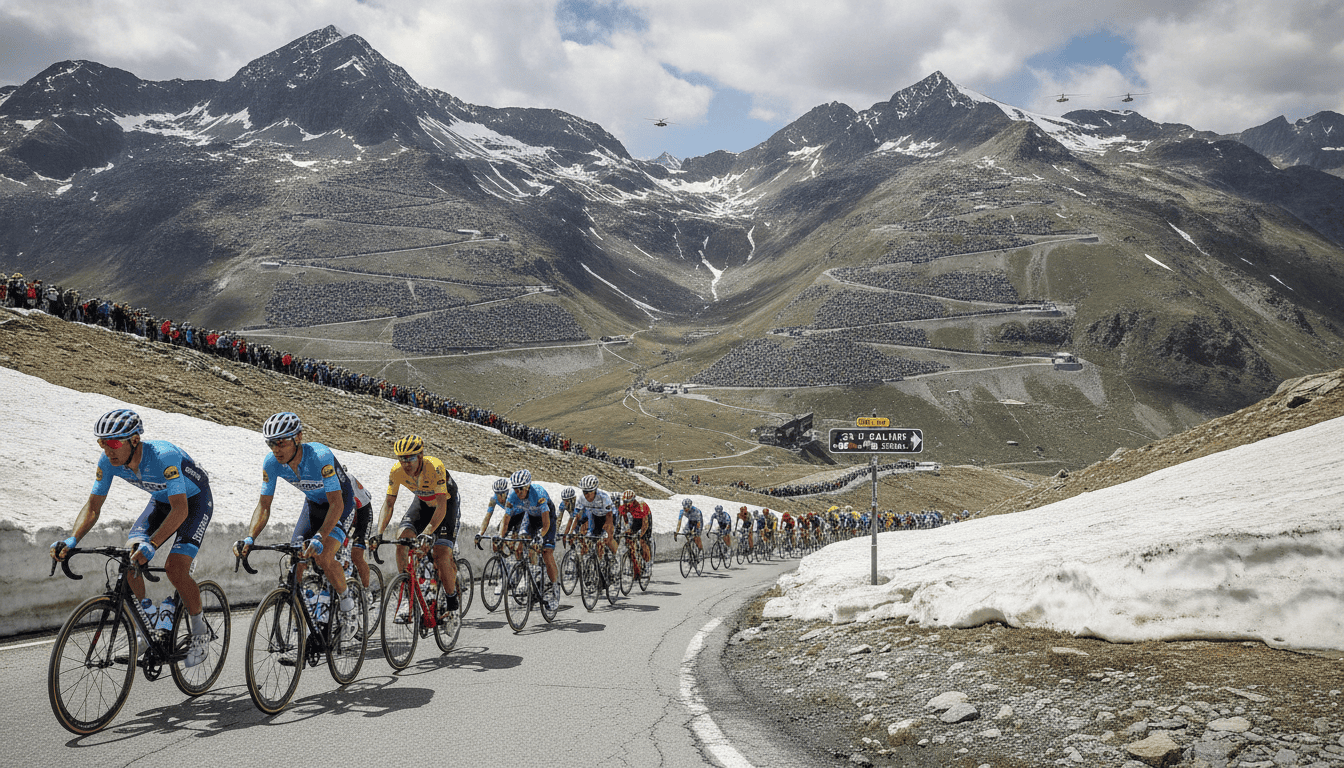
Race organisers built a mountain-heavy itinerary, with eight summit finishes and two stages ending at the iconic Alpe d’Huez. The legendary climb appears on back-to-back days, making the final Alpine block unusually brutal and tactical. Riders will face the 21 hairpins on Stage 19 and a different ascent to the resort on Stage 20 that traverses the Écrins National Park.
The repetition of Alpe d’Huez elevates the climb’s influence on the general classification, offering clear opportunities for climbers to gain time or for teams to force errors. Teams must manage resources carefully: two major ascents so close together demand depth from support riders and precise timing from team leaders.
The ‘king stage’ with Galibier and decisive climbs
Saturday, July 25 has been billed as the race’s king stage and for good reason: the route includes the Col de la Croix de Fer and the Col du Télégraphe before reaching the Col du Galibier at 2,624 metres. The Galibier climb is roughly 17.7 kilometres long with an average gradient near 6.9 percent, and it sits amid nearly 5,450 metres of vertical gain across the day’s profile.
After the Galibier riders must still contend with the Col de Sarenne and the final run to Alpe d’Huez, creating a sequence of high, sustained efforts that could produce the race-defining gaps. The combination of elevation, gradient and accumulated fatigue makes this stage the most likely occasion for a decisive GC move in the closing week.
GC contenders and the unfolding duel
The overall battle has largely centred on a familiar duel: Tadej Pogacar seeks to extend his Tour achievements while Jonas Vingegaard aims to reclaim supremacy after strong performances elsewhere this season. Pogacar’s series of mountain wins and form in shorter stage races have made him the rider to beat, while Vingegaard’s power and team depth, demonstrated in his Giro d’Italia and Paris–Nice victories, keep the rivalry open.
Other contenders are shaping the podium conversation. Remco Evenepoel has shown versatility with time-trial and summit victories, Florian Lipowitz remains a local favourite and podium candidate, and young Paul Seixas has emerged as a surprise threat after strong spring results. The race’s mountainous second half will determine whether the two central protagonists are separated or if a more complex top three emerges.
Teams, German riders and notable debuts
Twenty-three squads started the Tour, anchored by paper favourites such as UAE Team Emirates-XRG and Team Visma-Lease a Bike, along with Red Bull – Bora-hansgrohe fielding a two-pronged leadership approach. The peloton features a mix of established leaders, seasoned helpers and debutants who could animate breakaways and support team ambitions.
From a German perspective the race includes both veterans and newcomers: Florian Lipowitz rides as a GC leader for Red Bull – Bora-hansgrohe, while classics riders and sprinters such as Nils Politt and John Degenkolb add experience. Several riders make their first Tour appearances this year, increasing the unpredictability of breakaways and stage strategies.
Broadcast, logistics and what’s left to decide
For viewers, public broadcasters and pay services have provided extensive coverage: the ARD carries live broadcasts in Germany with supplemental streams from other international providers. Logistics have played a visible role as the race moves from Catalonia across France’s varied terrain, requiring complex transfers, security arrangements and crowd management at key mountain towns.
With the penultimate Alpine block and the ceremonial finish on the Champs-Élysées still to come, teams will choose between attacking to seize seconds or riding defensively to protect slender leads. The coming stages will test endurance, tactical nous and team coordination as the Tour de France 2026 heads into its final weekend.
As the race reaches its climax, riders and teams must balance risk and reward over two high-stakes Alpine days before the traditional sprint battle through Paris brings the three-week contest to a close on July 26.
