
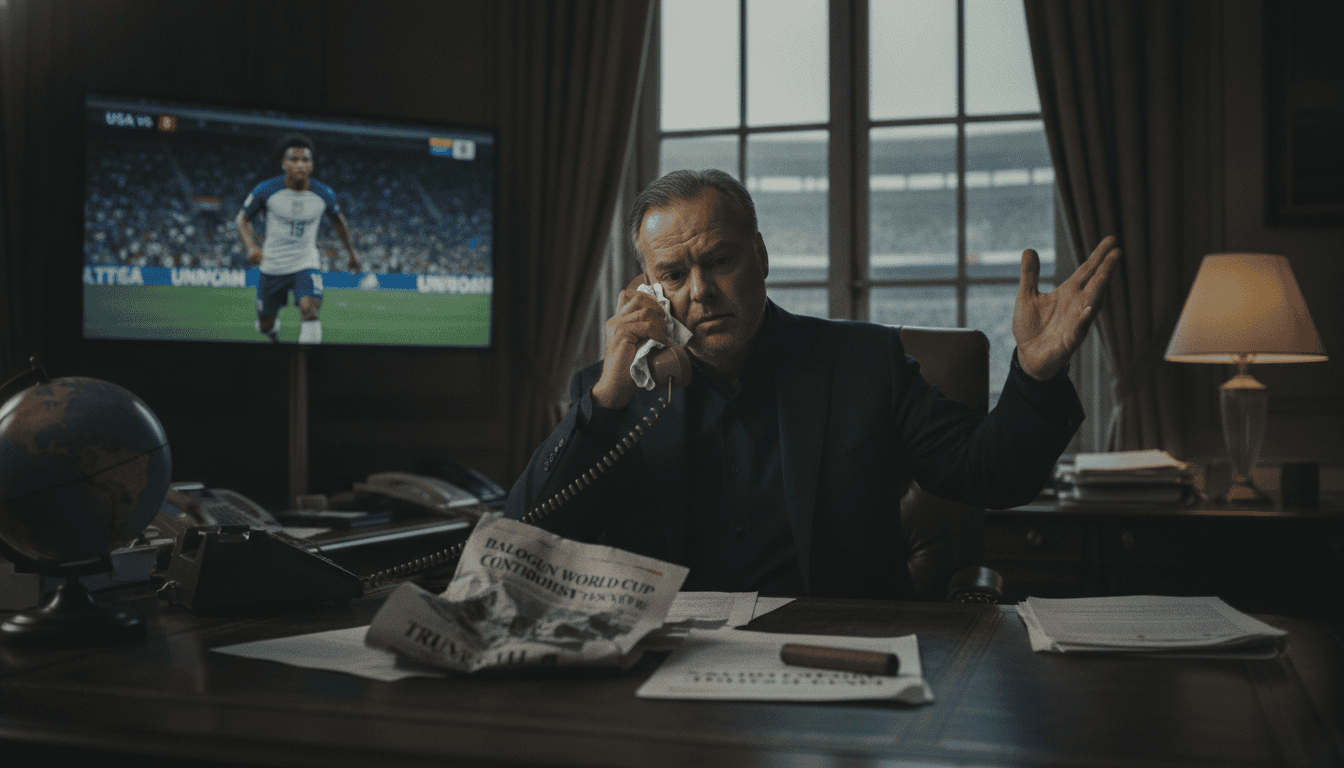
Folarin Balogun Case Fuels FIFA Storm After Trump Call to Infantino Ahead of 2027 Vote
FIFA lifts Folarin Balogun suspension after President Trump’s phone call to Gianni Infantino, triggering global criticism and fresh scrutiny of Infantino’s bid for re-election in March 2027.
Strong opening: what happened
Folarin Balogun was at the centre of an unprecedented World Cup controversy after a red card shown on July 1, 2026, was effectively reversed following a phone call from U.S. President Donald Trump to FIFA President Gianni Infantino.
The reversal allowed Balogun to be available for the United States’ round-of-16 fixture against Belgium, and the episode has provoked sustained criticism about political interference in sport. (apnews.com)
Trump’s call and FIFA’s disciplinary reversal
Balogun received a red card during the United States’ win over Bosnia and Herzegovina on July 1, 2026, a sending-off that normally carries an automatic one-match suspension.
According to officials and contemporaneous reporting, President Trump phoned Infantino to request a review, and FIFA’s disciplinary process subsequently suspended the one-match ban, making Balogun eligible for the next game. (washingtonpost.com)
The decision to suspend the mandatory ban drew immediate headlines because it departed from long-standing automatic disciplinary practice in FIFA competitions.
FIFA’s public materials confirmed Balogun’s availability for the Belgium match while offering limited detail on the mechanics of the reversal. (fifa.com)
Infantino’s defence and institutional explanations
Gianni Infantino publicly addressed the backlash by reiterating the independence of FIFA’s disciplinary bodies and acknowledging that he had received a call from a head of state.
Infantino said such contacts are routine and maintained that the Disciplinary Committee operates independently, a claim that did little to quell scepticism among critics. (euronews.com)
FIFA’s statements emphasised that formal procedures were followed even as media coverage focused on the optics of presidential intervention in the running of the tournament.
Observers noted that transparency about the timing and content of the review remained limited, contributing to a broader perception problem for FIFA. (euronews.com)
Responses from players, coaches and commentators
Reactions within football were mixed but forceful, with some coaches accepting the decision as an administrative correction and others warning about precedent.
Balogun himself acknowledged in interviews that he expected the reinstatement to provoke controversy, while some team officials publicly praised the move as correcting an overly harsh on-field ruling. (cbsnews.com)
Media and pundit commentary, however, skewed sharply toward concern, arguing that the episode blurred lines between political influence and sporting governance.
Columnists and commentators compared the incident to past governance scandals that have damaged the reputation of football’s institutions and intensified calls for clearer safeguards. (aljazeera.com)
Political and governance implications
Legal and governance experts warned that the incident raises constitutional and ethical questions for FIFA, which has sought in recent years to project reforms and greater accountability.
Critics argue that even the perception of external political pressure risks undermining the credibility of disciplinary processes and the integrity of competition outcomes. (aljazeera.com)
The episode also amplified scrutiny of FIFA’s relationships with national leaders and stakeholders, particularly given the United States’ central role as co-host of the 2026 World Cup and as a major market for the sport.
Analysts said the case will likely prompt renewed calls for stricter rules governing contacts between FIFA officials and political leaders during competitions. (lemonde.fr)
Re-election stakes for Infantino in 2027
The Balogun affair has taken on added significance because Gianni Infantino has publicly confirmed he will stand for re-election in 2027, with the next presidential vote scheduled at the FIFA Congress on March 18, 2027.
Opponents and internal critics say the incident could be a potent issue on the campaign trail, raising questions about impartiality and decision-making at the highest level of the organisation. (inside.fifa.com)
Supporters of Infantino argue the episode will not change the underlying political calculations among FIFA’s member associations, but even allies concede the optics are damaging at a sensitive moment.
For Infantino, who has overseen a transformation in FIFA’s commercial profile, the controversy represents a reputational hazard as he seeks another term. (sportsbusinessjournal.com)
The Balogun case has become a focal point in debates over governance, accountability and the permissible bounds of political engagement in global sport.
As FIFA prepares for its 2027 leadership vote, member associations, sponsors and fans will be watching whether the organisation acts to clarify rules and restore confidence in its disciplinary independence. (euronews.com)
The fallout from the phone call and the disciplinary reversal will persist beyond the tournament results, shaping discussions about FIFA’s governance and the relationship between sport and state actors ahead of the March 18, 2027 Congress.
