
Volkswagen profit plunges 32.9% in Q2 2026 to €1.54bn
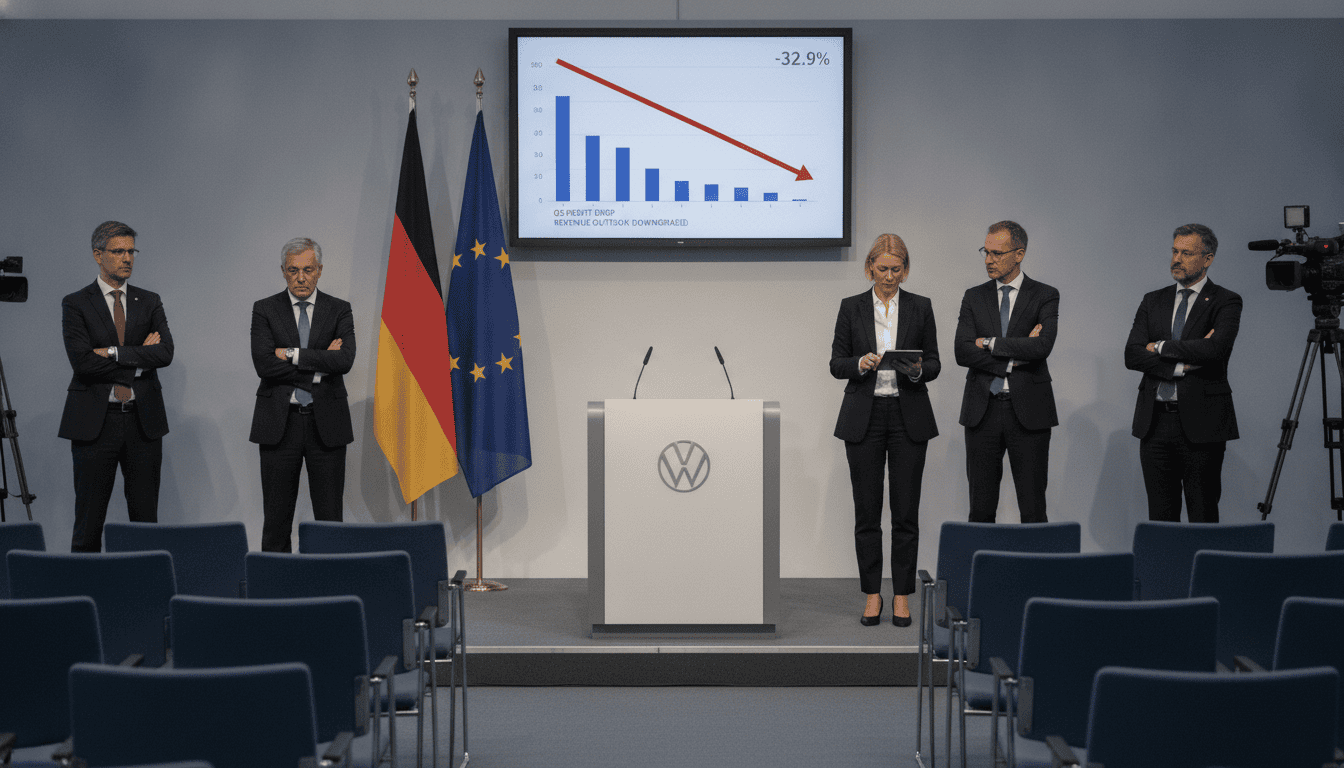
Volkswagen profit fell 32.9% in Q2 2026 to €1.54bn, prompting a revenue outlook cut to -3% for 2026 while keeping the firm’s 4–5.5% operating margin guidance.
Volkswagen reported a sharp decline in profit for the second quarter of 2026, with the automaker’s consolidated net income after taxes dropping to €1.54 billion for April through June. The result marked a 32.9 percent fall from €2.29 billion in the same quarter a year earlier and signals a notable slowdown in earnings momentum for Europe’s largest carmaker. The company said it now expects full year revenue to fall by up to three percent instead of delivering up to three percent growth that had been forecast earlier.
Second quarter results show sharp decline
Volkswagen’s Q2 2026 net profit of €1.54 billion contrasts sharply with the €2.29 billion recorded in Q2 2025. The company disclosed the figures in a statement issued from its Wolfsburg headquarters and noted the year on year percentage drop. The announcement follows a string of quarterly swings as the group navigates shifting demand and cost pressures across its global operations.
The release did not provide a detailed line by line breakdown of every business unit in the headline statement, but it highlighted that profit after tax for the quarter was substantially below the prior year level. Volkswagen’s prior second quarter had itself been weaker than the year before, underscoring ongoing volatility in the automaker’s earnings. Management framed the result within the broader context of a transitional market for the industry.
Full year revenue outlook revised
Volkswagen adjusted its revenue outlook for the full year 2026, now forecasting a decline of up to three percent rather than the previously communicated potential growth of up to three percent. The downward revision reflects the company’s reassessment of demand and market conditions since its last guidance update. Despite the top line downgrade, Volkswagen emphasized that its margin outlook remains intact.
The company reiterated that operating profit margins are still expected to fall between 4.0 and 5.5 percent for the full year, a range that it says would sit above the level achieved in the first half of 2026. This separation of revenue and margin outlooks suggests Volkswagen is prioritizing profitability and cost control measures even as sales volumes face headwinds. Investors will watch whether the company can maintain margins if revenue pressures persist.
Margin guidance and profit expectations
Volkswagen said it continues to expect a robust result for the full year that would be above last year’s level, a position stressed by Chief Executive Oliver Blume. Blume described the outlook as a projection of resilience in earnings despite the weaker second quarter result and the top line adjustment. The company’s assertion that margin guidance remains unchanged is intended to reassure markets that profitability initiatives are holding.
Analysts will evaluate whether Volkswagen’s margin forecast is achievable amid ongoing industry challenges that include raw material costs and the complexity of transitioning product lines. For the group, preserving margin percentages while revenues decline typically requires tight cost discipline and potential price management. Volkswagen’s global scale gives it tools to pursue those efficiencies, but execution will determine whether the guidance proves realistic.
Industry context and analyst expectations
The second quarter result arrives as the wider auto sector grapples with uneven consumer demand and a move toward electrification that is reshaping investments and product mixes. Market observers have increasingly focused on how established manufacturers balance the capital intensity of electrification with near term profitability. Volkswagen is among the largest players adapting its platform and supply chains to support electric models while maintaining cash flow from traditional vehicles.
While Volkswagen did not attribute the Q2 earnings drop to any single cause in its statement, industry commentators point to several common pressures that can affect results. These include slower vehicle deliveries in specific regions, pricing dynamics, and input cost volatility. The firm’s updated revenue projection will likely prompt closer scrutiny from investors and rating agencies as the year progresses.
Management response and next steps
Volkswagen’s management signaled it will continue to operate within the revised revenue outlook while executing on margin protection measures. The company said its updated plan aims to deliver a solid full year outcome and that operational adjustments will be targeted where necessary. Blume’s comment that he expects a robust result above the prior year frames the company’s response as confident but cautious.
Executives indicated that further updates may follow as the company finalizes second quarter reporting and outlines more detailed segment performance. Stakeholders will await Volkswagen’s full interim results for a clearer picture of unit profitability, regional sales trends, and the performance of its electric vehicle initiatives. The next reporting milestones will be critical for assessing whether the firm can translate margin guidance into confirmed outcomes.
The weak second quarter has tempered expectations for near term top line growth at Volkswagen, but management remains focused on preserving margins and delivering a full year result that it describes as robust relative to last year.
