
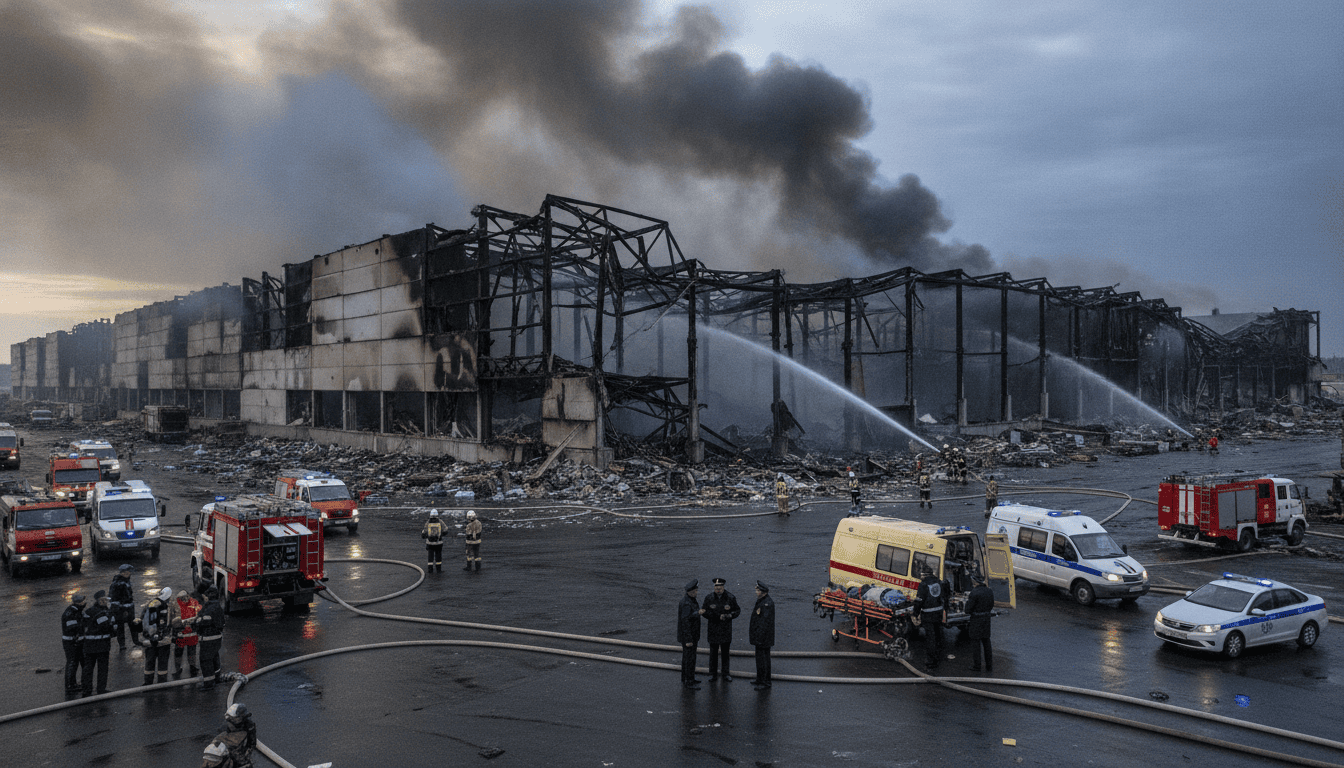
Ukrainian drones strike two Wildberries warehouses, injuring 10 in Russia
Ukrainian drones struck two Wildberries warehouses on July 22, 2026, injuring 10 people, as Kyiv says the sites were used to supply military components.
On July 22, 2026, Ukrainian unmanned aerial vehicles attacked two logistics facilities operated by Wildberries, Russia’s largest online retailer, according to Russian officials. The strikes wounded 10 people and caused damage to warehouse infrastructure in separate locations, officials said. Kyiv has repeatedly asserted that certain commercial sites inside Russia are being used to move or store components tied to the military, a claim that both sides have publicly advanced in recent months.
Two Wildberries warehouses hit in separate strikes
Russian emergency services reported that the incidents involved two distinct drone strikes on facilities linked to Wildberries, with damage concentrated in storage and loading areas. Local responders described fires and collapsed shelving, and several employees were treated for injuries at nearby hospitals. Authorities opened investigations into the cause and scale of the blasts, while company representatives confirmed disruption to operations at the affected sites.
Ten people injured and emergency response detailed
Regional health authorities said 10 people sustained injuries ranging from smoke inhalation to blunt force trauma, and medical teams provided urgent care at scene and in hospitals. Emergency services maintained cordons around the damaged buildings to allow firefighting and salvage work, and airspace restrictions were briefly imposed near the sites. Local officials reported that no fatalities had been confirmed, while assessing structural safety and cataloguing losses.
Kyiv alleges warehouses supported military supply chains
Ukrainian officials have stated in recent statements that some commercial logistics hubs inside Russia are used to store or distribute components linked to military supply chains. Kyiv’s security services claim such dual-use activity makes these facilities legitimate targets in the context of the wider conflict, a position the Ukrainian government has reiterated across a series of strikes. Moscow rejects broad characterizations of civilian infrastructure and has accused Kyiv of targeting non-combatants, emphasizing the need to protect civilians and legal commerce.
Wildberries operational impact and company stance
Wildberries, the country’s largest e-commerce firm, has experienced multiple attacks on its facilities during the conflict period and says such incidents disrupt deliveries and threaten staff safety. The company has not historically acknowledged military use of its buildings, and its statements following earlier strikes have stressed the civilian nature of its operations and the financial and human cost of damage. Logistics experts say repeated attacks on retail supply chains can cause longer-term disruptions to both domestic distribution and consumer availability.
Russian authorities launch probes and assign blame
Moscow quickly attributed the incidents to Ukrainian airborne drone operations and vowed to pursue investigations into the attacks, framing them as assaults on Russian territorial integrity. Security officials signaled they were tracking the origin and methods of the strikes and would pursue preventive measures to protect other logistics facilities. Government spokespeople also emphasized the need for enhanced air-defence coverage around industrial and commercial hubs to reduce risk to workers and infrastructure.
Broader implications for logistics and civilian safety
Analysts warn that continued strikes on logistics infrastructure heighten risks for civilian workers, complicate supply chains, and could raise insurance and operational costs for companies operating inside Russia. The targeting of large retail warehouses intersects with debates over distinguishing combat-related infrastructure from civilian economic activity, particularly where modern supply networks serve both commercial and potential dual-use purposes. International observers have noted that attacks on distribution centers can ripple across regional markets, affecting availability and prices for consumers.
The July 22 strikes mark the latest in a series of incidents that have drawn renewed attention to the vulnerability of commercial logistics hubs amid protracted conflict. As investigations proceed and parties exchange claims, company officials, local authorities and international monitors will be watching how protective measures, legal assessments and operational adjustments respond to the growing security challenges faced by civilian supply networks.
