
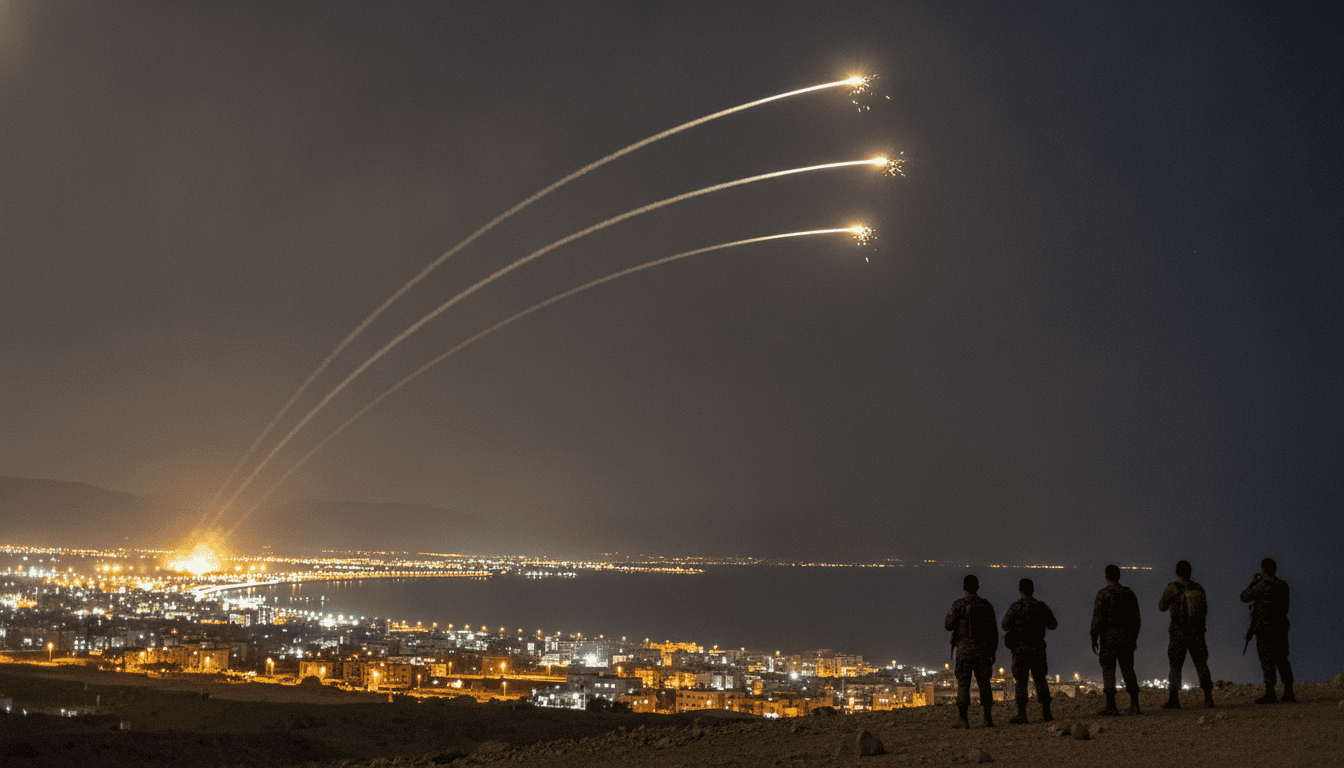
Iranian missiles intercepted over Jordanian port city Aqaba, two fall in unpopulated areas
Sirens in Aqaba as Jordanian army says four Iranian missiles were intercepted and two landed in unpopulated areas near the Red Sea coast.
Immediate events in Aqaba
The Jordanian city of Aqaba experienced air-raid sirens after missiles were detected over the Red Sea coast, officials said. The Jordanian army reported that air defenses engaged and intercepted four Iranian missiles, while two impacted in unpopulated areas outside the city.
Residents in Aqaba and the nearby Israeli resort city of Eilat heard explosions and reported seeing flares and anti-aircraft activity. No injuries or damage have been confirmed by Jordanian authorities in their initial statement.
Jordanian military statement and actions
In an official release, the Jordanian armed forces said their air-defense systems intercepted four missiles fired from the direction of Iran. The statement added that two additional missiles fell in areas without population, implying limited physical harm on the ground.
The declaration did not specify the types of missiles or the exact interception systems used, and it offered no immediate explanation for the origin or intended targets of the strikes. Jordanian authorities emphasized their rapid response to protect the city and maintain civilian safety.
Israeli military response and denial of involvement
The Israeli army issued a separate statement denying participation in intercepting the missiles over Aqaba and said it did not issue alerts for Israelis. Israel confirmed it had detected missiles launched from Iran toward Aqaba but stated that its forces were not involved in the interception actions reported by Jordan.
Explosions and anti-aircraft fire were heard within Israeli territory near Eilat, located on the northern end of the Red Sea, but Israeli authorities stressed their systems were not the ones that engaged the incoming projectiles. The clarification sought to prevent confusion about which military forces operated in the theatre.
Trajectory and interception details reported
According to the combined accounts, the missiles were tracked flying from the direction of Iran across the Gulf of Oman and the Red Sea, though precise flight paths were not released. Jordan’s account focused on the outcome—four intercepted, two fallen in unpopulated zones—rather than technical interception specifics.
Military analysts note that multiple nations and actors operate air-defense systems in the region, and radar detection can prompt rapid, overlapping responses from nearby militaries. The lack of detail on warhead types, guidance systems, or launch platforms means open-source assessments must remain cautious.
Regional security implications
Missile launches traced to Iran toward the Red Sea heighten tensions across a region already sensitive to cross-border strikes and naval security risks. Aqaba and Eilat are strategic port cities on the Red Sea and hold economic and touristic significance, making any attacks in the area particularly consequential for regional stability.
The incident may prompt renewed diplomatic exchanges and military readiness among Gulf and Levant states, which frequently coordinate surveillance and defenses against ballistic and cruise missile threats. Neighboring countries are likely to monitor the situation closely for any escalation or follow-up launches.
Diplomatic and military follow-up expected
Governments in the region commonly move quickly to seek clarifications and to coordinate through military channels after such incidents, and international actors could call for investigations into the origin and intent of the missile launches. Jordanian authorities have so far limited their public statements to operational facts about interceptions and impacts.
Further updates may include more detailed radar tracks, assessment of any secondary damage, and confirmation from third-party monitoring organizations. Diplomatic contacts between Jordan, Israel, and other regional and Western partners are expected as officials assess risks and consider possible responses.
The situation remains fluid as military and diplomatic bodies verify technical details and monitor for additional activity, with civilian safety and maritime security priorities guiding immediate responses.
