
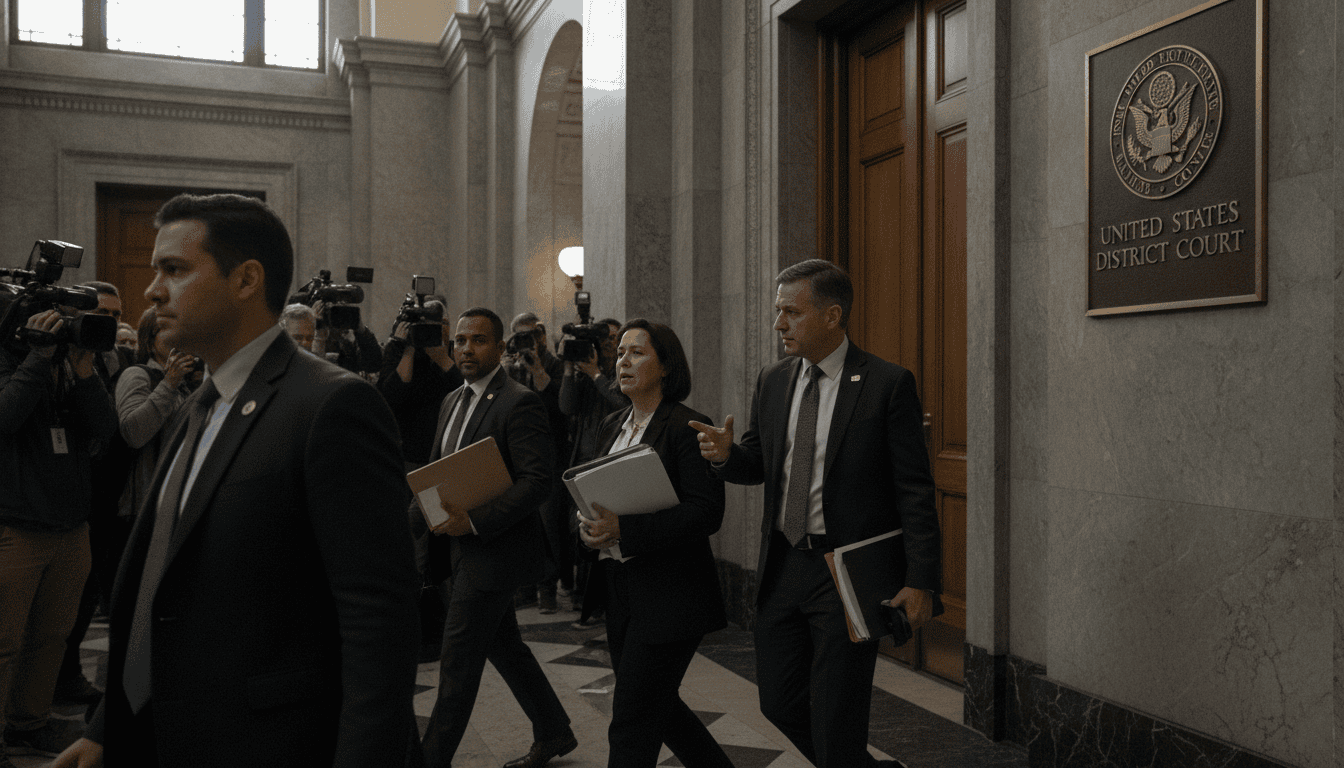
Judge Approves Anthropic $1.5 Billion Copyright Settlement; Payments to Authors Cleared
U.S. judge approves Anthropic’s $1.5 billion copyright settlement, clearing $3,000 payouts per work to authors and publishers for roughly 500,000 works.
Anthropic’s $1.5 billion settlement in a class action copyright suit received final judicial approval Monday, clearing the way for payments to authors and publishers affected by the company’s training practices. The Anthropic settlement will distribute roughly $3,000 per work across an estimated 500,000 works, a figure that legal teams say will be shared between authors and the publishers who hold rights. The approval was signed by U.S. District Judge Araceli Martinez-Olguin after the case advanced under former Judge William Alsup, whose earlier rulings shaped key legal questions about AI training and copyrighted material.
Court Signs Off on Settlement
Judge Araceli Martinez-Olguin formally approved the settlement Monday, concluding the district court’s review of terms reached between Anthropic and the class of writers and publishers. The deal had received preliminary approval last year after a protracted litigation period that included findings about how Anthropic assembled its training corpus. With final approval, the funds may now be disbursed to eligible claimants under the settlement framework agreed by the parties.
The settlement agreement assigns payments on a per-work basis, with an estimated 500,000 works included in the class definition. Claim procedures and allocation mechanics will govern how the $3,000-per-work figure is split when multiple rights holders claim the same title.
Alsup’s Fair Use Ruling and Its Limits
Earlier courtroom decisions by Judge William Alsup played a pivotal role in the case’s trajectory by addressing the core question of whether training AI on copyrighted text constitutes fair use. Alsup concluded that, on the specific facts before him, using copyrighted books to train a model could fall within fair use. That ruling was viewed by industry participants as a potentially transformative interpretation of copyright law in the AI context.
However, Alsup’s decision did not endorse all of Anthropic’s conduct. He found that the lab had also acquired works through unauthorized channels, including downloads from piracy sites, and indicated those misconduct claims could proceed. The juxtaposition of a fair-use finding with a separate piracy finding prompted settlement negotiations to avoid a trial focused on unlawful acquisition.
Why Anthropic Chose to Settle
Anthropic agreed to the settlement to sidestep the uncertainties and potential damages of a jury trial over how it obtained copyrighted works for training. The company had built its dataset from a mix of legitimately purchased and scanned books and material obtained from third-party sites that the court characterized as pirate repositories. Facing the prospect of litigation over those acquisition methods, Anthropic and the plaintiffs negotiated the monetary resolution now approved by the court.
Lawyers on both sides said the settlement reflects a calculation to secure compensation for rights holders while avoiding protracted appellate litigation. Because Anthropic settled rather than appealed, the case will not produce a binding appellate precedent on several unsettled legal issues.
Payments, Eligibility and Distribution
Under the settlement terms, each registered work in the claims pool is slated to receive $3,000, subject to the claims process and any pro rata adjustments if more works or claimants qualify than projected. The estimated pool of roughly 500,000 works means individual payouts will be divided among authors and publishers according to ownership and contractual arrangements.
Claims administrators will oversee verification of works and distribution logistics. Rights holders who believe their works were used in Anthropic’s training sets will be able to submit claims as directed in the settlement documentation, and those procedures will determine how funds are allocated among co-rights holders.
Broader Legal Landscape Remains Unsettled
Although this settlement closes a major file against Anthropic, it does not resolve the broader national debate over AI training and copyright. The district court ruling that favored fair use in certain circumstances was tied to the specific record in this case, and because the case settled, the issue will not be clarified by an appellate decision from this litigation.
Other lawsuits against AI developers continue to press related questions in different forums. Publishers and authors have brought claims against several technology companies alleging unauthorized use of copyrighted materials to develop language and multimodal models. Those cases may reach different conclusions based on differing facts and judicial interpretation, and courts remain divided on key doctrines that govern AI training.
Publishers, Authors and Industry Reactions
Reactions among authors and publishers have been mixed, with some welcoming the financial recovery and others criticizing the settlement as insufficient given the scope of alleged use. Legal observers have noted that the settlement’s scale is historically significant for U.S. copyright litigation, yet the absence of appellate review means the underlying legal doctrines will continue to evolve case by case.
Industry groups representing creators are signaling continued vigilance and a likelihood of further litigation to press for clearer rules or compensation models. Technology firms argue that judicial acceptance of fair use for model training in some circumstances supports innovation, but they also face pressure to adopt better acquisition and licensing practices to avoid similar disputes.
The Anthropic settlement marks a major chapter in the intersection of copyright law and artificial intelligence, delivering payments to a large class of rights holders while leaving many questions about legal standards and future licensing unresolved.
