
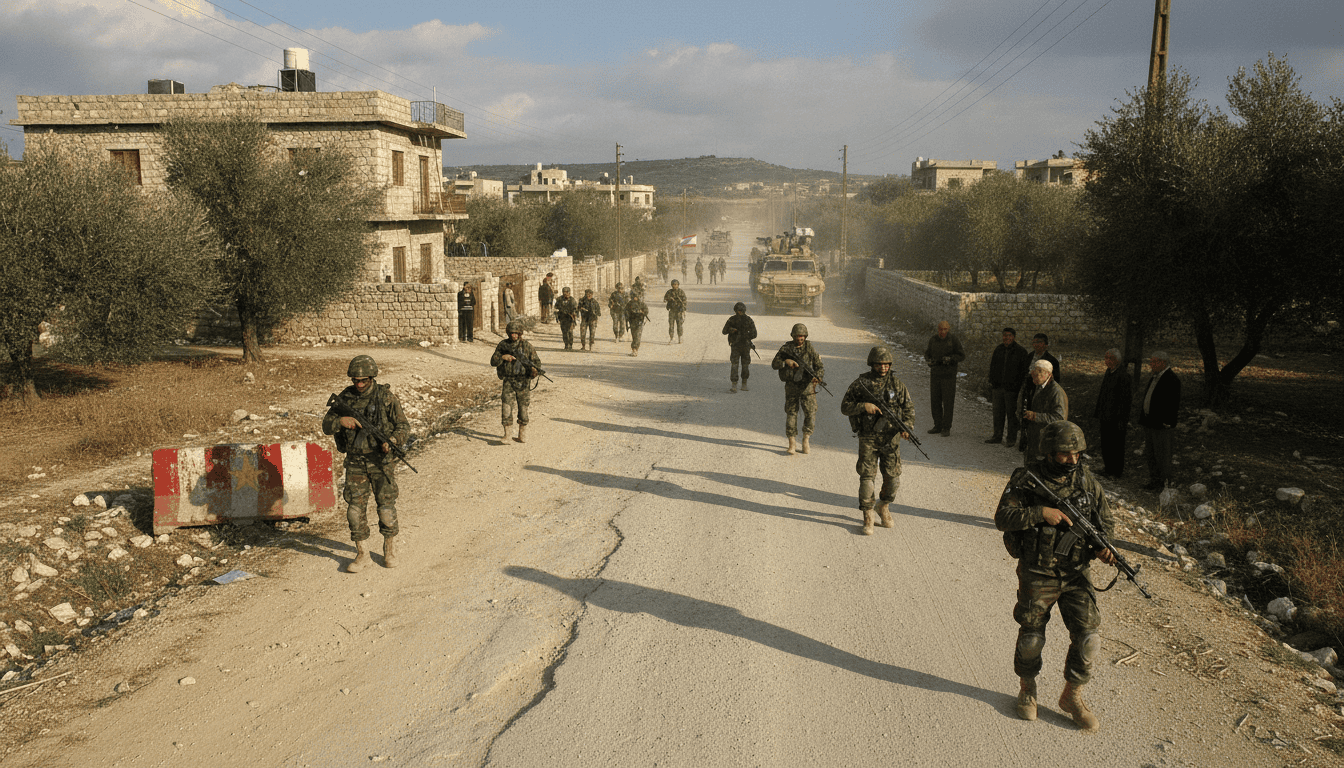
Lebanese Army Deploys in Zawtar al-Gharbiyeh After Israeli Withdrawal Under US-Brokered Pilot Zones Plan
Lebanese army deploys in Zawtar al-Gharbiyeh on July 21, 2026 after Israeli forces withdrew, marking the first movement under a US-brokered pilot zones agreement aimed at stabilizing the south.
The Lebanese army began deploying in the southern town of Zawtar al-Gharbiyeh on Tuesday, July 21, 2026, after Israeli forces pulled back from the area under a U.S.-mediated framework that establishes initial “pilot zones” for phased handovers. This move, officials said, follows technical arrangements intended to transfer security responsibility to the Lebanese state and reduce frontline friction. (apnews.com)
Lebanese army moves into Zawtar al-Gharbiyeh
The army said units moved into Zawtar al-Gharbiyeh early on Tuesday, taking positions after Israeli forces completed a withdrawal from the locality. Military officials described the deployment as part of an agreed sequence intended to restore Lebanese state control in selected southern villages. (timesofisrael.com)
Local military statements noted that Israeli troops had occupied only parts of the town’s outskirts and that Lebanese forces would enter once the pullback was verified by coordinating monitors. The deployment was framed as a technical, phased operation rather than an abrupt change in the front line.
Details of the US-brokered pilot zones framework
The pilot zones framework, agreed in late June and brokered by the United States, designates a limited number of villages where Israeli forces will withdraw and the Lebanese army will assume security responsibilities. The plan is intended as a cautious first step toward a broader stabilization process that requires disarmament of non-state armed groups in designated areas. (WashingtonGazette.com)
Lebanese and Israeli officials previously identified several localities — including Froun, Ghandouriyeh and parts of Zawtar — as candidates for the initial implementation phase. Under the agreement, the Lebanese state will gradually clear and secure the zones, while international observers are deployed to monitor compliance.
Implementation begins with two pilot areas, Zawtar pending
U.S. and Lebanese officials said the implementation sequence began with deployments in two pilot areas where the army has already taken positions, while deployment in Zawtar al-Gharbiyeh followed the Israeli withdrawal from that town. The staggered approach is designed to allow time for technical coordination and to reduce the risk of immediate confrontation. (thenationalnews.com)
Officials emphasized that the process remains contingent on verification mechanisms and ongoing talks between the two militaries and international monitors. The initial handovers are described by proponents as reversible if either side alleges breaches or if security conditions deteriorate.
Coordination with a US-led military monitoring group
Lebanese authorities said they were coordinating the deployment with a US-led Military Coordination Group and with international observers tasked with verifying the Israeli pullback. These liaison arrangements were central to the framework, which relies on external monitoring to confirm movements and to deconflict forces on the ground. (timesofisrael.com)
The coordination group is expected to oversee technical details such as timelines for patrols, the positioning of checkpoints and the verification process for any weapons collections or removals in the pilot zones. Officials said the group will meet in the coming days to finalize logistics.
Hezbollah reaction and political fractures in Beirut
Hezbollah has publicly expressed skepticism about direct talks that exclude its input and warned that any attempt to enforce a plan perceived as weakening its position could provoke tensions. The group’s leaders have described the U.S.-brokered track with Israel as insufficient unless broader regional issues are addressed. (WashingtonGazette.com)
Inside Lebanon, the framework has exposed sharp political divisions, with some parties backing the state-led handover and others denouncing the arrangement as potentially legitimizing a continued Israeli presence in parts of the south. Critics have argued the plan could entrench a partial status quo unless guarantees are secured for a complete and verifiable withdrawal.
Civilian impact and immediate security concerns
Residents of the affected villages have begun to return to areas where the army has re-established presence, though many families remain cautious amid lingering uncertainty about fronts and oversight. Humanitarian groups said access for relief and reconstruction will depend on stable security and clear lines of authority on the ground. (apnews.com)
The framework foresees the Lebanese state taking steps to clear pilot zones of heavy weapons and unauthorized armed presences, but observers warn that disarmament will be complex and time-consuming. Local officials and residents stressed the need for rapid delivery of basic services to reinforce confidence in the state’s ability to provide protection.
Obstacles ahead and potential flashpoints
Analysts caution that key obstacles remain, including disputes over high-ground positions such as the Ali Taher ridge and contested lines drawn during decades of back-and-forth control. Any disagreement over monitoring protocols or allegations of violations could slow or suspend the handover process. (WashingtonGazette.com)
The next phase will depend on technical meetings scheduled between Lebanese, Israeli and international military delegates, and on whether remaining contentious issues — including weapons collection, troop rotations and the status of strategic overlooks — can be negotiated without sparking renewed hostilities.
The deployment to Zawtar al-Gharbiyeh marks the first visible application of the U.S.-brokered pilot zones plan and represents a fragile but tangible step toward returning state authority to parts of southern Lebanon, even as political and security challenges persist.
