
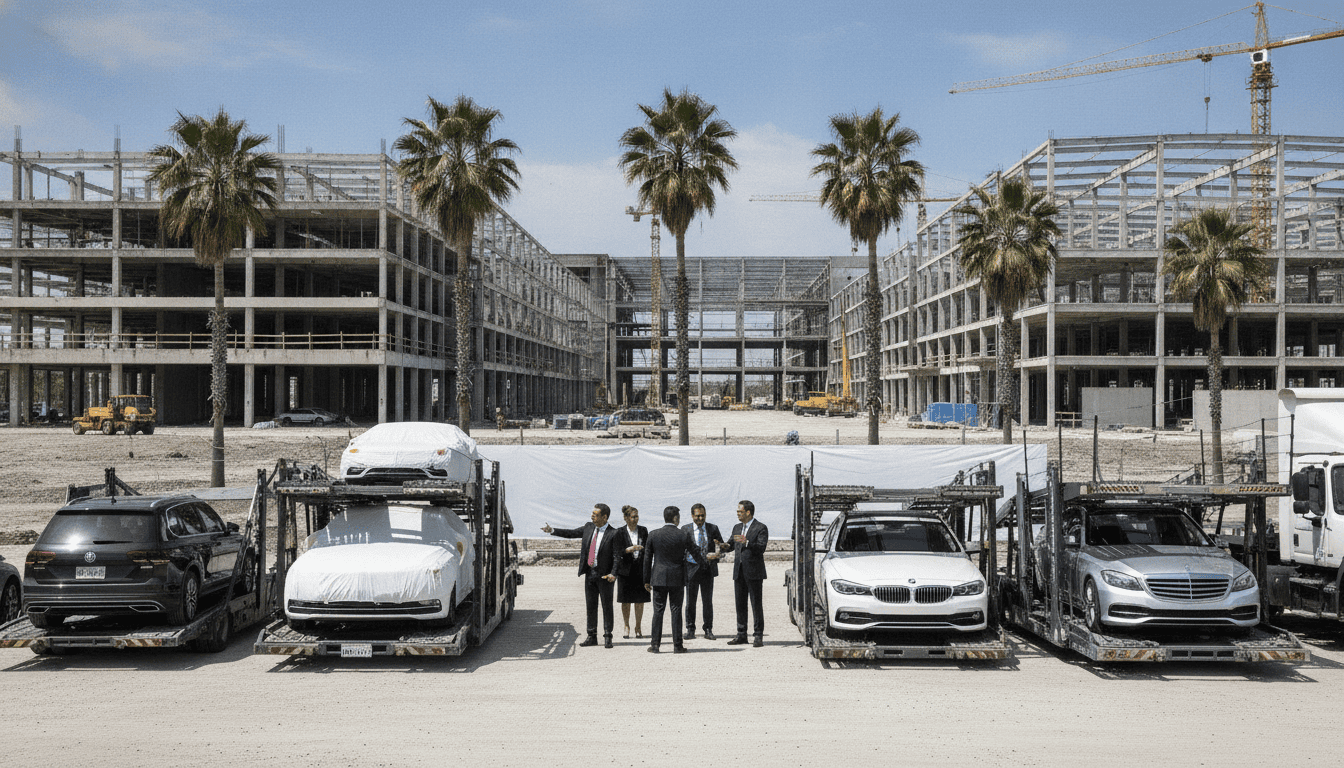
German car production shifts further abroad as major brands move models, squeezing jobs and forcing urgent policy and labour choices
German car production is shifting abroad as Volkswagen, Audi, BMW and Mercedes move assembly of key models to factories in Czechia, Hungary, Turkey, Portugal and China, accelerating job and value-chain losses in Germany. The relocation affects both volume models and high-margin vehicles, and it is reshaping employer and union strategies in Europe’s largest auto market. Companies cite capacity, costs and market access; critics warn the changes erode local industrial know‑how and employment prospects.
Production Shifts from Germany to Czechia and Turkey
Volkswagen has transferred several of its formerly German-made nameplates to plants beyond Germany’s borders, cutting into regional production capacity. Recent moves include relocating Passat production from Emden to Škoda facilities in the Czech Republic and shifting the traditional Transporter series to a Ford plant in Turkey, reflecting a broader strategy to concentrate manufacturing where unit costs and logistics align.
Those reassignments follow a pattern in which models that once anchored German assembly lines are increasingly produced at sister-brand or partner plants overseas. Managers argue these realignments optimize the group’s global footprint, but the immediate effect is fewer assembly jobs and reduced local supplier work in established German locations.
Audi, BMW and Mercedes Expand Foreign Output
Audi’s decision to discontinue domestic production of its smallest SUV model and rely on overseas plants for core crossovers highlights the premium segment’s outward drift. The Q2, formerly assembled in Germany, has been withdrawn, while the larger Q3 has long been manufactured in Hungary rather than on German soil.
BMW and Mercedes are following similar routes, with BMW’s electric iX3 produced at a new Hungarian factory and Mercedes expanding Hungarian output for compact models such as the A‑Class and several electric variants. At the same time, certain internal-combustion engines destined for vehicles like the CLA are now manufactured in China, underscoring how component and drivetrain work is being globalized as well.
Luxury Sedans Lose Ground to SUVs and Overseas Plants
Once-lucrative large sedans that delivered high margins for Germany’s premium marques are declining in importance, squeezed by consumer preference for luxury SUVs. Sales of traditional full-size limousines have fallen markedly while demand for high-margin sport-utility vehicles has grown, and much of the latter production has been placed in the United States and Slovakia where manufacturers aim to be closer to those buyers.
The result is a long-term erosion of high-value production and engineering tasks inside Germany. Those big sedans historically supported local supply chains and profitability; moving their manufacturing and related R&D abroad shifts the economic benefits away from German regions that previously relied on them.
Compact Cars and the Golf’s Proposed Move
Germany has already ceded large parts of the compact-car segment, and the planned relocation of combustion-engine Golf production to Mexico would mark a further retreat. The combustion Golf has long symbolized German mass-market manufacturing, and its potential move would leave few volume segments anchored in domestic plants.
That trend is compounded by global product strategies that favour locating compact and cost-sensitive models where labor and logistics costs better match price points. For German suppliers and smaller towns dependent on those lines, the implications include shrinking orders and mounting pressure on local employment.
Growing Competition from Chinese Automakers
Domestic products face intensified competition on price from Chinese entrants, which can undercut list prices even after incentives. For example, certain mid-size German SUVs with plug-in drivetrains are positioned at significantly higher list prices than comparable Chinese models once discounts are applied, shrinking the domestic manufacturers’ competitive margin.
This price pressure increases the urgency for German automakers to reduce costs or redesign value propositions, whether through product differentiation, cost-sharing with suppliers, or shifting more production to lower-cost locations. Unions and industry leaders are confronting the reality that competitiveness now extends beyond technology to include price, production footprint and supplier networks.
Labour Response, Short‑Term Measures and Preconditions
Trade unions’ longstanding expectations of continuous wage gains, shorter hours and favorable pension rules are colliding with the industry’s restructuring needs. Employers argue that such privileges are difficult to sustain amid international competition and reallocated production, prompting calls for more flexible labor arrangements and cost-sharing measures.
Temporary tools such as targeted short-time work, reduced-week schedules or location-specific agreements are being discussed as ways to preserve jobs while demand for some models remains weak. Historical precedents show that negotiated concessions and tailored deals can stabilize production in the short term, but they also underscore the political and social sensitivities around wage and working-time adjustments.
Germany’s industrial strategy will require balancing workers’ protections with measures to restore competitiveness, including investment in local battery and electric-powertrain supply chains, incentives for domestic value creation and coordinated supplier support. Any such package will need buy-in from companies, unions and government to succeed.
Germany must reframe its manufacturing model to reflect today’s globalized auto industry while safeguarding the skills and jobs tied to the sector. The reshuffling of production is already underway, and the choices made by policymakers, employers and labour representatives in the months ahead will determine whether German car production can retain significant high-value activity and employment on home soil.
