
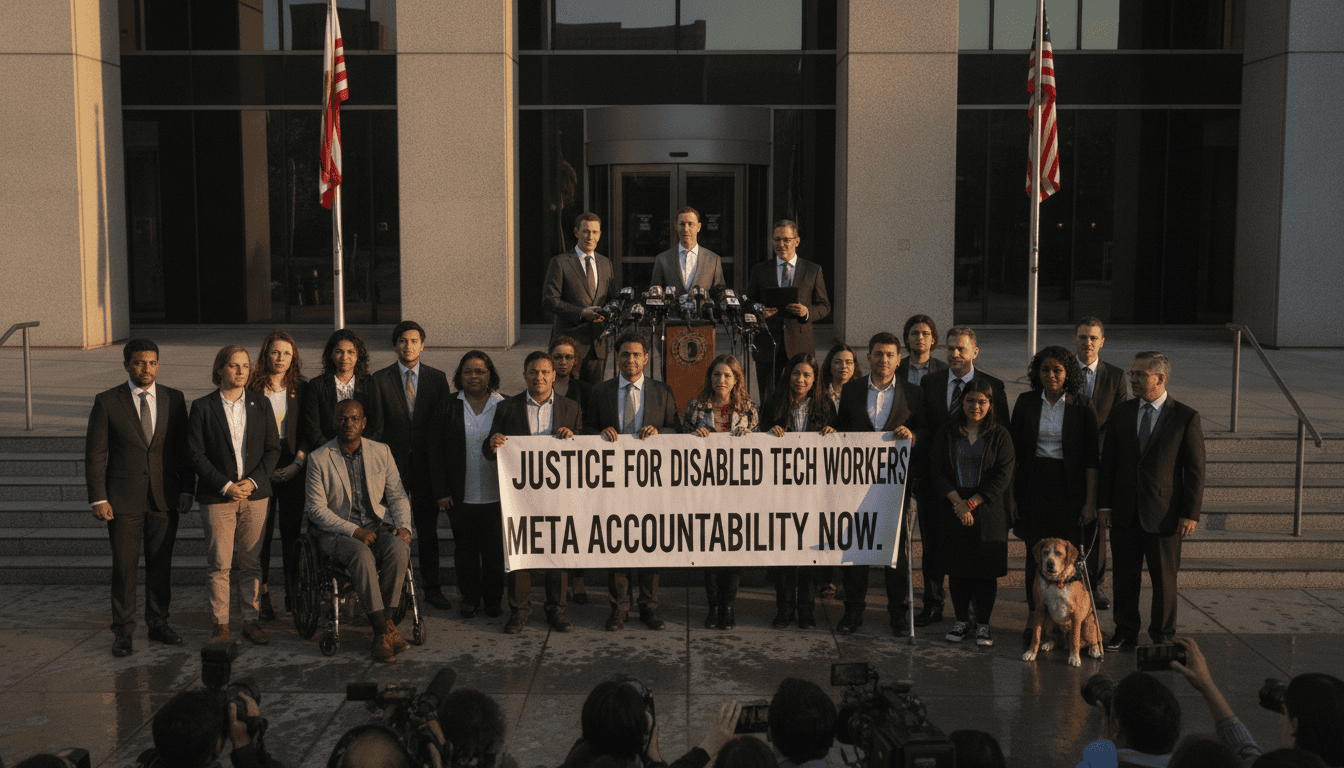
Meta AI layoffs spark California lawsuit alleging bias against employees on leave and with disabilities
26 former Meta employees filed suit in California alleging internal AI systems shaped ‘Meta AI layoffs’, harming workers on leave or with disabilities and seeking relief.
The company faces a lawsuit in California brought by 26 former employees who say internal artificial intelligence systems played a decisive role in the selection of workers for recent Meta AI layoffs. The plaintiffs, who were placed on leave for illness, pregnancy or disability, filed the complaint this week and allege the company relied on a “constellation of internal AI systems” rather than managerial judgment. They argue those systems produced metrics that disproportionately flagged people with reduced activity, effectively penalizing them in a reduction process announced by Meta in April 2026.
Scope of the lawsuit and legal claims
The complaint names Meta as defendant and invokes federal and state protections, including the Family and Medical Leave Act of 1993 and relevant California employment statutes. Plaintiffs contend the company used automated evaluations as a “negative factor” when deciding layoffs, a practice they say conflicts with FMLA prohibitions on penalizing employees for protected leave. If the court accepts the plaintiffs’ claims, the case could test how longstanding employment laws apply to decisions augmented by machine-driven analytics.
Alleged AI tools and data sources
According to the filing, Meta used a range of AI-driven tools to assess employees, including agents that scanned communications and documents and systems that generated productivity scores from behavioral telemetry. The suit describes data collection on browsing activity, keyboard and mouse usage, and employees’ engagement with internal AI features, with those signals combined into performance evaluations. Plaintiffs say such measures inherently disadvantage workers who are away from their desks for medically-protected reasons or who require accommodations.
Examples cited by plaintiffs
The complaint includes individualized examples to illustrate the alleged pattern of harm: one worker was notified of termination two days before the expected birth of her child, while another received a downgraded performance score after returning from an injury-related leave. The plaintiffs are largely anonymous in court filings, their lawyers saying they seek privacy because of fear of retaliation. These personal accounts are central to the suit’s claim that the selection process had a disparate impact on employees on leave and those with disabilities.
Requested court actions and timing
Plaintiffs are asking the court for immediate relief, seeking an injunction that would restore their employment status while the legal challenge proceeds and an independent audit of the decision-making process used in the layoffs. The complaint notes that although notices were issued in May 2026, many of the terminations were scheduled to take effect on July 22, 2026, adding urgency to the bid for a temporary restraining order. A judge’s decision on an injunction could determine whether those planned separations proceed as scheduled.
Meta’s response and corporate context
Meta has strongly denied the allegations. A company spokesperson described the claims as “simply not true,” asserting that employment decisions are made by humans rather than by AI systems. The lawsuit arrives against the backdrop of a major restructuring that Meta announced in April 2026 — a reduction of roughly 8,000 positions, or about 10 percent of its workforce — alongside heavy investments in artificial intelligence infrastructure estimated at $125 billion to $145 billion for the year.
Financial picture and corporate priorities
Company financials underline why Meta has justified workforce reductions as part of reallocating resources to new priorities. In the first quarter of 2026 Meta reported a 33 percent year-over-year revenue increase to $56.3 billion and a net profit of $26.8 billion, figures the company cites to argue it is rebalancing spending toward long-term AI development. Plaintiffs counter that the pace and methods of that shift cannot come at the expense of legal protections for employees who take protected leave or require workplace accommodations.
As litigation proceeds, the case could set an early precedent for how courts scrutinize the use of machine-derived signals in personnel decisions. Employers across industries are watching closely, since the ruling may influence whether automated productivity metrics and AI-derived assessments can be used without additional safeguards for employees on leave or with disabilities. The immediate next steps include the court’s consideration of the injunction request and potential discovery into Meta’s internal tools and data practices.
