
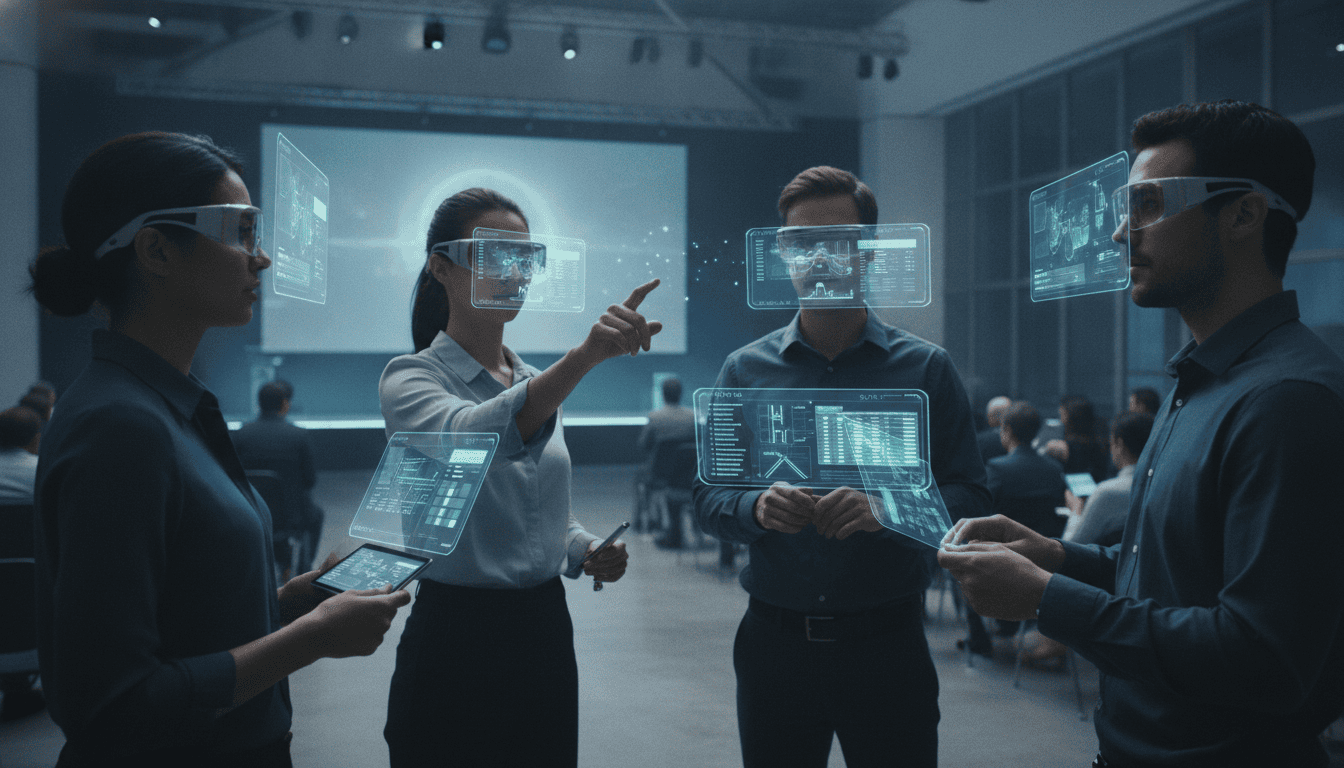
Even G2 smart glasses deliver bright neon HUD but hinge on phone connectivity and apps
Even G2 smart glasses combine a vivid monochrome heads-up display with a productivity-first design, but practical value depends on apps and stable phone pairing.
The Even G2 smart glasses arrive as a productivity-focused wearable centered on a neon-style monochrome display and deliberate privacy choices. The device omits cameras and speakers to prioritize workplace use, and it pairs with a companion app for most features. While the hardware shows clear upgrades over the first generation, everyday usefulness remains tied to software polish and reliable phone connectivity.
Even Realities debuts brighter monochrome HUD and faster refresh
The G2 uses a green, neon-like heads-up display that the company says reaches 1,200 nits and refreshes at 60Hz. That represents a notable jump over the predecessor’s specs and increases the readable area by roughly three-quarters. The single-color approach is intended for clear text and alerts rather than immersive multimedia.
The lack of color and the deliberate omission of cameras and speakers signal a tactical pivot toward workplace privacy. The design choice removes common social friction associated with recording-capable eyewear.
Light frame, premium materials and a heavy-duty charging case
The glasses weigh about 35 grams and pair a magnesium-alloy frame with titanium-alloy temples for a light but sturdy fit. Lenses include UV protection so the pair can double as outdoor eyewear even when smart features are not in use. Users reported comfortable wear for short sessions, though prolonged all-day use may be unnecessary for those who work mostly from home.
Even Realities bundles a sizeable protective case that functions as a power bank for the G2; the company claims the case can recharge the glasses up to seven times and that a typical user can expect up to two days of battery life between full charges. The trade-off is a bulky carry case that is too large for a pocket but designed for robust protection and extended field use.
Controls, assistant behavior and microphone performance
Basic interaction relies on touch-sensitive controls built into the temples that wake the device, summon a dashboard, and navigate menus. A built-in assistant called Even AI answers queries, manages reminders and can stream longer textual responses across the HUD. In trials, the assistant sometimes produced lengthy output with limited ways to interrupt or skip ahead, which undermines quick glances during meetings.
Despite four onboard microphones, voice activation and transcription accuracy proved uneven in noisy outdoor environments. Connectivity to the companion phone app was initially unreliable for some users but improved after successive software updates, highlighting the importance of ongoing firmware and app development.
Translation, teleprompting and navigation features evaluated
Translate and Conversate modes provide live transcription and on-the-fly translation with the HUD showing translated text, a feature that can help when speaking with people in different languages. A prep-notes capability allows users to upload documents ahead of meetings so the assistant can surface context-sensitive explainer bubbles during conversations, which testers found occasionally helpful for technical briefings.
Navigate delivers turn-by-turn directions on the display but requires routes to be set inside the Even Realities app rather than linking to Google or Apple Maps. Reported address and routing inaccuracies limit trust for unfamiliar destinations, though the HUD routing could have immediate utility for cyclists and riders once mapping precision improves.
R1 companion ring adds controls and health tracking, but value is limited
Even Realities introduced an R1 ring to serve as an alternate control surface for the G2, adding touch control away from the temple pads. The ring functions as advertised and includes health tracking for heart rate, sleep and SpO2, but its $249 price point raises questions about whether users should buy a multi-role ring or a dedicated health tracker. For many users, the glasses’ built-in controls already suffice, weakening the ring’s practical case.
Without a microphone on the ring, it does not replace the glasses for voice-driven tasks, and its health features position it more as a convenience than a best-in-class wearable for biometric monitoring.
Price, competitors and the path to broader adoption
At $599, the G2 sits in the premium end of the nascent smart-glasses market and competes against both camera-equipped frames and rival monochrome-display models from several Chinese manufacturers. Hardware quality, lightweight construction and battery endurance are strengths, but the overall user experience depends heavily on software, mapping accuracy and voice reliability. Support for third-party apps is being expanded, but current app options did not create a compelling daily use case outside niche professional scenarios.
The company’s recent valuation milestone underscores investor confidence, but long-term adoption will hinge on the supplier building a richer set of first-party and third-party apps that make the glasses indispensable rather than nominally useful.
Even Realities’ G2 shows that a focused, privacy-forward approach to smart eyewear can produce a polished product, but reviewers and early users agree that firmware refinements and a stronger software ecosystem will determine whether the glasses move from interesting gadget to everyday tool.
