
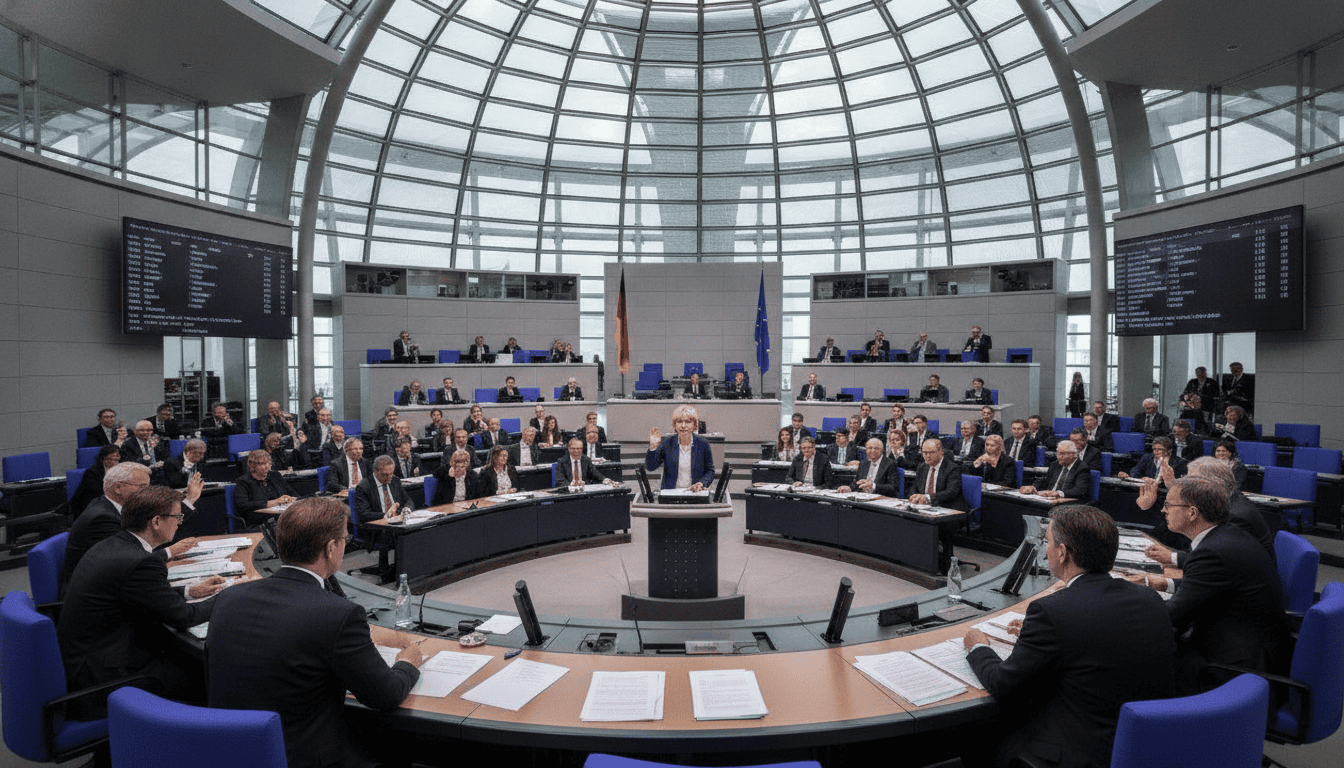
Bundestag Approves Stricter Industrial Emissions Rules to Implement EU Directive
Bundestag approves tougher industrial emissions rules to implement an EU directive, affecting about 10,000 facilities with new limits and investment incentives.
Germany’s Bundestag on Thursday passed legislation to tighten industrial emissions standards and implement a recent European Union directive, setting new limits and obligations that will affect roughly 10,000 industrial installations across the country. The bill, which includes requirements for environmental management systems and incentives for investment in cleaner technology, now moves to the Bundesrat for final approval. Lawmakers said the package seeks to bring German regulation into alignment with the EU while giving companies time and financial encouragement to modernize.
Parliamentary vote implements EU directive
The Bundestag’s decision formalizes the national implementation of the EU directive on industrial emissions, turning pan‑European standards into binding German law. Legislators framed the measure as necessary to harmonize rules across member states and reduce harmful pollutants from large sources such as refineries, chemical plants and power stations. The law’s text obliges facilities above the specified thresholds to meet the new emission ceilings and to report compliance under tightened oversight.
Approximately 10,000 facilities are in scope
Officials estimate that about 10,000 installations in Germany will fall under the stricter regime, covering a wide range of industrial operations. The scope reaches longstanding heavy industry as well as smaller large‑scale plants that previously operated under more lenient national regimes. Operators of affected sites will be required to implement certified environmental management systems and submit documentation showing steps taken to limit emissions.
New limits, transition rules and investment incentives
The bill sets lower pollutant ceilings for key emissions and introduces conditional flexibility for firms that can demonstrate a credible transition to low‑emission technologies. Companies that provide verifiable plans and investment timelines to move toward climate‑friendly processes may receive temporary deferrals for certain obligations, with postponements of up to eight years in specific cases. Legislators also included funding incentives and administrative measures intended to lower upfront costs for deploying modern abatement technology.
Parliamentary amendments reshape government proposal
During committee deliberations, members of the governing coalition introduced roughly 150 amendments to the government’s original draft, altering technical requirements and administrative procedures. Lawmakers from the CDU/CSU and SPD said the changes were aimed at simplifying compliance and reducing burdens on industry without undermining environmental goals. Critics argued some amendments dilute public oversight or create loopholes that could delay pollution reductions.
Political split and criticism from opposition parties
The vote revealed clear partisan divisions: the Greens and the Left voted against the law, citing reductions in citizen participation and weakened environmental safeguards. They warned that procedural simplifications could limit transparency around permit decisions and weaken local input on plant operations. The AfD also opposed the measure, arguing that tighter rules and compliance costs would increase economic strain on affected companies and risk jobs in industrial regions.
Next step is Bundesrat review and implementation timing
With Bundestag approval secured, the law must be endorsed by the Bundesrat before it can be signed and published into national law. If the federal council approves the text without substantial changes, implementing provisions will be phased in according to timetables set out in the legislation and the underlying EU directive. Regulators will also publish technical guidance and timelines to help operators assess when new limits apply and what documentation will be required.
The legislation seeks to balance the EU’s push for lower emissions with practical steps to ease the financial and administrative transition for German industry. Supporters say the combination of stricter limits and targeted incentives provides a realistic path toward cleaner operations, while opponents caution that the legislative compromises could weaken enforcement and delay meaningful reductions. As the bill proceeds to the Bundesrat, its final shape will determine how rapidly Germany reduces industrial pollutants and how companies plan investments in environmental technology.
